South Africa Fuel Cut Extension Details Check New Interest Rates

South Africa’s financial landscape is currently shaped by a mix of domestic economic updates and global developments. The rand’s recent movements, fuel pricing expectations, and upcoming monetary policy signals are all closely connected. Investors and consumers alike are watching these indicators to understand what lies ahead for inflation, borrowing costs, and overall economic stability.
This article explains the latest updates in simple terms, covering fuel price expectations, currency trends, and interest rate outlook without repeating information unnecessarily.
Rand Stability and Market Overview
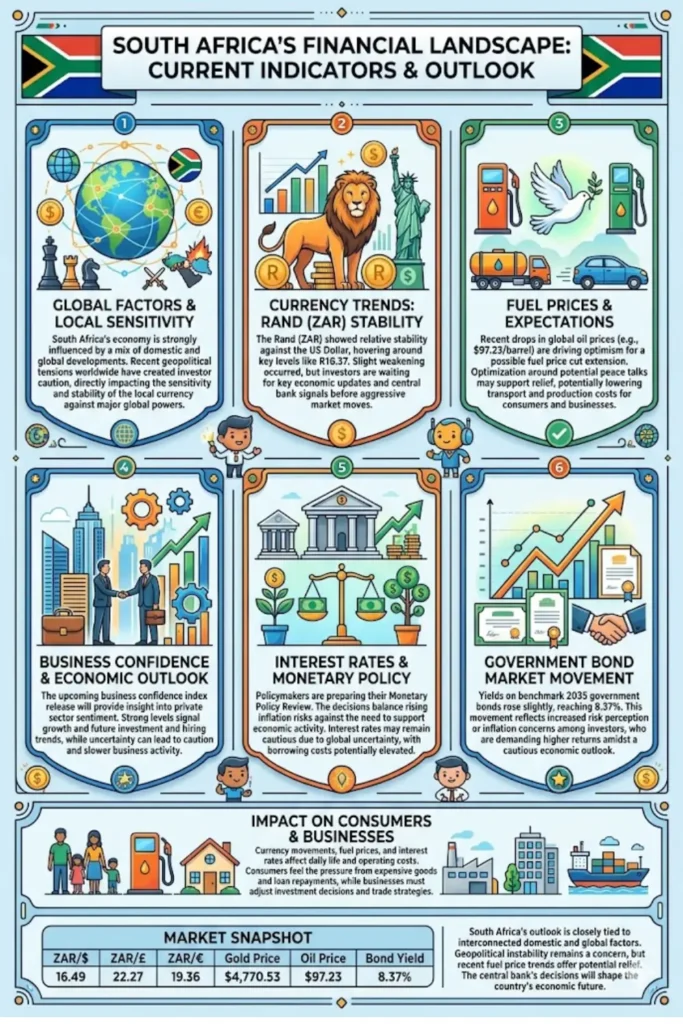
The South African rand showed relative stability in early trading, hovering near the 16.37 mark against the US dollar. This slight movement reflects cautious investor sentiment as markets wait for key economic updates.
The currency is highly sensitive to global risk factors. Recent geopolitical tensions, particularly involving major global powers and the Middle East, have influenced investor behavior. As a result, the rand often reacts quickly to any shift in global confidence.
Key highlights of the rand’s performance:
- Trading close to 16.37 against the dollar in early sessions
- Slight weakening compared to the previous closing value
- Continued sensitivity to global political and economic news
- Impacted by oil price movements and investor risk appetite
The stability suggests that investors are not making aggressive moves yet, preferring to wait for clearer signals from economic data and central bank guidance.
You can also read: R3 Million Primary Residence Exclusion
Fuel Price Trends and Possible Extension
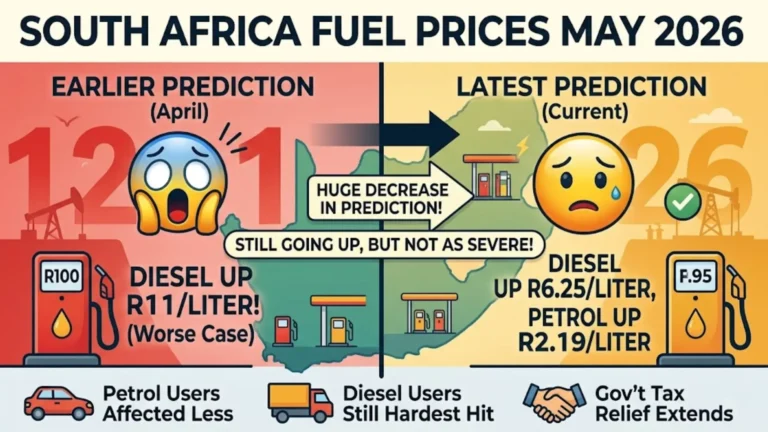
Fuel prices remain a major concern for households and businesses. Recent oil price fluctuations are playing a key role in shaping expectations for a possible fuel price cut extension.
Oil prices dropped by more than $1 recently, reversing earlier gains. This decline is largely driven by optimism around potential peace talks, which could increase global oil supply and ease price pressures.
What this means for fuel prices:
- Lower oil prices may support continued fuel price relief
- A possible extension of fuel cuts could reduce transport and production costs
- Consumers may experience slight financial relief if trends continue
- Businesses could benefit from reduced operating expenses
However, fuel pricing decisions depend on multiple factors, including exchange rates and global supply conditions. Even small changes in the rand can influence final fuel costs.
Business Confidence and Economic Outlook
The upcoming business confidence index release is an important indicator of how companies view the current economic environment. This index reflects private-sector sentiment and provides insight into future investment and hiring trends.
A strong confidence level usually signals growth and expansion, while a weak reading may indicate caution among businesses.
Factors influencing business confidence:
- Stability of the local currency
- Interest rate expectations
- Global economic conditions
- Energy and fuel costs
If confidence improves, it could support economic recovery. On the other hand, uncertainty may slow down business activity and investment decisions.
You can also read: Eskom Graduate in Training Programme
Interest Rates and Monetary Policy Direction
The central bank’s Monetary Policy Review is expected to provide guidance on interest rates for the coming months. Interest rates play a crucial role in controlling inflation and supporting economic growth.
Currently, policymakers are balancing two major concerns: rising inflation risks and the need to support economic activity. Any changes in interest rates will directly impact borrowing costs for individuals and businesses.
Key expectations:
- Interest rates may remain cautious due to global uncertainty
- Inflation trends will heavily influence decisions
- Borrowing costs could stay elevated if inflation persists
- Policy direction will depend on both domestic and global conditions
Higher interest rates can help control inflation but may slow economic growth. Lower rates, on the other hand, can stimulate spending but risk increasing inflation.
Government Bond Market Movement
South Africa’s bond market also reflected shifting investor sentiment. The benchmark 2035 government bond saw a decline in price, with yields rising slightly.
This movement indicates that investors are demanding higher returns, often due to increased risk perception or inflation concerns.
Important bond market signals:
- Yield increased to 8.37%
- Indicates cautious investor outlook
- Reflects concerns about inflation and fiscal stability
Bond yields are closely watched because they influence lending rates and overall financial conditions in the economy.
Current Market Snapshot
Below is a quick overview of key financial indicators:
| Indicator | Latest Value |
|---|---|
| Rand vs Dollar | R16.49 |
| Rand vs Pound | R22.27 |
| Rand vs Euro | R19.36 |
| Gold Price | $4,770.53/ounce |
| Oil Price | $97.23/barrel |
| Bond Yield (2035) | 8.37% |
This snapshot highlights the broader economic environment and helps track how different factors are moving together.
Impact on Consumers and Businesses
The combined effect of currency movements, fuel prices, and interest rates directly impacts everyday life. Consumers may feel pressure through higher costs, while businesses must adjust to changing financial conditions.
For consumers:
- Fuel price changes affect transport and daily expenses
- Interest rates influence loan repayments
- Currency shifts impact imported goods prices
For businesses:
- Operating costs depend on fuel and energy prices
- Investment decisions rely on interest rate trends
- Currency stability affects trade and imports
Understanding these factors can help individuals and businesses make better financial decisions.
You can also read: SASSA E life Certification Portal
Conclusion
South Africa’s economic outlook remains closely tied to both local developments and global events. The rand’s stability, potential fuel price relief, and upcoming interest rate guidance are all interconnected.
While there are signs of possible relief in fuel costs, uncertainty still exists due to geopolitical tensions and market volatility. The central bank’s decisions in the coming months will play a key role in shaping the country’s economic direction.
Staying informed about these changes is essential, as even small shifts in currency, fuel, or interest rates can have a meaningful impact on financial stability and daily life.