Eskom Graduate in Training Programme 2026 Check (X13 Posts) Details Step by Step

South Africa’s energy sector is going through a major shift, with a strong focus on stability, modernization, and renewable energy growth. To support this transition, Eskom has introduced the Graduate in Training (GIT) Programme 2026 within its Renewables Division. This programme is designed to help unemployed graduates gain real-world experience and develop practical skills over a 24-month period.
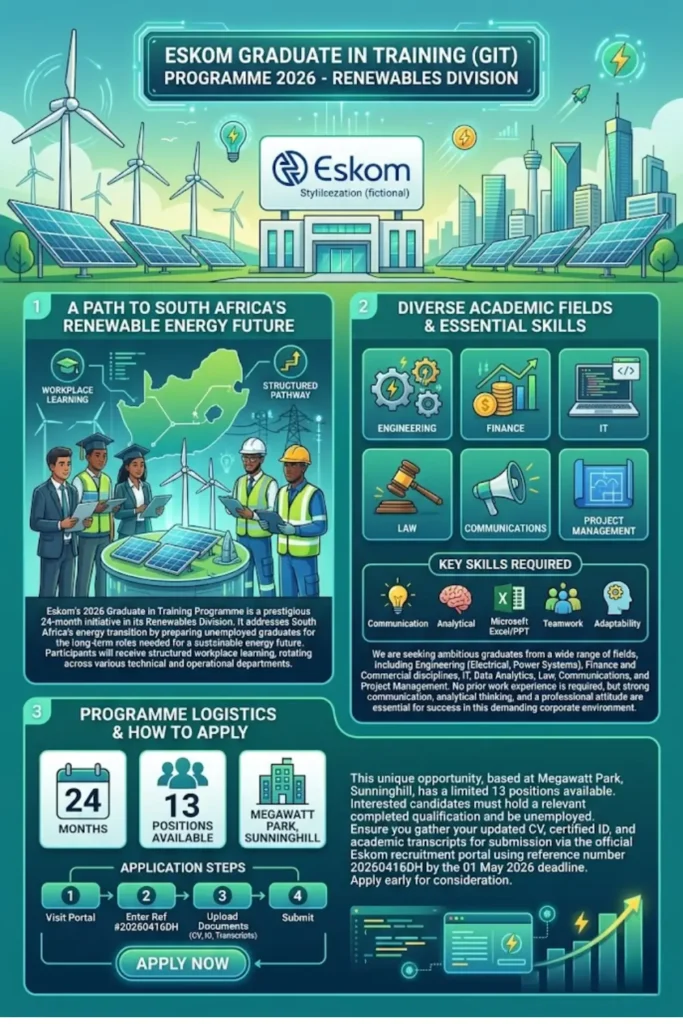
This opportunity is not just a typical internship it is a structured career pathway that prepares candidates for long-term roles in energy, infrastructure, and corporate sectors. With only 13 positions available, the competition is high, making it important for applicants to fully understand the process and requirements.
Overview of Eskom Graduate in Training Programme 2026
The Graduate in Training Programme is a two-year workplace learning initiative aimed at bridging the gap between academic knowledge and industry practice. It allows graduates to work on real projects while learning from experienced professionals.
Participants will rotate across different departments within the Renewables Division. This ensures exposure to technical, financial, and operational aspects of large-scale energy projects.
- Programme Duration: 24 months
- Total Positions: 13
- Location: Megawatt Park, Sunninghill
- Reference Number: 20260416DH
This structured approach helps graduates understand how renewable energy systems are designed, managed, and maintained in a real-world environment.
You can also read: 2027 South Africa University Application Update
Why This Programme Matters in South Africa
South Africa is actively shifting from traditional power generation to renewable energy sources such as solar and wind. This transition requires skilled professionals who understand both engineering systems and infrastructure planning.
The programme plays a key role in building future talent by preparing graduates to contribute to national energy goals. It also strengthens the workforce needed for sustainable development and energy security.
- Supports renewable energy integration into the national grid
- Builds technical and professional capacity
- Encourages sustainable infrastructure development
- Reduces reliance on conventional energy sources
Graduates who complete this programme become valuable assets in both public and private sectors.
Fields of Study Accepted
The programme welcomes graduates from a wide range of academic backgrounds. Each field contributes to different aspects of energy and infrastructure development.
Engineering Disciplines
Engineering graduates play a central role in energy systems and infrastructure reliability. They work on grid optimization, system design, and renewable integration.
- Electrical Engineering
- Control and Instrumentation
- General Engineering (Power Systems)
Finance and Commercial Fields
Finance professionals ensure that projects remain cost-effective and sustainable. They manage budgets and investment planning.
- Budgeting and cost control
- Financial modelling
- Capital planning
IT and Data Analytics
Technology and data are critical for modern energy systems. These roles focus on digital tools and performance tracking.
- Software and system support
- Data analysis and reporting
- Energy forecasting models
Other Fields
Additional disciplines support governance, communication, and project execution.
- Law (Regulatory compliance)
- Communications (Stakeholder engagement)
- Project Management and Quantity Surveying
You can also read: Who Qualifies for NSFAS Allowances
Key Skills and Competencies Required
Although no prior work experience is required, applicants must demonstrate strong professional skills. These competencies help graduates adapt to a structured corporate environment.
- Strong communication (written and verbal)
- Analytical thinking and problem-solving
- Basic knowledge of Microsoft Excel and PowerPoint
- Ability to work in teams
- Professional attitude and adaptability
These skills are essential for handling real-world challenges in energy projects.
Roles and Responsibilities of Selected Candidates
Participants will be involved in various tasks across departments. This hands-on experience helps them understand how large infrastructure projects operate.
- Assist in renewable energy project planning
- Support technical and financial reporting
- Analyze operational data
- Prepare presentations and documentation
- Coordinate stakeholder communication
By working on real projects, graduates gain practical insights into decision-making and execution processes.
Eligibility Criteria
To apply for the programme, candidates must meet specific requirements. These ensure that the programme targets the right group of graduates.
- Must be an unemployed graduate
- Hold a relevant qualification
- Completed studies (final-year students may be considered)
- Interest in energy, infrastructure, or public sector
- Willing to commit to 24 months
This makes the programme ideal for recent graduates looking to start their careers.
Required Documents for Application
Applicants need to prepare and submit all necessary documents to avoid delays or rejection.
- Updated CV
- Certified ID copy
- Academic certificates
- Academic transcripts
- Proof of residence (if required)
- Driver’s licence (optional)
Ensure all documents are certified and up to date before submission.
Step-by-Step Application Process
Applying for the programme requires careful attention to detail. Follow these steps to ensure a successful application.
- Visit the official Eskom recruitment portal
- Search for the Graduate in Training Programme 2026
- Use reference number 20260416DH
- Upload all required documents
- Submit before the deadline
- Closing Date: 01 May 2026
- Late applications will not be accepted
Applying early increases your chances of being considered.
You can also read: SRD SASSA Status Check 2026 on WhatsApp
Programme Benefits and Career Growth
This programme offers significant advantages for graduates entering the job market. It provides both technical knowledge and professional exposure.
- Hands-on experience in renewable energy
- Exposure to large infrastructure projects
- Networking opportunities with industry experts
- Improved employability
Although permanent employment is not guaranteed, many participants move into strong career positions after completion.
Programme Summary Table
| Feature | Details |
|---|---|
| Programme Name | Graduate in Training Programme 2026 |
| Duration | 24 Months |
| Number of Posts | 13 |
| Location | Megawatt Park, Sunninghill |
| Reference Number | 20260416DH |
| Closing Date | 01 May 2026 |
| Work Experience Required | No |
| Stipend | Yes (Market-related) |
Conclusion
The Eskom Graduate in Training Programme 2026 is a valuable opportunity for graduates who want to build a career in the energy sector. It combines structured learning with real-world experience, making it one of the most impactful development programmes available.
You can also read: R3 Million Primary Residence Exclusion
With South Africa focusing heavily on renewable energy and infrastructure growth, this programme positions graduates at the center of future industry demand. Those who apply early and meet the requirements have a strong chance of gaining skills that will shape their long-term careers.
