South Africa Fuel Price Increase In May 2026
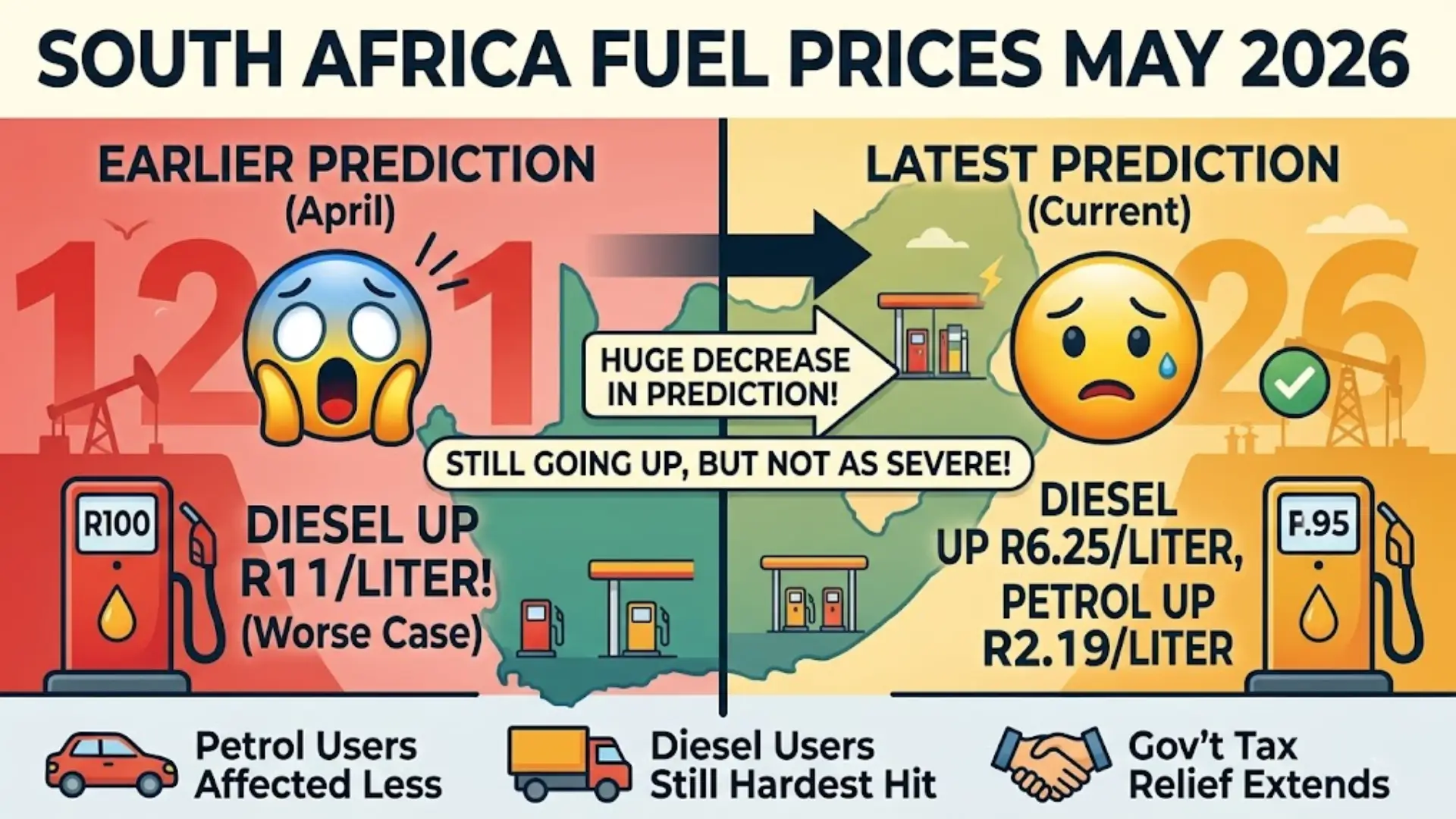
Fuel prices in South Africa are expected to rise again in May 2026, but the situation is not as severe as it seemed earlier in April. At the beginning of the month, predictions showed extremely high increases, especially for diesel users. However, recent updates suggest that the expected hikes are gradually decreasing, offering slight relief to motorists.
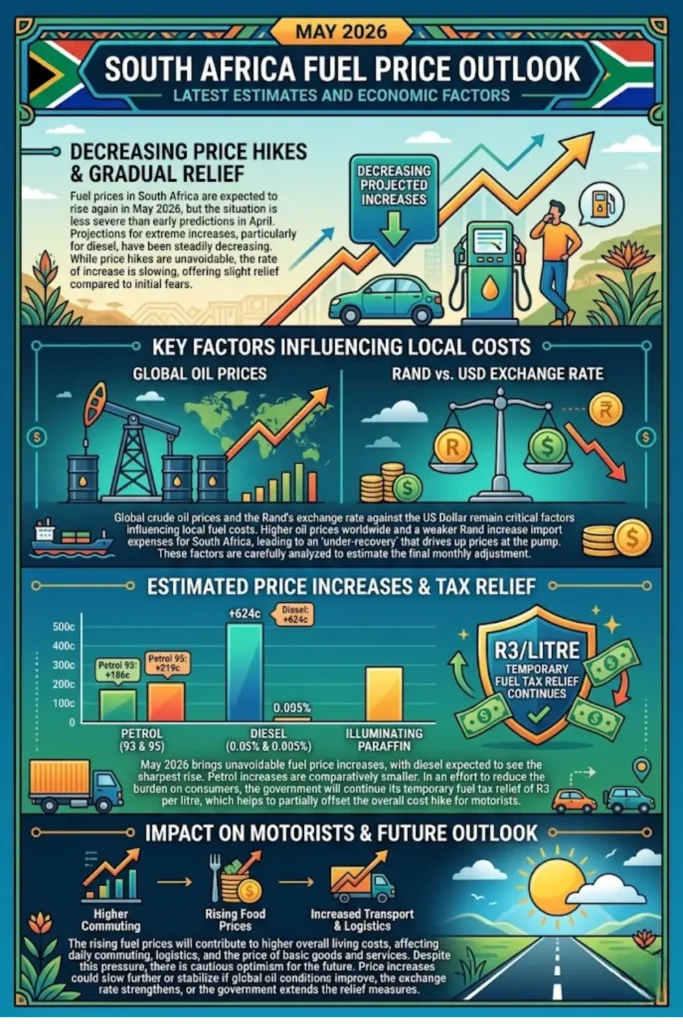
Even with this improvement, drivers will still pay more at the pumps compared to April. The latest data shows that while increases are unavoidable, the rate of increase is slowing down. This change gives some hope that fuel prices may stabilize in the near future if global conditions improve.
Recent Trends in Fuel Price Predictions
At the start of April, diesel prices were expected to increase by as much as R11 per litre. This created concern among drivers and businesses relying on transport. Over the past few weeks, these projections have steadily decreased, showing a more moderate rise.
Key observations from recent trends include:
- Fuel price increases are still expected, but at lower levels
- Diesel prices remain the most affected
- Petrol price increases are comparatively smaller
- Daily monitoring shows gradual improvement
These changes indicate that while the pressure is still there, the worst-case scenario is becoming less likely.
You can also read: South Africa Fuel Cut Extension Details
How Fuel Prices Are Determined in South Africa
Fuel prices in South Africa are monitored and predicted by official bodies that track economic and global trends. These institutions provide daily updates to give an accurate forecast of upcoming price changes.
Important factors influencing fuel prices include:
- International crude oil prices
- Rand to US Dollar exchange rate
- Import costs and transportation expenses
- Local taxes and levies
These elements are carefully analyzed to estimate fuel price adjustments, which are officially announced monthly.
Global Oil Prices and Currency Impact
One of the biggest reasons for the fuel price increase is the rise in global oil prices. When oil becomes more expensive worldwide, countries that import fuel, like South Africa, are directly affected.
The exchange rate also plays a major role. A weaker Rand against the US Dollar makes fuel imports more expensive. This combination leads to what is called an under-recovery, meaning fuel prices need to increase to cover costs.
Key impacts include:
- Higher global oil prices increase import costs
- Weak currency adds extra financial pressure
- Under-recovery leads to price hikes for consumers
If oil prices decrease or the Rand strengthens, fuel prices could improve in the coming months.
Government Intervention and Fuel Tax Relief
To reduce the burden on consumers, the government has introduced a temporary fuel tax relief of R3 per litre. This measure was also applied in April and will continue into May.
This intervention provides short-term relief but comes at a significant cost to the government.
- Estimated cost: R10 to R12 billion
- Relief applies to petrol and diesel
- Temporary solution, not permanent
Experts suggest that this support may continue for another month or two, depending on the country’s financial situation. However, once it ends, consumers may face full market-driven prices again.
You can also read: Supply Chain Management Marketable Skills
Predicted Fuel Price Increases for May 2026
The following table shows the latest expected fuel price increases for May 2026:
| Fuel Type | Expected Increase (cents/litre) | Increase (Rand/litre) |
|---|---|---|
| Petrol 93 | 186 cents | R1.86 |
| Petrol 95 | 219 cents | R2.19 |
| Diesel 0.05% | 624 cents | R6.24 |
| Diesel 0.005% | 625 cents | R6.25 |
| Illuminating Paraffin | 524 cents | R5.24 |
From the table, it is clear that diesel users will face the highest increase, while petrol users will see relatively smaller changes.
What This Means for South African Motorists
The increase in fuel prices will affect daily life in several ways. Transport costs will rise, which can also increase the price of goods and services.
Major impacts include:
- Higher commuting costs for individuals
- Increased logistics and transport expenses
- Rising prices of food and basic goods
- Greater financial pressure on households
Diesel users, especially in transport and agriculture sectors, will be the most affected due to the sharp increase in diesel prices.
Future Outlook for Fuel Prices
There is cautious optimism about the future of fuel prices. The recent reduction in projected increases shows that the situation can improve if global conditions change.
Possible future developments:
- Oil prices may stabilize or decrease
- Exchange rate could improve
- Government may extend tax relief
- Price increases may slow down further
However, uncertainty remains, and fuel prices will continue to depend heavily on global economic trends.
Conclusion
South Africa is heading towards another fuel price increase in May 2026, but the situation is not as severe as initially expected. While drivers will still pay more, the reduction in projected increases offers some relief.
You can also read: Sassa Elife Certification Portal Glitches
The combination of global oil prices, currency fluctuations, and government intervention will continue to shape fuel costs. For now, motorists should prepare for higher expenses while keeping an eye on future developments that may bring some stability.