2027 South Africa University Application Update & Check Opening and Closing Dates

Starting your higher education journey in South Africa requires careful planning, and one of the most important steps is understanding application timelines. For the 2027 academic year, universities have already started announcing their opening and closing dates, giving students a valuable opportunity to prepare early and apply on time.
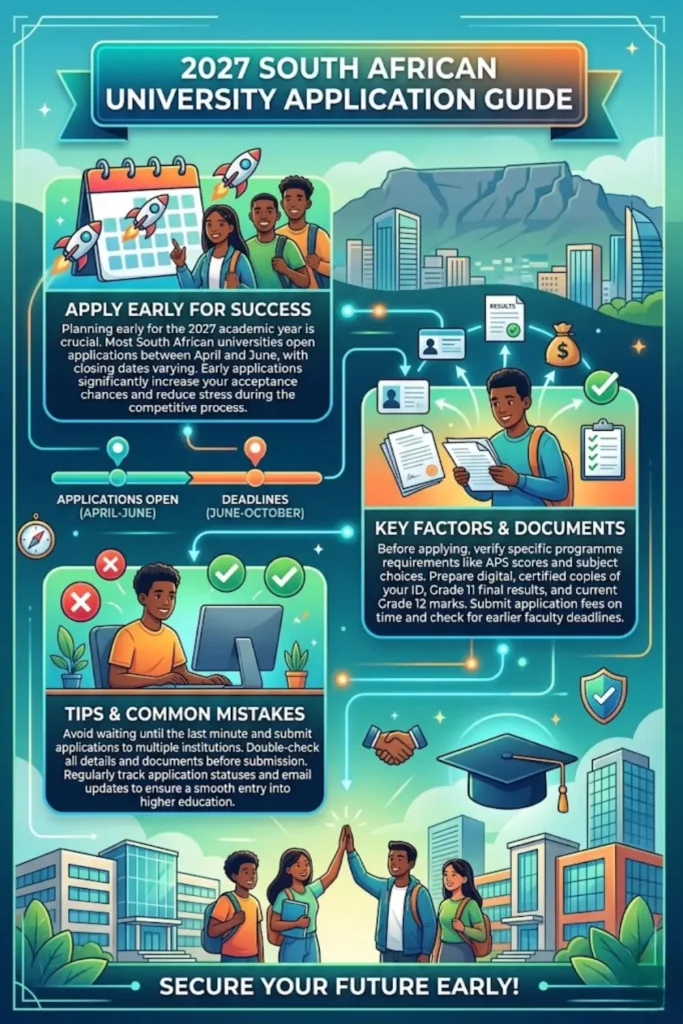
This guide provides a clear, structured, and easy-to-understand overview of application periods, along with practical tips to help you successfully secure admission. Applying early not only increases your chances but also reduces stress during the process.
Understanding the 2027 Application Timeline
South African universities follow different application schedules, but most institutions open applications between April and June. Closing dates vary depending on the university and programme, with some deadlines as early as June or July.
Planning ahead is essential because many competitive courses fill up quickly, sometimes even before the official closing date. This means students who apply early often have a significant advantage over late applicants.
It’s also important to remember that timelines may differ for specific faculties such as medicine, law, or engineering. Therefore, checking programme-specific deadlines is just as important as knowing general university dates.
You can also read: SASSA SRD Phone Number Common
2027 South African University Application Dates
Below is a simplified table showing key universities along with their expected application opening and closing dates for 2027:
| University Name | Opening Date | Closing Date |
|---|---|---|
| Mangosuthu University of Technology | Already Open | 30 September |
| University of the Free State | 1 April | 30 September |
| University of Fort Hare | 1 June | 31 October |
| University of Cape Town | 1 April | 31 July |
| Rhodes University | April | Not Specified |
| University of Johannesburg | 1 April | 31 October |
| University of Zululand | Already Open | 31 October |
| Central University of Technology | 13 May | 30 September |
| Walter Sisulu University | 1 April | 31 October |
| University of Limpopo | 1 April | July/September (varies) |
| Durban University of Technology | Already Open | 30 September |
| Sefako Makgatho University | 1 April | 31 July |
| Tshwane University of Technology | 1 April | 30 September |
| University of the Western Cape | 2 April | 30 September |
| Stellenbosch University | 1 April | 31 July |
| University of Pretoria | 1 April | Varies by programme |
| University of the Witwatersrand | Already Open | June/September |
| University of KwaZulu-Natal | Already Open | 30 September |
| North West University | 1 April | Varies |
| Nelson Mandela University | 1 April | June–September |
| Vaal University of Technology | Already Open | Not Specified |
These dates give a general idea, but always confirm details on official university websites before applying.
Why Applying Early Matters
Submitting your application early can make a significant difference in your chances of acceptance. Many universities review applications as they come in, and spaces in popular programmes can fill up quickly.
Applying early also gives you enough time to fix mistakes, upload missing documents, or apply to multiple institutions without rushing.
Key benefits of early application include:
- Better chances of securing a place in competitive programmes
- More time to arrange accommodation and funding
- Reduced stress closer to deadlines
- Opportunity to apply to multiple universities
Important Factors to Consider Before Applying
Choosing the right university and programme requires more than just meeting deadlines. You should carefully evaluate your options and ensure you meet all requirements.
Before applying, keep the following points in mind:
- Programme Requirements: Check APS scores and subject requirements
- Application Fees: Some universities may require payment
- Supporting Documents: Ensure all documents are complete and certified
- Multiple Deadlines: Some faculties close earlier than others
- Online Applications: Most universities use online systems
Understanding these factors will help you avoid common mistakes and improve your application quality.
You can also read: NSFAS Status Check 2026 Details
Documents You Need for University Applications
Preparing your documents in advance is essential for a smooth application process. Missing or incorrect documents can delay or even cancel your application.
Make sure you have the following ready:
- Certified copy of your ID or passport
- Grade 11 final results
- Grade 12 mid-year results (if available)
- Proof of application fee payment (if required)
- Personal statement or motivation letter (for certain courses)
- Portfolio or audition material (for creative programmes)
Having digital copies of these documents will make the online application process much easier.
Tips for a Successful Application Process
Applying to university can feel overwhelming, but with the right approach, it becomes manageable. Staying organized and focused is the key to success.
Here are some practical tips to guide you:
- Start your applications as soon as they open
- Apply to more than one university for better chances
- Double-check all information before submitting
- Track deadlines using a calendar or planner
- Regularly check your email for updates from universities
Consistency and attention to detail can greatly improve your chances of admission.
Common Mistakes to Avoid
Many students lose opportunities simple errors that can easily be avoided. Being aware of these mistakes can save you time and effort.
Avoid the following:
- Waiting until the last minute to apply
- Submitting incomplete applications
- Ignoring programme-specific requirements
- Using incorrect or outdated documents
- Not checking application status after submission
Avoiding these issues will keep your application process smooth and stress-free.
You can also read: NSFAS Funding be Received After Changing Universities
Final Thoughts
Applying to South African universities for the 2027 academic year is a major step toward your future. With multiple institutions offering different timelines, staying informed and organized is essential.
The earlier you start, the better your chances of success. Focus on meeting deadlines, preparing your documents, and choosing the right programme for your goals. Always verify information directly with universities to ensure accuracy.
With proper planning and timely action, you can confidently navigate the application process and move closer to achieving your academic dreams.
