SASSA May 2026 Children Grants Increased by R20 from R560 to R580 in April 2026
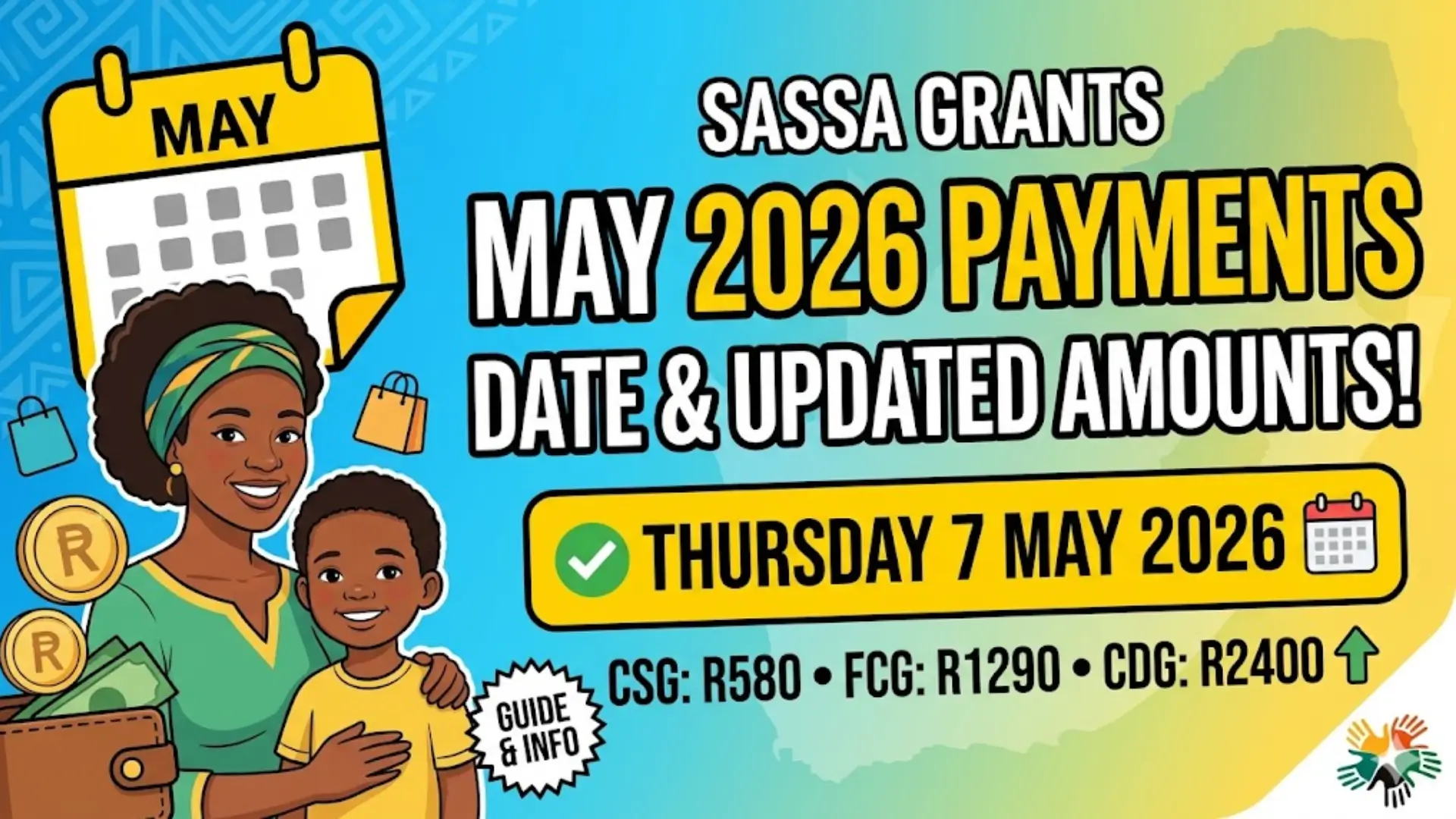
After a difficult April payment cycle, May 2026 brings some stability and predictability for millions of South African families relying on children’s grants. The previous delays caused frustration, especially when payments were pushed beyond the Easter period, leaving many households struggling to manage daily expenses.
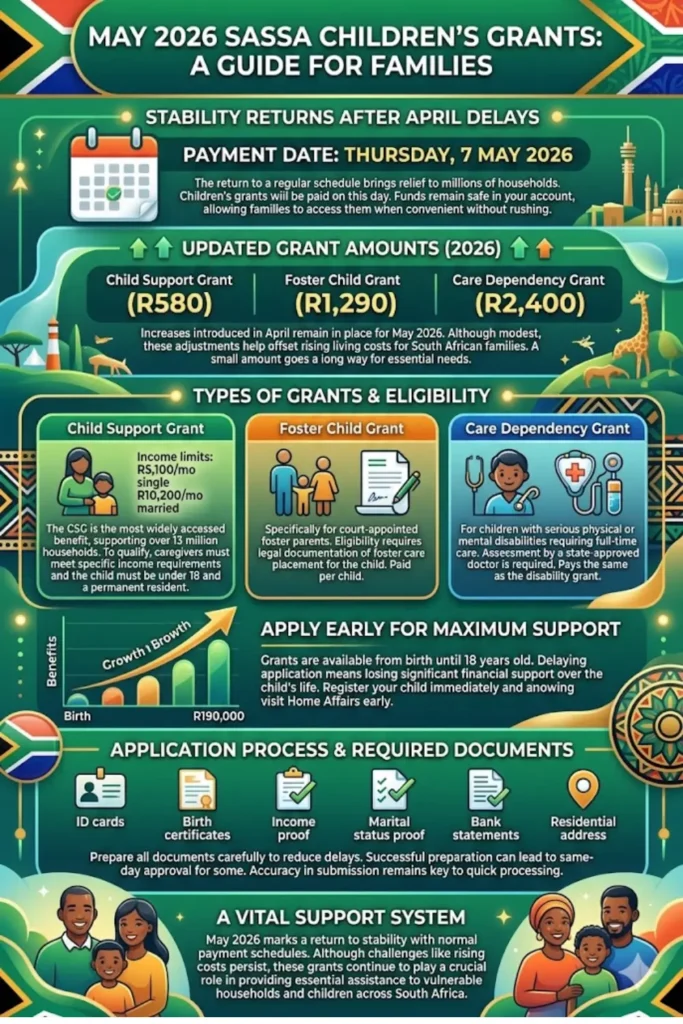
Now, the system returns to a normal four-week payment cycle. While the increase introduced in April remains modest, it still provides some financial relief. This guide explains everything you need to know about May 2026 SASSA Children’s Grants, including payment dates, updated amounts, eligibility, and application requirements.
May 2026 SASSA Children’s Grant Payment Date
For May 2026, children’s grants will be paid on:
- Thursday, 7 May 2026
This return to a regular payment schedule is important for families who depend on consistent income for essentials like food, school supplies, and healthcare.
Key points to remember:
- Payments follow a four-week cycle again
- Funds are available through bank accounts, SASSA cards, and retail outlets
- There is no need to rush on the first day, money remains safe in your account
You can also read: Electricity Billing Changes In South Africa
Updated Grant Amounts for 2026
Although beneficiaries were hoping for a bigger increase, the April 2026 adjustments remain unchanged for May payments. These increases, while small, still help offset rising living costs.
| Grant Type | Old Amount | New Amount (April 2026) | Increase |
|---|---|---|---|
| Child Support Grant | R560 | R580 | R20 |
| Foster Child Grant | R1,250 | R1,290 | R40 |
| Care Dependency Grant | R2,320 | R2,400 | R80 |
Important highlights:
- The Child Support Grant supports over 13 million households
- Foster and Care Dependency grants are targeted support programs
- All increases were implemented in April 2026 and continue in May
Child Support Grant: Eligibility and Income Limits
The Child Support Grant is the most widely accessed benefit and plays a critical role in reducing poverty among children.
To qualify, caregivers must meet income requirements:
- Single caregiver:
- Maximum R5,100 per month
- Maximum R61,200 per year
- Married couples:
- Maximum R10,200 per month combined
- Maximum R122,400 per year combined
Other key eligibility rules:
- Child must be under 18 years old
- Applicant must be the primary caregiver
- Both caregiver and child must reside in South Africa
This grant ensures consistent support for families raising children under financial pressure.
Foster Child and Care Dependency Grants Explained
These two grants are designed for more specific situations and require additional verification.
Foster Child Grant:
- Only for court-appointed foster parents
- Paid per child
- Requires legal foster care documentation
Care Dependency Grant:
- For children with serious physical or mental disabilities
- Requires assessment by a state-approved doctor
- Pays the same as the Disability Grant
Key differences:
- Foster care is based on legal placement
- Care dependency is based on medical condition
- Both provide higher financial support than Child Support Grant
Why Early Application Matters
Many caregivers delay applying for grants, often missing out on significant financial support. Applying early can make a huge difference over time.
Important facts:
- Grants are available from birth until age 18
- Total support over 18 years can reach approximately R190,000
- Delays in registration mean lost financial benefits
To avoid missing out:
- Register your child immediately after birth
- Visit the Department of Home Affairs early
- Apply for the grant as soon as documents are ready
Early action ensures your child benefits fully from available support.
You can also read: SASSA Grants Starts New R8,070
Documents Required for Application
To apply successfully, you need to prepare all required documents. Having everything ready can speed up approval, sometimes even on the same day.
Essential documents include:
- Valid ID documents of caregiver and spouse
- Child’s birth certificate
- Proof of marital status
- Proof of income (salary slips or affidavit)
- Three-month bank statement
- Proof of residential address
Additional requirements may apply for:
- Foster Child Grant (court order)
- Care Dependency Grant (medical assessment)
Being fully prepared reduces delays and improves approval chances.
Improved Processing Times in 2026
There is some positive news regarding application processing. Previously, applicants had to wait up to three months for approval.
Now, improvements include:
- Some applications processed on the same day
- Faster verification systems
- Reduced backlog in certain regions
However, delays can still occur if:
- Documents are incomplete
- Information cannot be verified
- Additional assessments are required
Submitting accurate information remains the key to quick approval.
You can also read: SASSA Grant-in-Aid 2026 Who Qualifies
Conclusion
May 2026 brings a welcome return to normal payment schedules after April’s disruptions. While the grant increases are relatively small, they still provide essential support to millions of families.
In summary:
- Payment date is 7 May 2026
- Grant amounts remain unchanged from April increases
- Early application is crucial for long-term benefits
- Proper documentation ensures faster approval
Although challenges like rising living costs persist, these grants continue to play a vital role in supporting children and vulnerable households across South Africa.
