SASSA Grant-in-Aid 2026 Who Qualifies and Check Complete Older Person Grant Details

Caring for someone who cannot take care of themselves is both emotionally and financially demanding. Many families in South Africa face this challenge daily, often without knowing that extra financial support is available. The SASSA Grant-in-Aid is one such benefit, designed specifically to assist households where full-time care is needed at home.
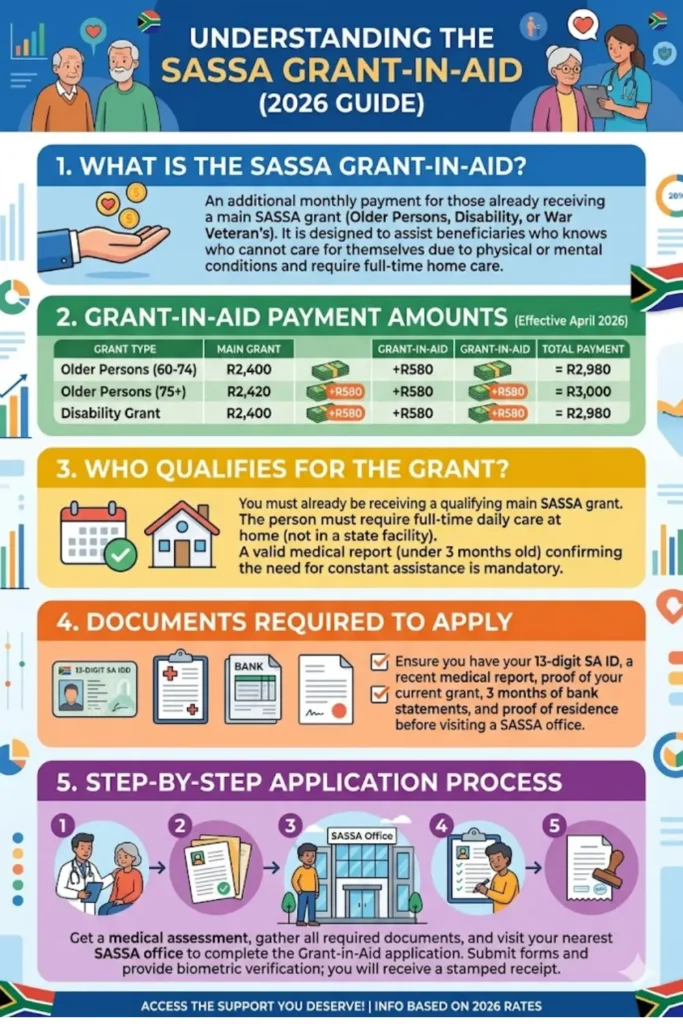
This article explains everything you need to know in a simple and clear way — who qualifies, how much you receive, how to apply, and important details about the Older Person Grant. If you or someone you know needs constant care, this guide can help you access the support you deserve.
What Is the SASSA Grant-in-Aid?
The Grant-in-Aid is an additional monthly payment given to people who already receive certain SASSA grants but cannot care for themselves due to serious physical or mental conditions. It is not a separate grant it is added on top of an existing grant.
This support is meant to help cover the cost of caregiving. Whether the caregiver is a family member or someone hired, the purpose of this grant is to reduce the financial burden on households providing daily assistance.
Many people miss out on this benefit simply because they are unaware it exists. Understanding its purpose can make a big difference in improving quality of life for both the beneficiary and the caregiver.
Key points to remember:
- It is a supplement, not a standalone grant
- Paid monthly together with your main grant
- Designed for people needing full-time home care
- Can be used for caregiver costs or medical needs
You can also read: TUT 2027 applications Applications
Grant-in-Aid Payment Amount in 2026
From April 2026, the Grant-in-Aid amount has increased to R580 per month. This amount is added to the beneficiary’s main grant, increasing total monthly support.
Below is a simple breakdown of combined payments:
| Grant Type | Main Grant Amount | Grant-in-Aid | Total Monthly Payment |
|---|---|---|---|
| Older Persons (60–74) | R2,400 | R580 | R2,980 |
| Older Persons (75+) | R2,420 | R580 | R3,000 |
| Disability Grant | R2,400 | R580 | R2,980 |
While R580 may not fully cover caregiving costs, it provides meaningful support for essentials like:
- Hiring part-time help
- Buying medical supplies
- Paying for mobility aids
- Supporting household care needs
Who Qualifies for the Grant-in-Aid?
To receive the Grant-in-Aid, you must already be receiving a qualifying SASSA grant and meet additional care-related conditions.
The most important requirement is that the person must be unable to care for themselves and need daily assistance at home.
Eligibility criteria include:
- Already receiving:
- Older Persons Grant
- Disability Grant
- War Veteran’s Grant
- Requires full-time care due to illness or disability
- Lives at home (not in a government institution)
- Has a valid medical report (not older than 3 months)
- Meets the means test requirements
One critical rule is often overlooked: if the person is admitted to a state-funded facility, they will not qualify. This grant is strictly for home-based care.
Documents Required for Application
Applying for the Grant-in-Aid requires proper documentation. Missing or outdated documents can delay or even cancel your application.
Make sure all documents are correct and up to date before visiting a SASSA office.
Required documents:
- South African ID (13-digit barcoded ID)
- Medical report (not older than 3 months)
- Proof of current SASSA grant
- Bank statements (last 3 months)
- Proof of residence
Additional documents (if applicable):
- Marriage certificate
- Divorce papers
- Death certificate of spouse
- Affidavit if single
If someone is applying on behalf of the beneficiary:
- A permission letter from the beneficiary
- Doctor’s note confirming inability to travel
Step-by-Step Application Process
The application process must be done in person at a SASSA office, unless someone applies on behalf of the beneficiary.
Planning ahead can make the process smooth and stress-free.
Steps to apply:
- Get a medical assessment from a doctor
- Gather all required documents
- Visit the nearest SASSA office
- Request the Grant-in-Aid application form
- Complete the form in front of a SASSA officer
- Submit documents and biometric verification
- Receive a stamped receipt as proof
Processing can take up to three months, but once approved, payments are backdated to the application date. This means you will receive a lump sum for missed months.
You can also read: Electricity Billing Changes In South Africa
Older Person Grant: Key Details You Should Know
The Older Person Grant is the main support for elderly individuals in South Africa. The Grant-in-Aid is added to this when extra care is required.
This grant ensures older citizens can meet their basic living needs, especially when they are no longer able to work.
Important details:
- Available from age 60 and above
- Higher payment for those 75 years and older
- Subject to a means test
- Paid monthly through bank or cash points
When combined with the Grant-in-Aid, it becomes a stronger financial support system for households managing elderly care.
How to Check Your Application Status
After applying, many people feel unsure about what happens next. SASSA does not provide instant updates online for this grant.
You will need to wait for official communication.
Ways to check status:
- Wait for the approval or rejection letter
- Call the SASSA helpline after processing time
- Visit the office if necessary
Possible outcomes:
- Approved → Payments begin with backdated amount
- Declined → Request reasons and consider appeal
- Pending → Wait for verification completion
When Can the Grant-in-Aid Be Cancelled?
The Grant-in-Aid is not permanent. It depends on the ongoing condition of the beneficiary.
If the situation changes, the grant may be stopped.
Reasons for cancellation:
- Recovery or improved health
- No longer needing full-time care
- Admission to a government institution
- Death of the beneficiary
- Cancellation of the main grant
It is important to inform SASSA if circumstances change. Failure to do so may result in repayment of funds.
Common Mistakes to Avoid
Many applications are delayed or rejected due to simple mistakes. Avoiding these can save time and effort.
Common errors include:
- Submitting an expired medical report
- Missing required documents
- Not applying early enough
- Providing incorrect personal information
- Assuming the grant is automatic
Applying as soon as full-time care is needed is the best decision, as delays can lead to lost payments.
Conclusion
The SASSA Grant-in-Aid is a crucial but often overlooked benefit. It provides essential support for families caring for loved ones who cannot manage daily life on their own.
Even though the amount may seem small, it plays an important role in easing financial pressure. More importantly, it recognizes the value of caregiving — whether done by family or professionals.
You can also read: SASSA Grants Starts New R8,070
If you or someone you know qualifies, do not delay. A simple application can lead to long-term support that makes daily life more manageable.
