SASSA Grants Starts New R8,070 Income Rule Check New Eligibility Changes

The South African Social Security Agency (SASSA) is introducing a new income requirement in 2026 that will directly affect thousands of grant beneficiaries. This update is part of a broader effort to ensure that financial support is distributed fairly among citizens who need it the most. With rising demand for social assistance and limited government resources, stricter eligibility checks have become necessary.
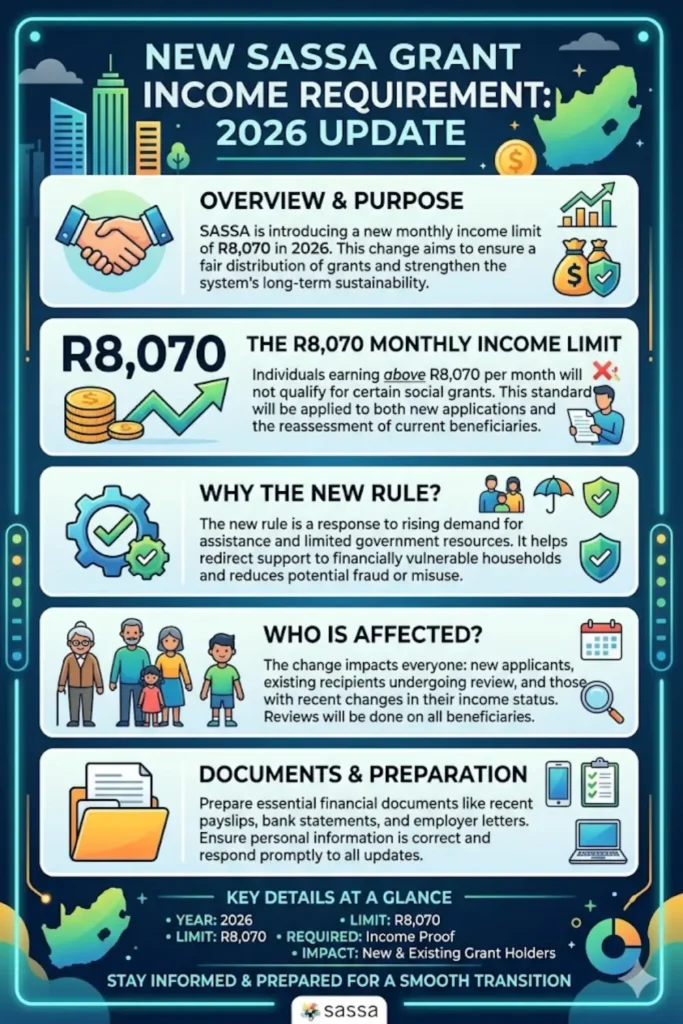
Under the new system, income will play a more important role in determining whether someone qualifies for a grant. This change is not just about limiting access but about improving the overall sustainability of the social grant system. It aims to ensure that people who are financially vulnerable continue to receive support without unnecessary delays or misuse of funds.
Understanding the R8,070 Monthly Income Limit
The key feature of this update is the introduction of a fixed monthly income threshold. Individuals earning more than R8,070 per month will no longer qualify for certain social grants. This limit will be used as a standard measure when reviewing both new and existing applications.
This income rule is designed to create a fair system where assistance is directed toward low-income households. By applying a clear benchmark, SASSA can quickly determine eligibility and reduce confusion among applicants.
- Applicants earning below R8,070 may qualify for grants
- Individuals earning above R8,070 may face rejection or cancellation
- The rule applies to both new applications and reassessments
- Income will be verified using official financial documents
Why the New Rule Is Being Introduced
The government has introduced this change to maintain the long-term stability of the social grant system. With millions of people depending on monthly payments, the number of applicants continues to increase each year. Without proper controls, the system could face financial pressure.
This updated rule helps ensure that only deserving individuals receive assistance. It also reduces the chances of fraud or misuse, which can take resources away from those who truly need help.
- Improve fair distribution of funds
- Reduce unnecessary or incorrect payments
- Strengthen financial sustainability
- Increase transparency in the system
You can also read: R1,500 NSFAS Allowance
Who Will Be Affected by This Change
The new income requirement will not only apply to new applicants but also to people who are already receiving grants. SASSA plans to reassess existing beneficiaries to confirm whether they still meet the updated criteria.
This means that even if someone is currently receiving payments, their financial situation will be reviewed. If their income exceeds the set limit, their grant may be reduced or stopped.
- New applicants applying in 2026
- Existing beneficiaries undergoing review
- Individuals with recent income changes
- Applicants submitting updated financial details
Documents Required for Income Verification
To ensure accurate assessments, SASSA will require applicants to submit valid proof of income. These documents will help officials verify whether an individual meets the eligibility criteria under the new rule.
Providing correct and up-to-date documents is essential to avoid delays or rejection. Applicants should prepare their paperwork in advance to ensure a smooth process.
- Recent payslips
- Official bank statements
- Employer confirmation letters
- Any other proof of monthly income
What Happens If Your Income Exceeds the Limit
If SASSA finds that an applicant earns more than R8,070 per month, action will be taken based on their financial status. However, the process will not be immediate or unfair. Beneficiaries will be notified and given a chance to respond.
This approach ensures that individuals can correct any errors or provide updated information before a final decision is made. It also protects applicants from sudden loss of financial support.
- Grant may be reduced
- Grant may be cancelled
- Beneficiaries will receive official notification
- Opportunity to verify or update details
Steps Beneficiaries Should Take Now
To avoid interruptions in payments, beneficiaries should take proactive steps. Preparing early can make a big difference in ensuring continued eligibility under the new system.
Keeping financial records updated and accurate will help applicants avoid unnecessary complications during reassessment.
- Review your monthly income details
- Keep all documents ready and updated
- Ensure personal information is correct
- Respond quickly to any SASSA communication
Key Details at a Glance
| Category | Details |
|---|---|
| Implementation Year | 2026 |
| Monthly Income Limit | R8,070 |
| Who Is Affected | New & existing beneficiaries |
| Required Documents | Payslips, bank statements, employer letter |
| Possible Outcome | Grant reduction or cancellation |
| Main Objective | Fair distribution and sustainability |
Final Thoughts
The introduction of the R8,070 income limit marks an important shift in how social grants are managed in South Africa. While the change may affect many beneficiaries, its main goal is to create a more balanced and transparent system.
You can also read: Electricity Billing Changes In South Africa
By focusing on those who truly need financial assistance, SASSA aims to ensure that support remains available for the most vulnerable members of society. Beneficiaries who stay informed, prepared, and responsive will have a better chance of continuing to receive their grants without disruption.
