South Africa Fuel Price Hikes Check Complete Petrol and Diesel

Fuel prices in South Africa are once again expected to increase in May 2026, even though conditions improved during April. Many motorists were hoping for relief after earlier projections showed extreme under-recoveries, but the latest data suggests that price hikes are still unavoidable.
The situation highlights how sensitive fuel prices are to global trends. Even when local conditions stabilize, international oil prices and policy decisions continue to shape what consumers pay at the pump. Understanding these factors can help drivers and businesses better prepare for upcoming cost changes.
April Recovery: A Sharp Improvement but Not Enough
During early April, fuel under-recoveries were extremely high, putting pressure on future prices. However, as the month progressed, there was a noticeable improvement in the data, reducing the expected increases.
Despite this recovery, the improvement was not strong enough to eliminate price hikes completely. The market is still adjusting, and the earlier losses continue to influence the final pricing for May.
- Petrol under-recovery dropped by around 73%
- Diesel under-recovery reduced by more than 66%
- Market conditions improved due to slight stabilization in exchange rates
- Global oil pressure still prevented full recovery
This shows that while conditions are better than before, they are not strong enough to bring prices down.
You can also read: Special Investigating Unit Fraud in R85 million
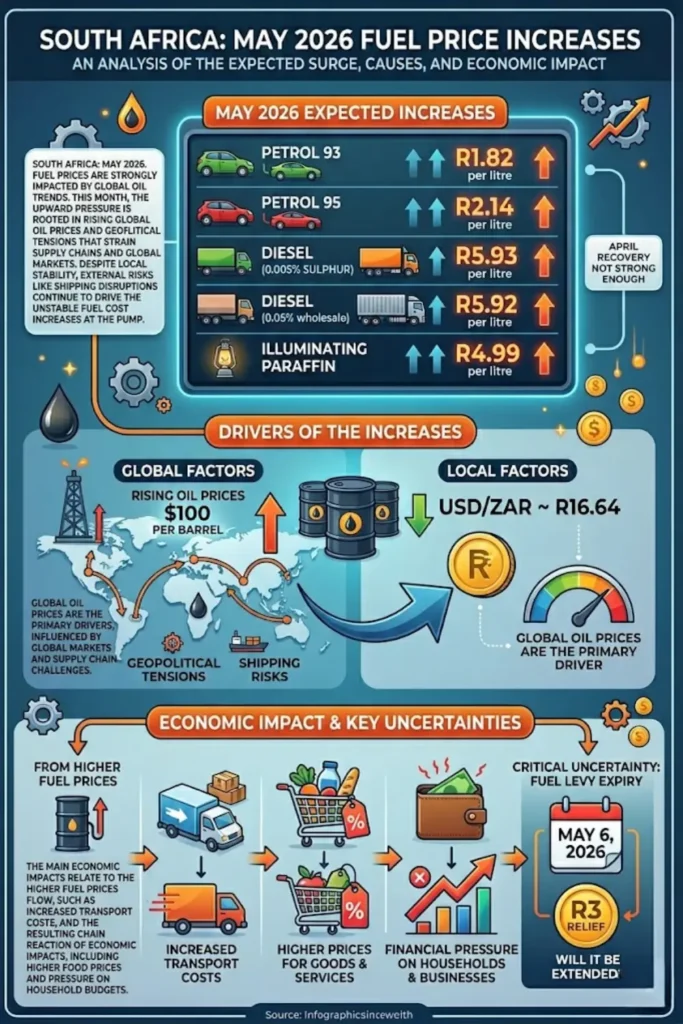
Expected Fuel Price Increases for May 2026
Based on the latest data, motorists should prepare for noticeable increases across all fuel types. Although these increases are lower than earlier estimates, they are still significant.
| Fuel Type | Expected Increase (per litre) |
|---|---|
| Petrol 93 | R1.82 |
| Petrol 95 | R2.14 |
| Diesel (0.005% sulphur) | R5.93 |
| Diesel (0.05% wholesale) | R5.92 |
| Illuminating Paraffin | R4.99 |
These increases reflect the remaining under-recoveries and ongoing global price pressures. Diesel users, especially in transport and agriculture, will feel the biggest impact.
Global Oil Prices Driving the Pressure
One of the biggest reasons behind the expected fuel hikes is the surge in global oil prices. Crude oil has climbed above $100 per barrel due to geopolitical tensions, particularly in key oil-producing regions.
These global developments have a direct effect on South Africa because the country relies heavily on imported fuel. Even small disruptions in supply chains can lead to major price fluctuations locally.
- Oil prices remain above $100 per barrel
- Middle East tensions affecting supply routes
- Shipping risks increasing transportation costs
- Nearly 99.5% of under-recovery linked to global prices
This means local improvements alone cannot offset international market pressures.
Rand Stability Offers Limited Relief
The South African rand has shown relative stability, trading near R16.64 against the US dollar. Normally, a stable currency helps reduce fuel price increases, as imports become slightly cheaper.
However, in this case, the benefit has been limited. The strength of global oil prices has outweighed any positive impact from the currency, keeping fuel costs elevated.
Even though the rand avoided major volatility, it has not been strong enough to counter the global oil surge.
Fuel Levy Cut: A Major Uncertainty
Another key factor affecting fuel prices is the temporary fuel levy relief introduced by the government. The R3 per litre reduction was designed to ease pressure on consumers, but it is set to expire on May 6.
The future of this relief remains uncertain, and its removal could significantly increase fuel prices beyond current projections.
- Current relief: R3 per litre reduction
- Expiry date: 6 May 2026
- Extension under consideration by government
- Any extension must remain budget-neutral
If the levy is not extended, motorists could face a much steeper increase than currently expected.
You can also read: South Africa Freedom Day Details
What This Means for Consumers and Businesses
Rising fuel prices affect more than just drivers they have a ripple effect across the entire economy. Transport costs increase, which can lead to higher prices for goods and services.
For businesses, especially those dependent on logistics, diesel price hikes are particularly concerning. Consumers may also feel the pressure through increased food and retail prices.
- Higher transport and delivery costs
- Increased prices for essential goods
- Greater financial pressure on households
- Reduced spending power for consumers
Planning ahead and managing fuel usage becomes more important during such periods.
Outlook: What to Expect in the Coming Weeks
Looking ahead, the final fuel price adjustments will depend on two key factors: global oil trends and government decisions on the fuel levy. If oil prices remain high and the levy relief ends, fuel costs could rise sharply.
However, if conditions improve or the levy is extended, the increases may remain moderate. The situation remains fluid, and motorists should stay informed as new updates emerge.
You can also read: Sassa E-Life Certification Requirement
In summary, while April brought some relief, it was not enough to prevent increases. South Africans should prepare for higher fuel costs in May and possibly beyond, depending on global and policy developments.