The Shocking Truth Behind Petrol Prices in South Africa
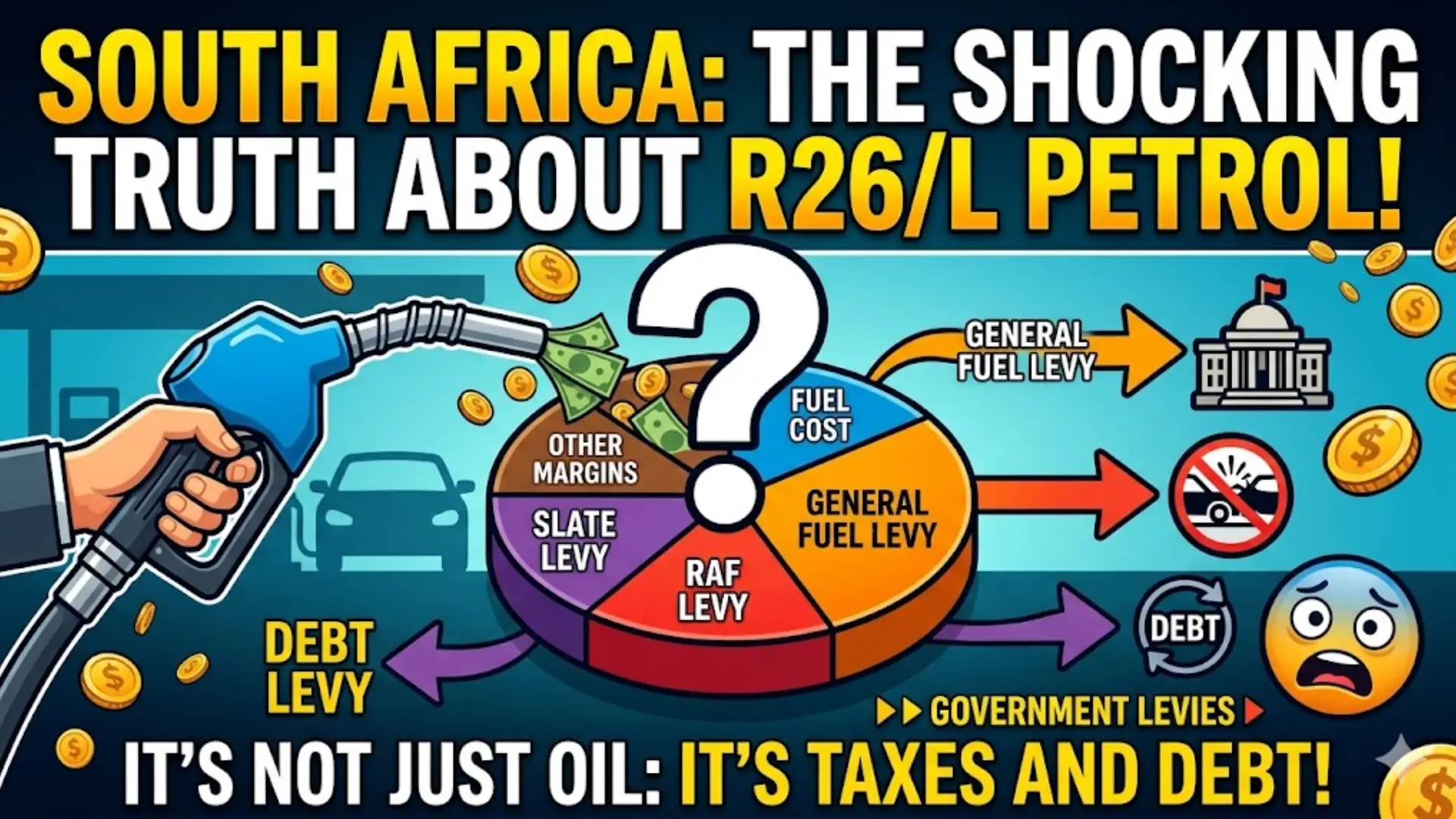
South Africans are paying some of the highest petrol prices in the country’s history, and the reasons go far beyond global oil prices or tensions in the Middle East. Every time motorists fill up their cars, a large portion of the money goes directly toward taxes, levies, government debt recovery, and struggling state systems.
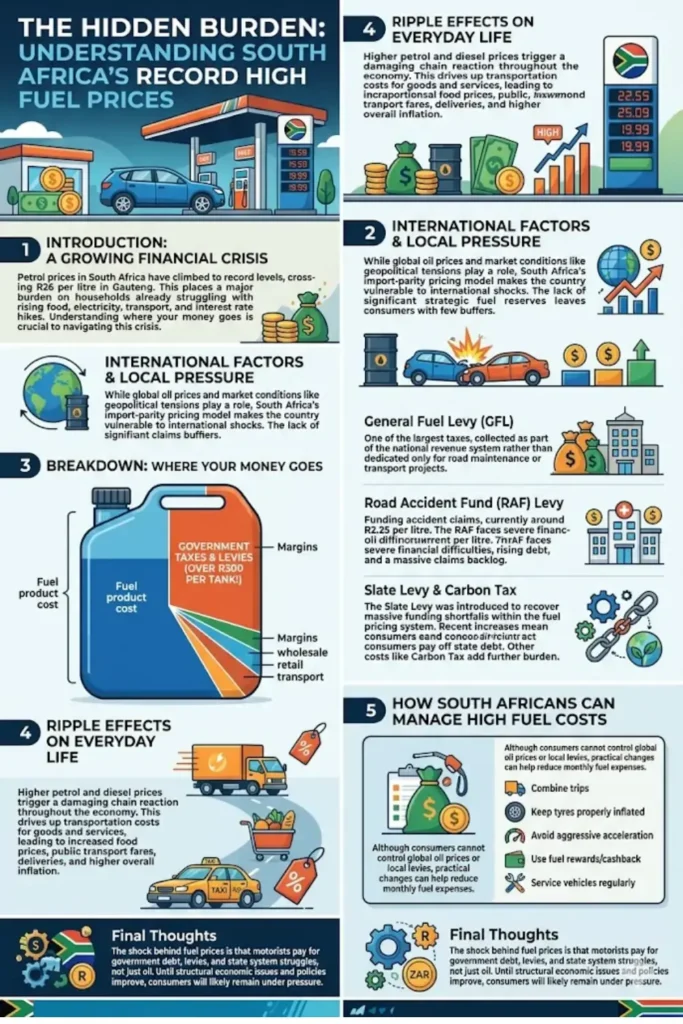
Petrol prices have become a major financial burden for households already dealing with rising food costs, electricity hikes, transport expenses, and high interest rates. Understanding where this money goes helps consumers make smarter financial decisions and prepare for future fuel increases.
Why Petrol Prices in South Africa Are Reaching Record Highs
Petrol 95 has climbed above R26 per litre in Gauteng and inland areas, while diesel prices have crossed R31 per litre. Although international crude oil prices affect fuel costs, local taxes and levies are making the situation far worse for South African motorists.
You can also read: NSFAS TVET Application Process
According to financial experts, the current fuel crisis is tied to years of economic pressure, weak infrastructure, and growing government liabilities. South Africans are not only paying for imported oil but also covering the cost of policy failures and debt collection through fuel charges.
The Hidden Taxes South Africans Pay at the Pump
Many motorists believe fuel stations keep most of the profit from rising petrol prices, but that is not the reality. A significant share of every litre sold goes directly to the government through multiple taxes and levies.
Here are some of the biggest charges included in fuel prices:
- General Fuel Levy
- Road Accident Fund (RAF) Levy
- Carbon Fuel Tax
- Transport and storage margins
- Slate Levy
- Wholesale and retail margins
For a standard 50-litre petrol tank, South Africans can pay more than R300 in taxes and levies alone before driving a single kilometre.
Understanding the Fuel Levy and Slate Levy
The General Fuel Levy is one of the largest taxes added to petrol and diesel prices in South Africa. This levy is collected by the government and used as part of the national revenue system rather than being reserved only for road maintenance or transport projects.
Another controversial charge is the Slate Levy, which recently increased sharply. The government introduced this levy to recover billions lost within the fuel pricing system.
Key Facts About the Slate Levy
| Fuel Charge | Purpose | Estimated Impact |
|---|---|---|
| General Fuel Levy | Government revenue collection | Major contributor to fuel price |
| RAF Levy | Funding road accident claims | R2.25 per litre |
| Slate Levy | Recover fuel pricing shortfall | R1.23 per litre |
| Carbon Tax | Environmental taxation | Added cost per litre |
The Slate Levy alone has become a major concern because consumers are effectively paying off state-related debt through fuel purchases.
How Government Debt Impacts Fuel Prices
South Africa’s fuel price problem is also linked to the country’s broader financial challenges. As government debt rises, consumers indirectly carry part of the burden through increased taxes and levies.
Experts argue that fuel has become one of the easiest ways for the government to collect revenue quickly. Unlike other taxes, fuel levies affect almost every person in the economy because transport costs influence food prices, public transport fares, deliveries, and business operations.
The Road Accident Fund Crisis Explained
The Road Accident Fund (RAF) remains one of the biggest financial concerns linked to fuel prices. Despite collecting billions every year from motorists, the RAF continues facing severe financial pressure and growing liabilities.
Current reports suggest the RAF claims backlog exceeds hundreds of thousands of cases. At the same time, the fund’s debt is expected to increase significantly over the next few years, raising concerns about long-term sustainability.
Why the RAF Situation Matters
- Motorists pay around R2.25 per litre toward the RAF
- The fund reportedly faces massive financial liabilities
- Delayed claims continue affecting accident victims
- Rising RAF costs place additional pressure on fuel prices
Many consumers feel frustrated because they continue paying more while service delivery challenges remain unresolved.
You can also read: Sasa Grant Srd Ngesizulu Whatsapp
Why South Africa’s Fuel Pricing System Is Under Pressure
South Africa uses an import-parity pricing model, which means local fuel prices are heavily influenced by international market rates. This system often results in consumers paying more, especially during periods of global instability.
The country also lacks strong strategic fuel reserves that could help cushion sudden international oil price shocks. As a result, South Africans remain highly vulnerable whenever global oil supply disruptions occur.
The Real Impact of Rising Fuel Prices on Everyday Life
Higher petrol and diesel prices affect far more than transport costs. Rising fuel expenses create a chain reaction throughout the economy, increasing the cost of goods and services across multiple industries.
Consumers are already seeing the impact in several areas:
- Higher taxi and transport fares
- Increased food prices
- More expensive delivery costs
- Rising inflation
- Higher borrowing and interest costs
- Reduced household spending power
Many households are now forced to cut non-essential spending simply to manage daily transport and grocery expenses.
Breakdown of a 50-Litre Petrol Tank Cost
The true cost of fuel becomes clearer when breaking down how much money goes toward taxes and levies.
| Item | Approximate Cost on 50 Litres |
|---|---|
| Fuel product cost | Variable |
| Government taxes and levies | Over R300 |
| RAF contribution | Significant portion |
| Retail and transport margins | Included |
| Slate Levy contribution | Increasing yearly |
This explains why even small increases in levies can dramatically raise monthly transport expenses for ordinary South Africans.
Temporary Fuel Relief and What Happens Next
The government recently introduced temporary relief measures by reducing fuel levies to soften the pressure on consumers. While this offered short-term assistance, experts warn the relief may not last long.
If the full fuel levy returns in the coming months, motorists could face another sharp increase in petrol and diesel prices. This creates uncertainty for families and businesses already struggling with rising living costs.
How South Africans Can Manage Rising Fuel Costs
Although consumers cannot control fuel prices directly, there are practical ways to reduce the financial impact.
Smart Ways to Save on Fuel
- Combine trips to reduce unnecessary driving
- Keep tyres properly inflated
- Avoid aggressive acceleration and speeding
- Use fuel rewards and cashback programs
- Service vehicles regularly for better efficiency
- Compare transport alternatives where possible
Small driving habit changes can make a noticeable difference in monthly fuel expenses over time.
You can also read: SASSA Old-Age Grants Check Eligibility
Common Mistakes Motorists Should Avoid
Many drivers unknowingly increase their fuel spending through poor driving habits and financial decisions.
Common Fuel-Related Financial Mistakes
- Using credit cards for daily fuel expenses
- Ignoring vehicle maintenance
- Driving with underinflated tyres
- Delaying debt management during rising costs
- Overspending despite inflation pressures
Financial experts warn that relying heavily on debt during periods of rising fuel and food costs can quickly create long-term financial problems.
Final Thoughts
The shocking truth behind petrol prices in South Africa is that motorists are paying for far more than oil. Every litre includes a combination of taxes, levies, debt recovery charges, and costs linked to struggling government systems.
While global oil markets continue influencing fuel prices, South Africa’s internal financial challenges are making the crisis even worse. Until structural economic issues, fuel pricing policies, and state liabilities improve, consumers are likely to remain under pressure.
For many South Africans, rising petrol prices are no longer just a transport issue. They have become a full cost-of-living crisis affecting nearly every part of daily life.
