Official NSFAS Status Tool Launched to Help South African Students Track Funding Updates
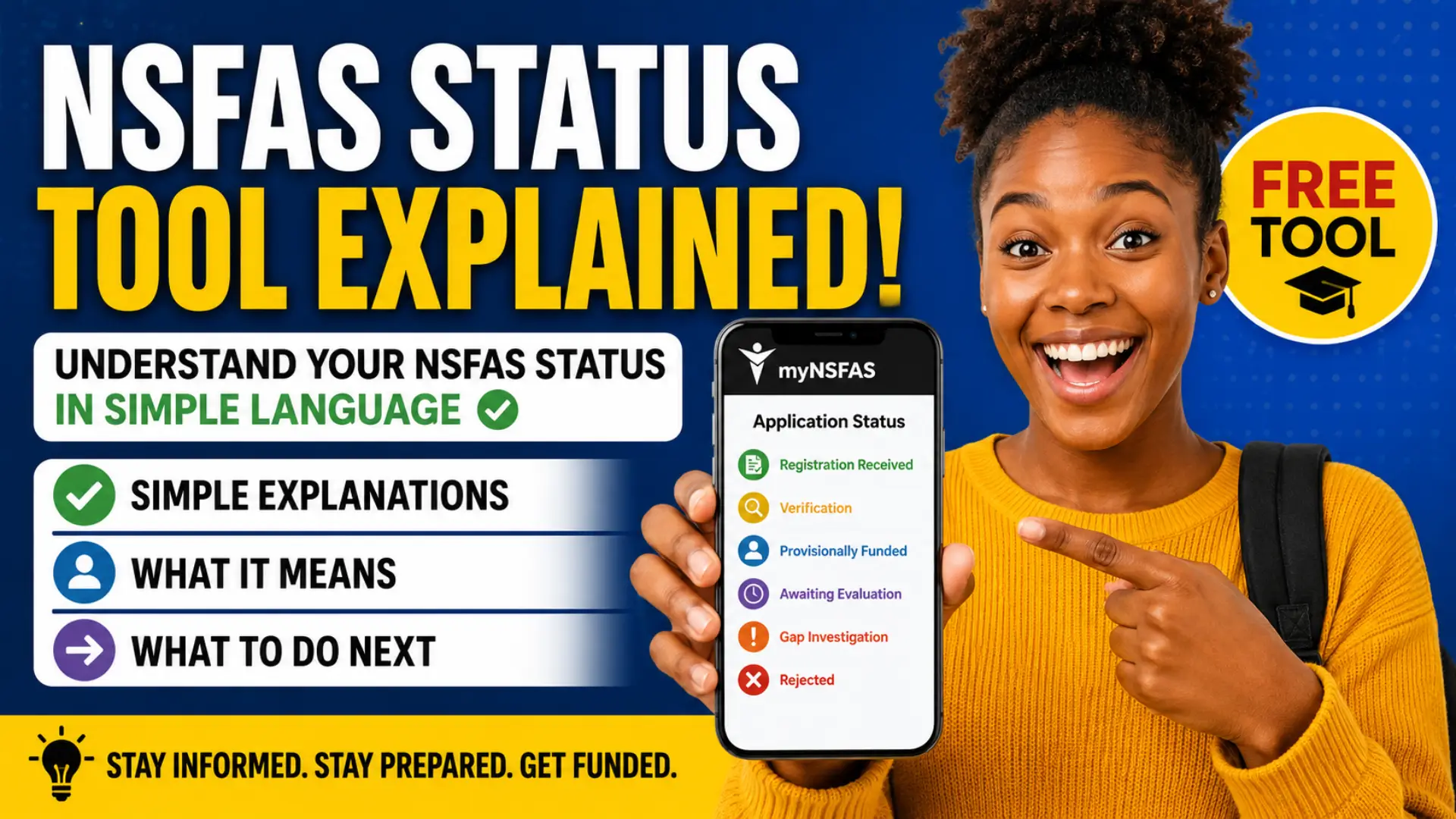
Thousands of South African students check their NSFAS application status every day, but many struggle to understand what different funding messages actually mean. Statuses such as Registration Received, Verification, Provisionally Funded, Awaiting Evaluation, Gap Investigation, and Rejected often leave applicants unsure about what is happening with their funding.
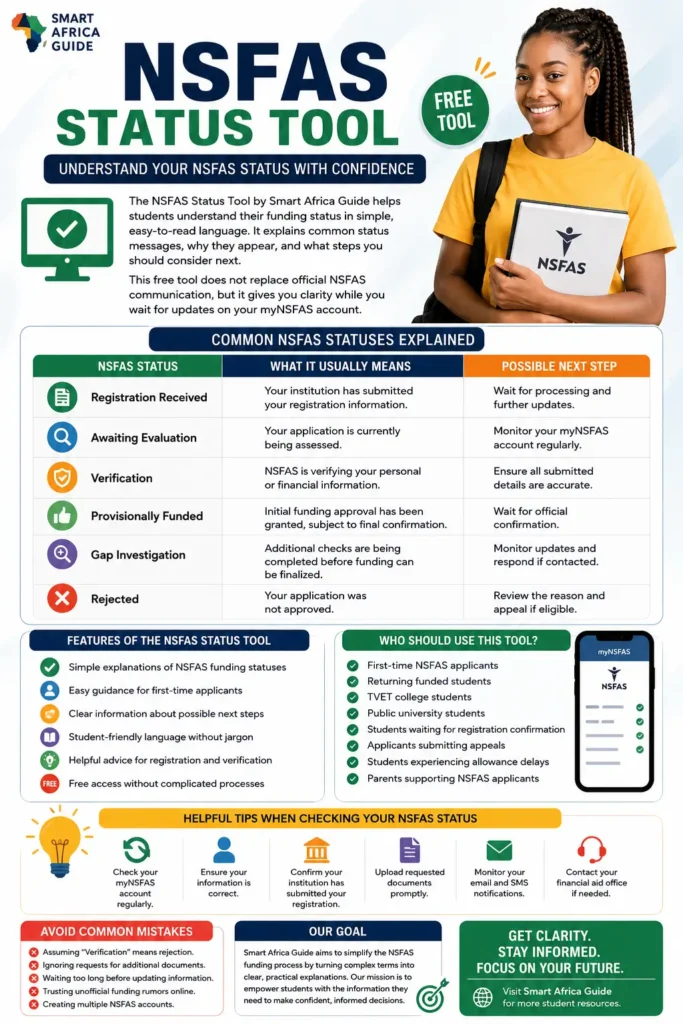
To help solve this problem, Smart Africa Guide has officially launched a free NSFAS Status Tool that explains common NSFAS status messages in simple, student-friendly language. Rather than replacing official NSFAS communication, the tool helps students understand what their current status may mean and what steps they should consider next while waiting for official updates.
What Is the Official NSFAS Status Tool?
The NSFAS Status Tool is a free online resource developed by Smart Africa Guide to make the NSFAS funding process easier to understand. Instead of leaving students to interpret technical status messages on their own, the tool provides clear explanations using simple language.
You can also read: Sassa Status Whatsapp Number
Many students search online after seeing unfamiliar status updates on their myNSFAS accounts. The new tool aims to reduce confusion by explaining what each status generally means, why it appears, and what students may need to do before expecting further progress in their funding application.
Why This Tool Matters for South African Students
For students attending public universities and TVET colleges, NSFAS funding plays a vital role in covering tuition fees, accommodation, learning materials, and allowances. Any delay or unexpected status update can create uncertainty about registration and academic planning.
By offering straightforward explanations, the tool helps students better understand where they are in the funding process. This allows them to prepare the correct documents, contact the appropriate office if necessary, and avoid unnecessary panic caused by misunderstood status messages.
Common NSFAS Statuses Explained
The tool explains many of the most common funding statuses that students regularly see during the NSFAS application and registration process.
| NSFAS Status | What It Usually Means | Possible Next Step |
|---|---|---|
| Registration Received | Your institution has submitted your registration information. | Wait for processing and further updates. |
| Awaiting Evaluation | Your application is being assessed. | Monitor your myNSFAS account regularly. |
| Verification | NSFAS is checking your personal or financial information. | Ensure all submitted details are accurate. |
| Provisionally Funded | Initial funding approval has been granted, subject to final confirmation. | Wait for official confirmation. |
| Gap Investigation | Additional checks are being completed before funding can be finalized. | Monitor updates and respond if contacted. |
| Rejected | Your application was not approved. | Review the reason and consider submitting an appeal if eligible. |
These explanations help students understand that many statuses are simply part of the normal funding process and do not automatically mean their application has failed.
Features of the NSFAS Status Tool
The platform is designed with students in mind and focuses on providing practical guidance instead of technical language.
Key features include:
- Simple explanations of NSFAS funding statuses
- Easy-to-understand guidance for first-time applicants
- Information about possible next steps
- Student-friendly language without confusing terminology
- Helpful advice for registration and verification stages
- Free access without complicated processes
The goal is to give students greater confidence while they wait for official NSFAS decisions.
You can also read: ISFAP Complete Application Process
How the Tool Helps Students Make Better Decisions
Instead of immediately worrying after seeing a status update, students can use the tool to understand what their application stage generally represents. Knowing whether an application is still under review or awaiting verification can reduce unnecessary stress.
The guidance also encourages students to check important items that commonly delay funding, including registration confirmation, supporting documents, banking information, and communication from their institution. This practical approach helps students stay informed while waiting for official updates.
What the Tool Does Not Replace
Although the NSFAS Status Tool provides useful explanations, it is important to understand its purpose. It is an educational resource designed to explain funding terminology—not an official NSFAS decision-making platform.
Students should continue relying on:
- Official NSFAS notifications
- Their myNSFAS account
- University financial aid offices
- TVET college financial aid departments
- Official communication regarding funding decisions
Final funding approval always comes directly from NSFAS and the student’s institution.
Helpful Tips When Checking Your NSFAS Status
Students should avoid making assumptions based on a single status update because many applications move through several stages before a final decision is made.
For the best experience:
- Check your myNSFAS account regularly.
- Ensure your personal information is correct.
- Confirm your institution has submitted your registration.
- Upload any requested supporting documents promptly.
- Monitor your email and SMS notifications.
- Contact your financial aid office if a status remains unchanged for an extended period.
Following these steps can help prevent avoidable delays during the funding process.
Common Mistakes Students Should Avoid
Many students become anxious after seeing unfamiliar statuses and often rely on unofficial information shared on social media. This can create unnecessary confusion and misinformation.
Avoid these common mistakes:
- Assuming “Verification” means rejection.
- Ignoring requests for additional documents.
- Waiting too long before updating incorrect information.
- Trusting unofficial funding rumors online.
- Creating multiple NSFAS accounts.
- Ignoring communication from your institution.
Staying informed through official channels remains the safest approach.
Smart Africa Guide’s Goal
According to Smart Africa Guide, many students search online simply because they cannot understand the wording used during the NSFAS funding process. The platform aims to bridge that information gap by translating technical funding language into practical explanations that students and parents can easily understand.
Beyond the Status Tool, Smart Africa Guide also publishes educational resources covering NSFAS applications, appeals, the N+ Rule, bursaries, scholarships, allowance delays, TVET funding, and other student support topics across Africa. Its content focuses on helping learners make informed decisions without overwhelming them with complex terminology.
You can also read: SASSA Status Check Approved
Who Should Use the NSFAS Status Tool?
The tool can be useful for a wide range of students, including:
- First-time NSFAS applicants
- Returning funded students
- TVET college students
- Public university students
- Students waiting for registration confirmation
- Applicants submitting appeals
- Students experiencing allowance delays
- Parents supporting NSFAS applicants
Anyone unsure about the meaning of a funding status can use the tool as a starting point before seeking official confirmation.
Final Thoughts
The launch of the Official NSFAS Status Tool gives South African students an easier way to understand the funding messages that appear throughout the NSFAS process. Instead of guessing what terms like Provisionally Funded, Verification, or Gap Investigation mean, students can access clear explanations that help them understand their current stage and prepare for possible next steps.
You can also read: Apple iOS 27 Release Date Announced
While the tool does not replace official NSFAS decisions, it serves as a valuable educational resource that simplifies complex funding terminology. Students should continue checking their myNSFAS accounts and communicating with their institution’s financial aid office for official updates, but the new Status Tool provides a helpful first step toward understanding their funding journey with greater confidence.
