How to Apply for NSFAS 2026 Check Step by Step Full Details
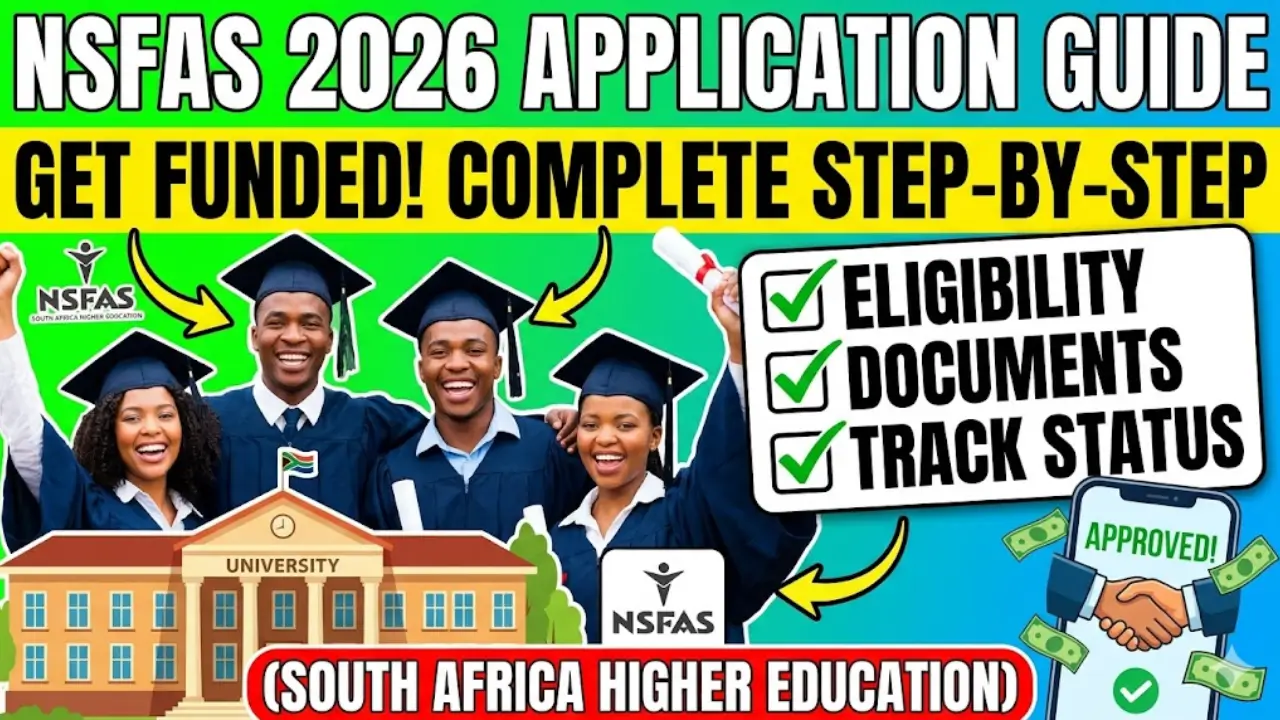
Higher education can be expensive, and many students struggle to afford tuition, accommodation, and other study expenses. To help students from low-income families, the South African government created the National Student Financial Aid Scheme (NSFAS). This program provides financial assistance so eligible students can study at public universities or TVET colleges without worrying about the cost.
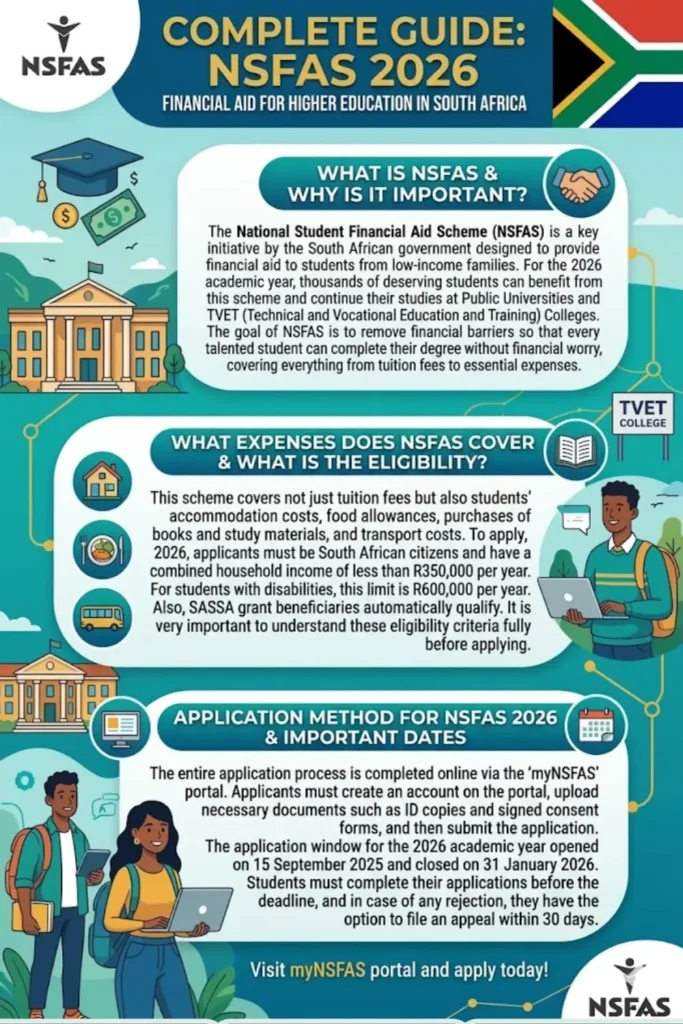
For the 2026 academic year, thousands of students applied for NSFAS funding. The application window opened on 15 September 2025 and closed on 31 January 2026. If you want to understand how the application process works, what documents are required, and what to do if your application is rejected, this guide explains everything in a clear step-by-step manner.
What is NSFAS and Why It Matters in 2026
The National Student Financial Aid Scheme (NSFAS) is a government program designed to support students who cannot afford higher education. It provides bursaries and financial assistance to eligible applicants studying at public universities and Technical Vocational Education and Training (TVET) colleges.
You can also read: ISFAP Bursary Programme Opens Applications
One of the biggest advantages of NSFAS funding is that it helps students complete their entire qualification. As long as the student meets academic requirements each year, the funding can continue throughout the duration of the course. This makes higher education more accessible to students from financially disadvantaged backgrounds.
Another reason NSFAS is important in 2026 is the increasing cost of education. Tuition fees, housing, and daily living expenses can make it difficult for many students to continue their studies. Through this funding program, the government aims to reduce financial barriers and give more students the opportunity to pursue higher education.
What Costs Does NSFAS Cover for Students
NSFAS funding is designed to cover the essential costs students face while studying. The financial support ensures that students can focus on their education without worrying about basic living expenses.
The scheme usually covers several types of expenses, including tuition and daily living allowances. These payments are made directly to institutions or provided to students through monthly allowances.
NSFAS typically covers the following costs:
- Tuition and registration fees
- University or TVET college accommodation
- Monthly food allowance
- Monthly transport allowance for commuting students
- Book and study materials allowance
- Personal care allowance for daily necessities
This financial support helps students manage their academic life more comfortably while completing their studies.
NSFAS 2026 Eligibility Criteria
Before applying for NSFAS funding, students must ensure they meet the basic eligibility requirements. Understanding these requirements is important because many applications are rejected simply because the applicant does not qualify.
To be eligible for NSFAS funding, applicants must meet several conditions related to citizenship, income level, and academic status.
Students who usually qualify for NSFAS include:
- South African citizens or permanent residents
- Students whose household income is R350,000 or less per year
- Students with disabilities whose household income is below R600,000 per year
- Students accepted or registered at a public university or TVET college
- Applicants studying an NSFAS-approved course or qualification
- Beneficiaries of SASSA social grants, who automatically qualify for funding
Meeting these requirements significantly increases the chances of approval.
Who Cannot Apply for NSFAS Funding
While NSFAS supports many students, some applicants are not eligible for this funding. It is important to understand these restrictions before applying.
NSFAS does not provide funding in certain situations, particularly when students already have financial support or are studying outside approved institutions.
Applicants who do not qualify include:
- Students already funded by another full bursary or employer
- Individuals who already have an undergraduate degree and want funding for a second degree
- Students studying at private colleges or universities
- Applicants enrolled in programs not accredited by SAQA or DHET
- Students applying for funding for a duplicate qualification
Knowing these rules can save time and prevent unnecessary application attempts.
You can also read: SASSA R370 Grant Dates for March 2026
Documents Required for NSFAS 2026 Application
Preparing documents before starting the application process is very important. Many applications remain incomplete because students fail to upload the correct documents.
Incomplete documentation is one of the main reasons applications are delayed or rejected. Therefore, students should collect all required documents before submitting their application.
Required Documents Overview
| Applicant Type | Required Documents |
|---|---|
| All applicants | Certified copy of ID or birth certificate, signed NSFAS Consent Form |
| SASSA beneficiaries | ID copy and Consent Form only |
| Dependent applicants | ID copies of parents/guardian and proof of income |
| Self-supporting applicants | Proof of income and IRP5 tax documents |
| Students with disabilities | Medical confirmation of disability |
| Vulnerable children | Letter from the Department of Social Development |
All documents should be certified and clearly scanned before uploading to the portal.
Step-by-Step Guide to Apply for NSFAS 2026
The NSFAS application process is completed entirely online through the myNSFAS portal. There are no paper forms, which means applicants must ensure they follow the digital process carefully.
Below is the complete step-by-step process for applying.
1. Visit the Official NSFAS Website
Start by visiting the official website and accessing the myNSFAS portal. Always ensure that you are on the official government website to avoid scams or fake portals.
2. Create Your myNSFAS Account
First-time applicants must register on the portal. During registration, you will provide your email address and cellphone number. These details will be used for communication and account verification.
Important information when creating your account:
- Use an email address you check regularly
- Create a strong password
- Choose security questions you can easily remember
3. Verify and Activate Your Account
After registration, you will receive a One-Time Pin (OTP) on your mobile phone or email. This code is used to verify your identity and activate your account.
If you do not receive the OTP immediately, check your spam folder or ensure that your phone number is correct.
4. Complete the Online Application Form
Once your account is activated, log in and start the application form. You will need to provide accurate information about:
- Personal details
- Household income
- Institution and study program
Double-checking the information is important because incorrect details can delay the application process.
5. Upload Supporting Documents
After completing the form, upload the required documents. Ensure that the files are clear and readable.
Helpful tips for uploading documents:
- Use PDF format whenever possible
- Ensure text is visible and not blurred
- Check that ID numbers and names are readable
6. Submit Your Application
Once all sections are complete, review the information and submit your application. After submission, you will receive confirmation through email or SMS.
Keep this confirmation message as proof of application.
Important NSFAS 2026 Application Dates
Applying within the correct timeframe is extremely important. Missing the deadline means you may have to wait until the next academic year.
Key dates for the NSFAS 2026 application cycle include:
- 15 September 2025: Applications opened
- 31 January 2026: Final application closing date
- 31 December 2025: Processing target before academic year begins
- Ongoing in 2026: Appeals period for rejected applications
Students studying at TVET colleges may also have additional application windows depending on their trimester schedule.
How to Track Your NSFAS Application Status
After submitting your application, you can monitor its progress online through the myNSFAS portal. This tracking system allows applicants to stay updated on their funding status.
To check your application status:
- Log in to your myNSFAS account
- Open the dashboard
- Click Track Funding Progress
Your application may show different statuses, including:
- Pending
- Approved
- Incomplete
- Rejected
- Under Appeal
If the status shows Incomplete, it means a document is missing and must be uploaded within 30 days.
What to Do If Your NSFAS Application Is Rejected
A rejected NSFAS application does not necessarily mean the end of the process. Students have the right to submit an appeal if they believe their application was unfairly rejected.
The appeals process allows applicants to provide additional documents or explain errors in the original application.
Steps to appeal an NSFAS decision include:
- Log in to your myNSFAS account
- Select the Appeal option
- Upload supporting documents
- Submit a motivation explaining your situation
Students must submit the appeal within 30 days of receiving the rejection notice.
Tips to Increase Chances of NSFAS Approval
Applying correctly and preparing your documents carefully can greatly improve the chances of approval.
Some helpful tips include:
- Apply early to avoid system overload near deadlines
- Ensure your email and phone number are correct
- Certify documents before uploading them
- Upload clear and readable files
- Check the portal regularly for status updates
These simple steps can prevent delays and reduce the risk of rejection.
You can also read: SRD Payment Dates for March 2026
Conclusion
The NSFAS program continues to play a vital role in helping South African students access higher education. By covering tuition fees, accommodation, and other study expenses, it removes financial barriers that often prevent students from completing their education.
For the 2026 academic year, understanding the eligibility criteria, preparing documents correctly, and following the application steps carefully are essential for success. Students who apply on time and provide accurate information significantly improve their chances of receiving funding.
If your application is unsuccessful, remember that the appeals process provides another opportunity. Staying informed and acting quickly can help ensure you do not miss the chance to receive financial support for your studies.

