NSFAS TVET Funding Application Dates & Check Complete Apply Mathod

The National Student Financial Aid Scheme has officially opened TVET Trimester 2 (T2) funding applications for 2026. Students studying at Technical and Vocational Education and Training (TVET) colleges can now apply for financial support before the closing deadline of 18 May 2026.
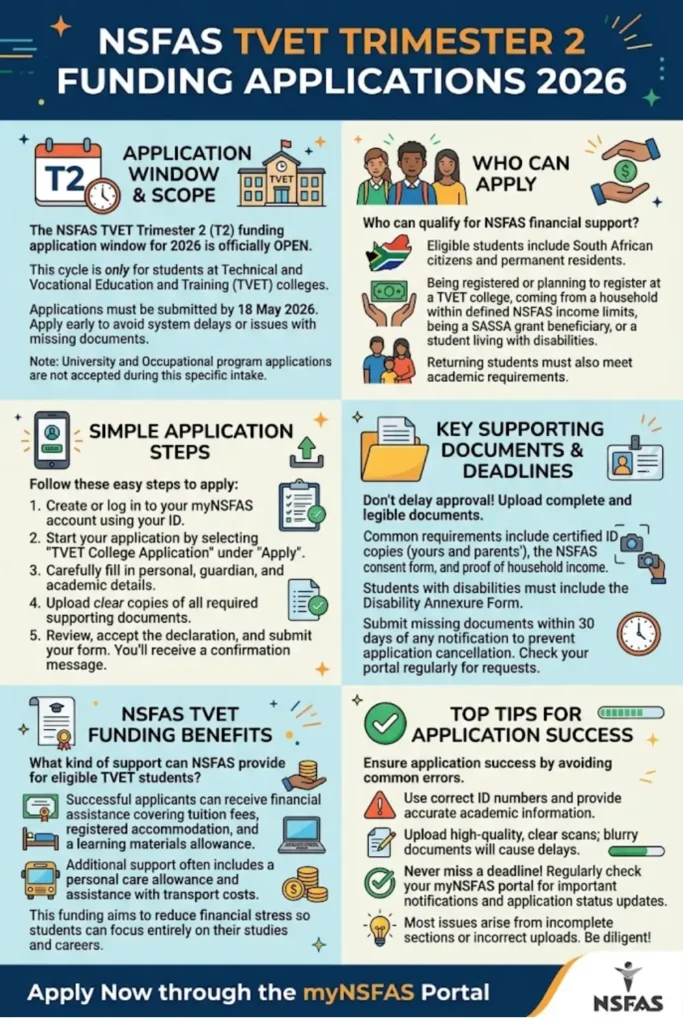
This application cycle is only for TVET college students. University applications are not accepted during this period, and occupational programme applications will only open during the next intake scheduled for July 2026 to June 2027. Students are advised to submit applications early to avoid system delays and missing document problems.
NSFAS TVET Funding Application Dates 2026
Here are the important NSFAS TVET T2 application dates every student should know:
| NSFAS Process | Date |
|---|---|
| TVET Trimester 2 Applications Open | May 2026 |
| Application Closing Date | 18 May 2026 |
| Missing Documents Submission Period | Within 30 Days |
| Funding Outcome Updates | Ongoing Through myNSFAS |
| Occupational Programme Applications | July 2026 Intake |
Students should regularly check their myNSFAS portal because application statuses and document requests can change at any time.
You can also read: SASSA Old-Age Grants Check Eligibility
Who Can Apply for NSFAS TVET Funding?
NSFAS funding is designed to help financially struggling students continue their education without major financial pressure. Eligible students can receive assistance for tuition, accommodation, transport, and allowances depending on their qualification and institution.
You may qualify if you are:
- Registered or planning to register at a TVET college
- A South African citizen or permanent resident
- From a household earning within NSFAS income limits
- A SASSA grant beneficiary
- A student living with disability
- Returning NSFAS-funded student meeting academic requirements
Students applying for occupational programmes during this cycle will not be processed because those applications open later in 2026.
Complete NSFAS TVET Apply Method 2026
Applying for NSFAS TVET funding is simple if you follow the correct process carefully. Most application problems happen because students upload wrong documents or leave sections incomplete.
Step 1: Visit the Official NSFAS Website
Go to the official NSFAS Website and access the myNSFAS portal.
Create a new account if you are a first-time applicant. Existing users can simply log in using their ID number and password.
Step 2: Create or Log Into myNSFAS Account
You will need:
- South African ID number
- Active cellphone number
- Working email address
- Secure password
After registration, verify your account through the OTP sent to your phone or email.
Step 3: Start Your TVET Funding Application
After logging in:
- Click “Apply”
- Select TVET College Application
- Fill in personal details
- Enter guardian or parent information
- Add academic details carefully
Always double-check spelling mistakes and ID numbers before continuing.
Step 4: Upload Required Supporting Documents
NSFAS may request different documents depending on your situation. Missing or unclear documents can delay approval.
Common required documents include:
- Certified ID copy
- Parent or guardian ID copy
- NSFAS consent form
- Proof of income
- Disability Annexure Form (if applicable)
- Orphan or Vulnerable Child Declaration Form
- Death certificates (if applicable)
- Retrenchment letter
- Divorce decree
- Marriage certificate
Make sure documents are clear, readable, and correctly scanned before uploading.
Step 5: Submit the Application
Once everything is completed:
- Review your application
- Accept NSFAS declaration
- Submit your form online
You should receive a confirmation message after successful submission.
How to Check NSFAS TVET Application Status
After applying, students should monitor their funding progress regularly through the myNSFAS portal. NSFAS sometimes requests additional documents after the initial submission.
To check your application status:
- Visit the myNSFAS portal
- Log into your account
- Click “Track Funding Progress”
- View your current application status
Possible statuses include:
- Application Submitted
- Documents Outstanding
- Verification in Progress
- Funding Approved
- Unsuccessful
- Appeal Available
If your status shows missing documents, upload them within 30 days or your application may be cancelled.
You can also read: Shocking Truth Behind Petrol Prices in South Africa
NSFAS Supporting Documents Important Notice
NSFAS has confirmed that many students experience delays because of incorrect or incomplete uploads. Students should carefully read document instructions before submission.
Important reminders:
- Merge medical reports with Disability Annexure forms
- Upload certified documents only
- Use clear PDF or image files
- Avoid blurry scans
- Check file size limits before uploading
Students younger than 18 years who are orphans or vulnerable children must complete the special declaration form during the process.
NSFAS Appeals Process for Rejected Applications
Students whose applications are rejected can still appeal if they believe the decision was incorrect. Appeals usually open shortly after application outcomes are released.
Common appeal reasons include:
- Missing supporting documents
- Incorrect household income assessment
- Updated financial circumstances
- Academic information errors
Appeals must normally be submitted within 30 days after receiving the application result notification.
NSFAS Accommodation Process for TVET Students
NSFAS beneficiaries can also apply for approved student accommodation near their institutions. Accommodation applications are processed through the myNSFAS portal.
The accommodation process includes:
- Searching approved accommodation
- Selecting preferred housing
- Completing reservation application
- Receiving SMS or email confirmation
Students should avoid paying unofficial accommodation fees because NSFAS has warned against fraudulent accommodation providers.
NSFAS Cybersecurity Warning for Students
NSFAS recently issued an important cybersecurity notice after identifying potential security weaknesses within parts of its ICT systems. Although no ongoing compromise was detected, students are advised to remain careful online.
Safety tips for applicants:
- Never share login passwords
- Avoid fake NSFAS links
- Verify all payment requests
- Use official NSFAS communication channels only
- Report suspicious messages immediately
Students should also avoid scams involving fake debt collectors or fraudulent funding offers pretending to represent NSFAS.
Common NSFAS Application Mistakes to Avoid
Many applications fail because students make avoidable mistakes during submission. Taking a few extra minutes to review information can prevent delays.
Avoid these common problems:
- Using incorrect ID numbers
- Uploading blurry documents
- Missing application deadlines
- Forgetting consent forms
- Using inactive phone numbers
- Ignoring portal notifications
Students should regularly monitor their myNSFAS accounts even after submission.
Benefits of NSFAS TVET Funding
NSFAS funding helps thousands of students continue their education every year without heavy financial stress. Approved students may receive multiple forms of support depending on eligibility.
Funding benefits may include:
- Tuition fees
- Accommodation support
- Transport allowance
- Learning materials allowance
- Personal care allowance
This support allows students to focus more on studies and career development.
Final Thoughts
The 2026 NSFAS TVET Trimester 2 application cycle gives eligible students another opportunity to secure educational funding before the deadline closes on 18 May 2026. Applicants should complete the process early, upload correct documents, and regularly monitor their myNSFAS portal for updates.
You can also read: Nsfas T2 Application Through myNSFAS Portal
Students who follow the correct application method carefully usually avoid delays, rejection issues, and document problems. Always use official NSFAS channels for applications, status checks, and accommodation registration to stay safe from scams and fraudulent communication.
