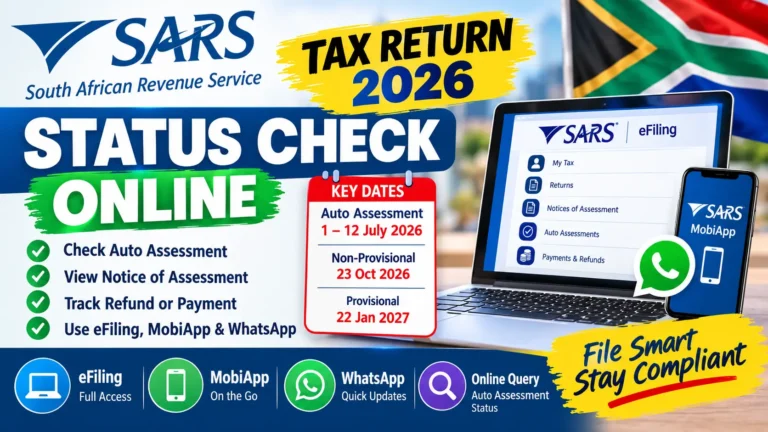
Sars 2026 Tax Season Dates Check Confirm Deadlines
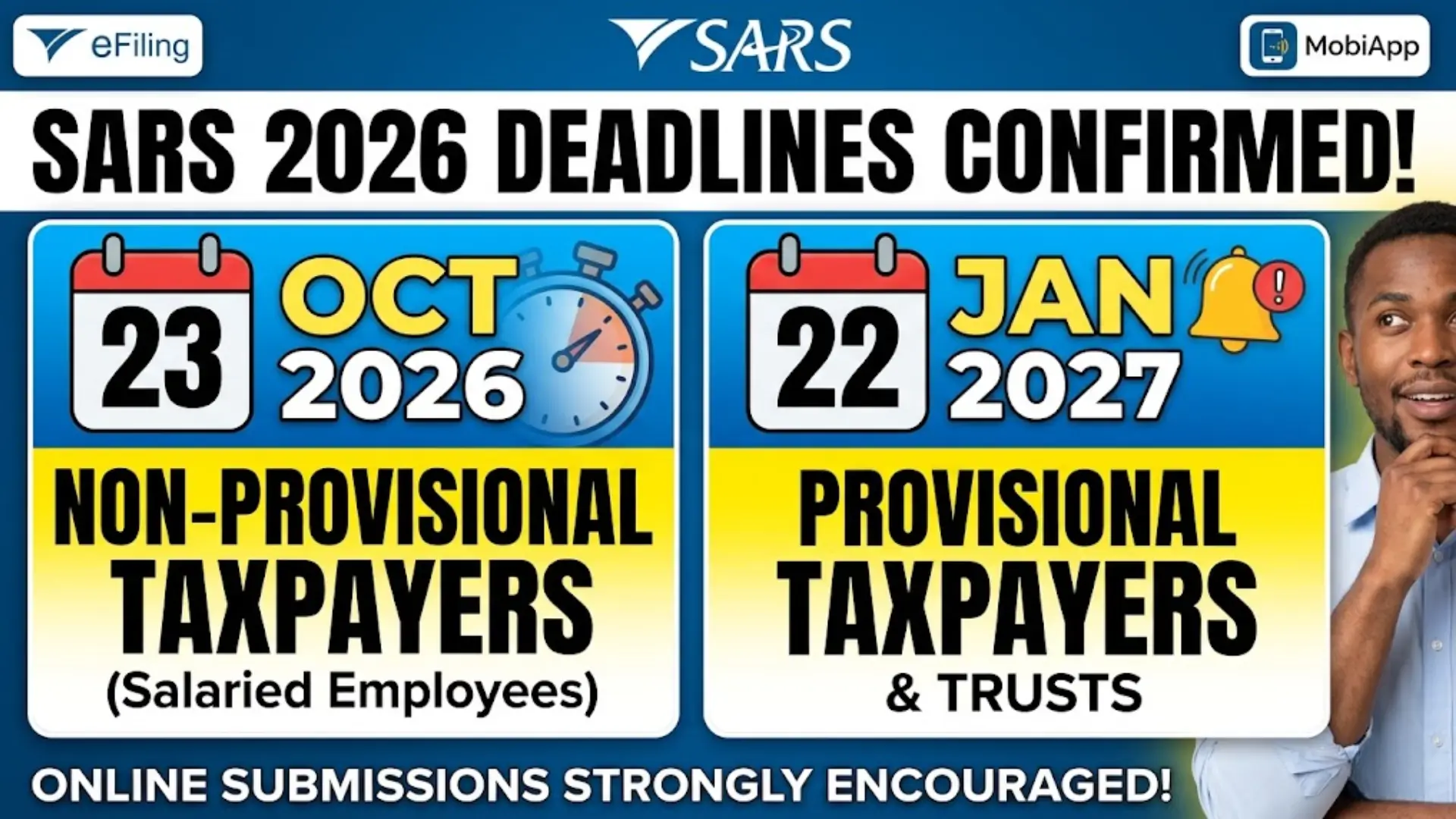
The South African Revenue Service (SARS) has officially confirmed the filing deadlines for the 2026 tax season. Taxpayers are being encouraged to prepare early as SARS strengthens its digital tax system and increases compliance monitoring across South Africa.
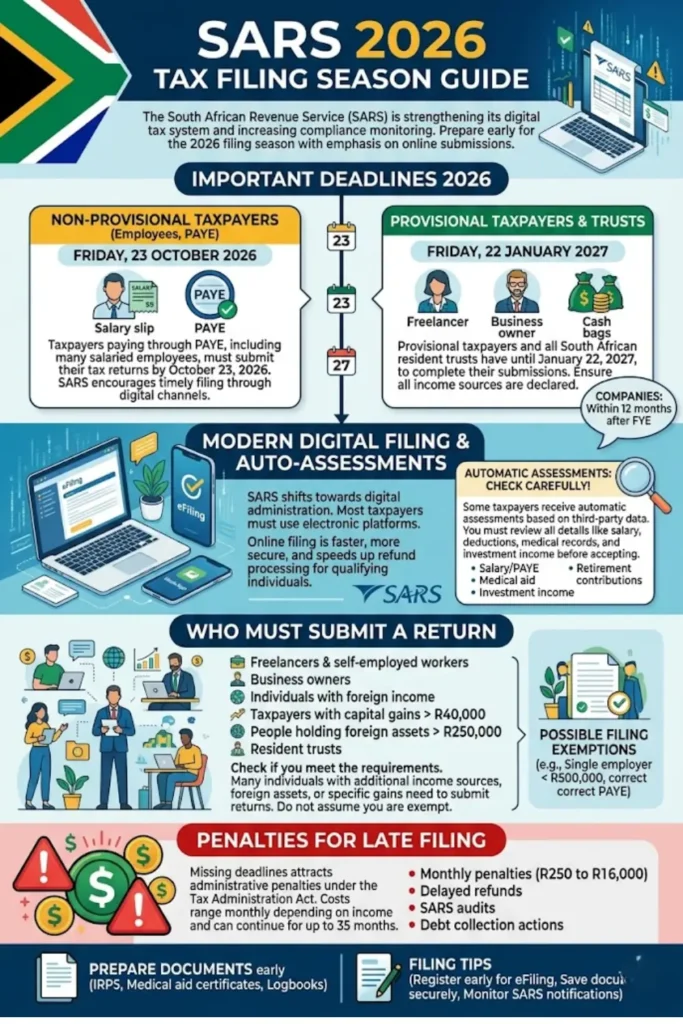
The 2026 filing season will rely heavily on online submissions through SARS eFiling and the SARS MobiApp. SARS is also expanding automatic assessments, meaning some taxpayers may not need to manually submit returns if their tax information is already verified and complete.
SARS 2026 Tax Filing Deadlines
SARS confirmed that non-provisional taxpayers must submit their tax returns by Friday, 23 October 2026. This deadline mainly applies to salaried employees and individuals whose tax is deducted through PAYE systems.
You can also read: Funding and Allowance Details 2026
Provisional taxpayers and trusts have until Friday, 22 January 2027 to file returns. Companies, public benefit organisations, and recreational clubs must submit returns within 12 months after the end of their financial year.
Important SARS Deadlines
| Taxpayer Type | Filing Deadline |
|---|---|
| Non-provisional taxpayers | 23 October 2026 |
| Provisional taxpayers | 22 January 2027 |
| Trusts | 22 January 2027 |
| Companies | Within 12 months after financial year-end |
SARS Expands Digital Filing
SARS is continuing its move toward fully digital tax administration during the 2026 tax season. Most taxpayers will now be expected to use electronic platforms instead of physical or postal submissions.
Digital filing makes the process faster, easier, and more secure for taxpayers. SARS says the system also helps improve compliance and speeds up refund processing for qualifying taxpayers.
Digital Platforms Available
- SARS eFiling
- SARS MobiApp
- SARS eBooking appointments
- Official SARS digital support channels
Automatic Assessments Explained
SARS is expanding automatic assessments using information received from employers, banks, retirement funds, and financial institutions. Some taxpayers may receive assessments automatically without needing to manually complete a return.
Even if SARS sends an automatic assessment, taxpayers must still review all information carefully. Incorrect income details or missing deductions can still cause problems later.
Check These Details Carefully
- Salary and PAYE information
- Medical aid records
- Retirement contributions
- Investment income
- Foreign income disclosures
- Tax deductions and rebates
Who Must Submit a Tax Return
Many South Africans will still be required to submit tax returns during the 2026 filing season. Taxpayers should not assume they are exempt without checking their filing status directly with SARS.
Individuals earning freelance income, rental income, business income, or foreign income generally fall within filing requirements. Taxpayers with capital gains or foreign assets may also need to file.
Taxpayers Who Must File
- Freelancers and self-employed workers
- Provisional taxpayers
- Business owners
- Individuals with foreign income
- Taxpayers with capital gains above R40,000
- People holding foreign assets above R250,000
- All South African resident trusts
Who May Not Need to File
Some salaried employees may not need to file a return if they earn less than R500,000 annually from a single employer and PAYE has already been deducted correctly.
Additional exemptions may apply where income only comes from tax-free investments, exempt dividends, or interest below SARS exemption thresholds.
Possible Filing Exemptions
- Income below R500,000
- One employer only
- Correct PAYE deductions
- Tax-free investment income
- Exempt dividends
- Certain retirement lump-sum payments
You can also read: MyNsfas Portal 2026 Status Check Online
Penalties for Late Filing
SARS warned that taxpayers who miss official deadlines may face administrative penalties under the Tax Administration Act. Penalties range from R250 to R16,000 per month depending on taxable income.
These penalties may continue for up to 35 months if taxpayers remain non-compliant. Late filing can also trigger audits, refund delays, and additional interest charges.
Risks of Late Submission
- Monthly penalties
- Delayed refunds
- SARS audits
- Debt collection actions
- Interest on outstanding tax
- Compliance notices
Important Documents to Prepare
Tax experts recommend preparing documents early before filing season officially opens. Proper preparation helps reduce mistakes and speeds up the submission process.
Freelancers, business owners, and provisional taxpayers should make sure bookkeeping records and supporting documents are complete and updated.
Documents You May Need
- IRP5 certificates
- Medical aid tax certificates
- Retirement annuity records
- Travel logbooks
- Investment statements
- Foreign income records
- Capital gains information
- Proof of deductions
Common Filing Mistakes to Avoid
Many taxpayers experience delays because of simple filing errors during tax season. SARS systems are now more advanced and can quickly identify mismatched or missing information.
Incorrect banking details, undeclared income, and unsupported deductions remain some of the biggest problems during filing season.
Common SARS Filing Mistakes
- Forgetting extra income sources
- Using outdated banking details
- Claiming invalid deductions
- Ignoring SARS notifications
- Accepting incorrect auto-assessments
- Filing close to the deadline
Tips for Easier SARS Filing
Taxpayers can make the filing process easier by staying organised throughout the year and using SARS digital systems correctly. Early preparation reduces stress and helps avoid last-minute problems.
Keeping proper records and checking all information carefully before submission can also reduce the risk of audits and delays.
Helpful Tax Filing Tips
- Register for eFiling early
- Save tax documents safely
- Review auto-assessments properly
- Respond quickly to SARS requests
- Keep proof of deductions
- Monitor SARS notifications regularly
You can also read: NSFAS Under Administration in 2026 Who Can Apply
Final Thoughts
The confirmed SARS 2026 tax season deadlines give taxpayers enough time to prepare properly before filing opens. Non-provisional taxpayers must file by 23 October 2026, while provisional taxpayers and trusts have until 22 January 2027.
With SARS expanding digital filing systems and automatic assessments, taxpayers should review all tax information carefully and avoid waiting until deadlines approach. Preparing early can help avoid penalties, delays, and unnecessary compliance issues during the 2026 tax season.