How will You Benefit from NSFAS Funding Relief if you Want to Enter University from a TVET College
Moving from a TVET college to a university is a big step in your academic journey. Many students worry about how their funding will be affected during this transition. NSFAS funding relief can support you, but only if you understand the rules and follow the correct process.
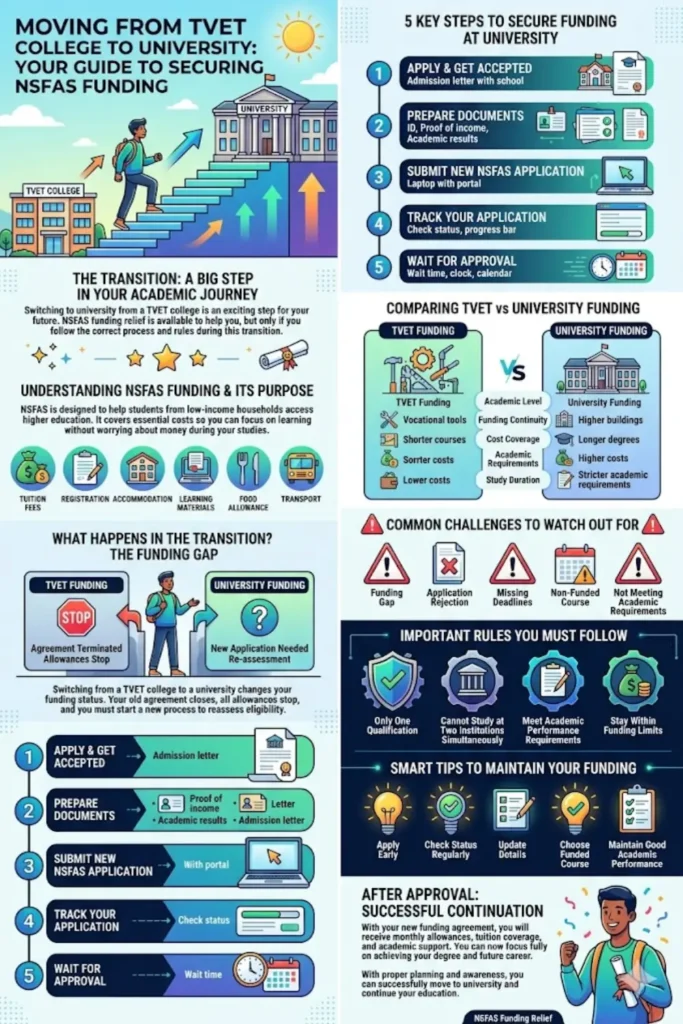
This guide explains everything in a simple and practical way so you can move forward with confidence and avoid losing your financial support.
Understanding NSFAS Funding and Its Purpose
NSFAS is designed to help students from low-income households access higher education without financial stress. It covers essential study costs so students can focus on learning instead of worrying about money.
When you are funded, NSFAS usually includes:
- Tuition fees
- Registration costs
- Accommodation expenses
- Learning materials
- Food allowance
- Transport (in some cases)
This support applies to both TVET colleges and universities, but the rules are not the same for each institution. The main purpose of NSFAS funding relief is to ensure that deserving students continue their education journey, even when they move to a higher level like university.
You can also read: 15 Universities Open for 2027 Applications
What Happens When You Move from TVET to University
Switching from a TVET college to a university is not just a simple transfer. It changes your funding status completely.
When you make this move, your previous NSFAS funding does not continue automatically. Instead, your old agreement is closed, and you must start a new process.
Here’s what usually happens:
- Your TVET funding agreement is terminated
- All allowances stop during the transition
- You need to submit a new NSFAS application
- Your eligibility is reassessed from the beginning
This process ensures that funding is fair and based on your new academic path.
Why NSFAS Requires a New Application
Many students think their funding will simply continue, but that is not how the system works. NSFAS treats university studies as a new funding category.
There are several reasons for this:
- Different funding structures between TVET colleges and universities
- Higher academic requirements at university level
- Increased study costs and longer course duration
- Need for updated financial verification
Because of these differences, NSFAS must evaluate your situation again before approving new funding.
Key Benefits of NSFAS Funding Relief During Transition
Even though the process may seem strict, there are real benefits when you qualify again for NSFAS at university.
One major advantage is continued financial support at a higher level of education. This allows you to pursue better career opportunities without financial barriers.
You can benefit in the following ways:
- Full or partial coverage of university tuition
- Monthly allowances to support daily living
- Access to better academic resources
- Reduced financial pressure on your family
In the long term, this support helps you complete your degree and improve your employment prospects.
Step-by-Step Guide to Secure NSFAS Funding at University
To avoid delays or rejection, it is important to follow the correct steps when transitioning.
Step 1: Apply and Get Accepted
Before anything else, secure admission to a university program.
Step 2: Prepare Your Documents
Make sure you have all required documents ready, such as:
- ID or passport
- Proof of income
- Academic results
- Admission letter
Step 3: Submit a New NSFAS Application
Apply through the official NSFAS portal within the deadline period.
Step 4: Track Your Application
Regularly check your application status and respond to any requests.
Step 5: Wait for Approval
NSFAS will assess your financial and academic eligibility before making a decision.
You can also read: Universities Open for 2027 Applications in South Africa
Comparison Between TVET and University NSFAS Funding
Understanding the difference helps you prepare better for the transition.
| Feature | TVET College Funding | University Funding |
|---|---|---|
| Academic Level | Vocational/Practical | Academic/Professional |
| Funding Continuity | Limited to TVET | Requires new application |
| Cost Coverage | Lower overall costs | Higher overall costs |
| Academic Requirements | Moderate | More strict |
| Study Duration | Shorter courses | Longer degree programs |
This comparison shows why NSFAS treats the transition as a completely new funding case.
Challenges You May Face During the Transition
While NSFAS funding relief is helpful, there are some challenges you should be aware of.
One common issue is the temporary gap in funding. Since your old funding stops and the new one takes time to process, you may face financial pressure.
Other challenges include:
- Risk of application rejection
- Missing deadlines
- Not meeting academic requirements
- Choosing a non-funded course
Planning ahead can help you overcome these challenges effectively.
Important Rules You Must Follow
To stay eligible for NSFAS funding, you must follow certain rules strictly.
- Only one qualification is funded at a time
- You cannot study at two institutions simultaneously with NSFAS
- You must meet academic performance requirements
- You must stay within funding limits
Breaking these rules can result in losing your funding completely.
Smart Tips to Maintain Your NSFAS Funding
If you want to benefit fully from NSFAS funding relief, you need to be proactive and careful.
Here are some practical tips:
- Apply early to avoid missing deadlines
- Keep checking your application status
- Update your personal and academic details regularly
- Choose a course that is funded by NSFAS
- Maintain good academic performance
These small steps can make a big difference in securing and keeping your funding.
What Happens After Approval
Once your application is approved, your funding starts under the new university system.
You will receive:
- A new funding agreement
- Monthly allowances
- Tuition fee coverage
- Academic support benefits
At this stage, your financial stress reduces, and you can fully focus on your studies.
You can also read: 2027 University Applications South Africa Check
Final Thoughts
Transitioning from a TVET college to a university is a great opportunity for academic and career growth. NSFAS funding relief can support this journey, but only if you understand the process and follow the rules carefully.
Always remember that funding does not transfer automatically. You must reapply, meet all requirements, and stay informed throughout the process. With proper planning and awareness, you can successfully move to university and continue your education without financial obstacles.
