How Much is Nsfas Allowance for 2026 Per Month Details Check Online

The National Student Financial Aid Scheme (NSFAS) continues to play a major role in helping students access higher education in South Africa. In 2026, thousands of students rely on this funding to cover essential academic and living expenses. However, many students still have questions about how much they actually receive per month and how payments are structured.
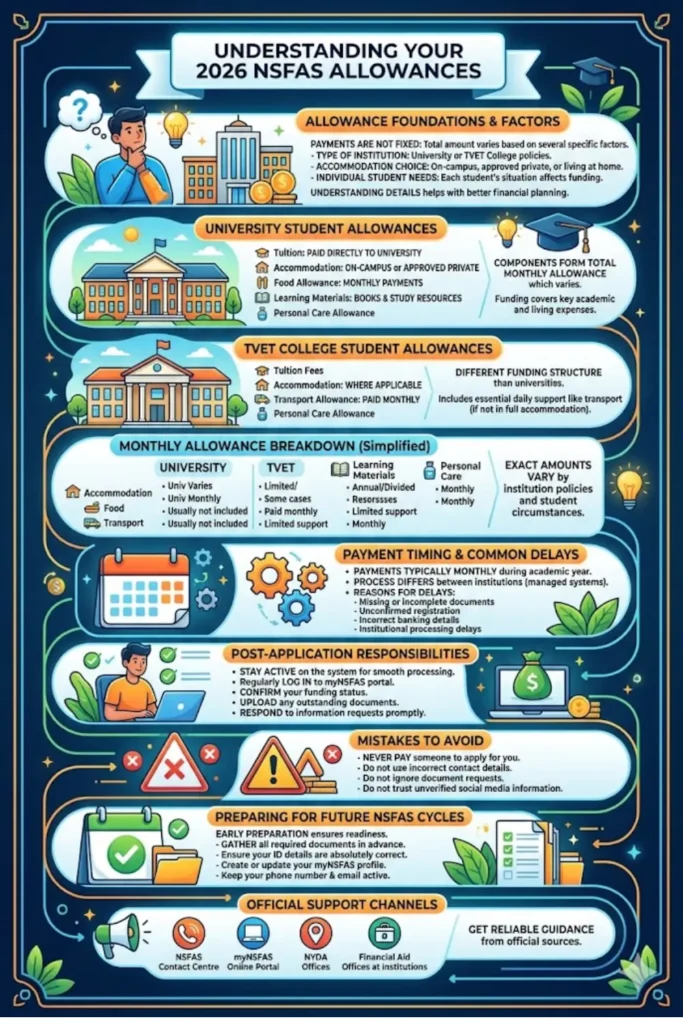
Unlike a fixed salary or stipend, NSFAS allowances are not the same for every student. The amount depends on several factors, including the type of institution, accommodation choice, and individual student needs. Understanding these details can help students plan their finances better and avoid confusion during the academic year.
How Much NSFAS Allowance Students Receive in 2026
NSFAS does not provide a single fixed monthly payment. Instead, it covers different categories of expenses, which together make up a student’s total allowance. These payments are often divided into monthly portions.
For university students, NSFAS funding generally includes several components that support both academic and personal needs. The actual monthly amount depends on how these components are structured by the institution.
Key allowance components for university students:
- Tuition fees (paid directly to the university)
- Accommodation (on-campus or approved private housing)
- Food allowance (monthly payments)
- Learning materials (books and study resources)
- Personal care allowance
These combined benefits can result in a monthly allowance that varies widely, depending on living arrangements and institutional policies.
You can also read: NSFAS Login Portal Status Check Online
NSFAS Allowances for TVET College Students
Students enrolled in TVET colleges receive a slightly different funding structure. While they still benefit from tuition coverage, their monthly allowances are adjusted based on their specific needs.
TVET students often receive support for transport instead of full accommodation, especially if they live at home. This makes their monthly allowance different from that of university students.
TVET student funding typically includes:
- Tuition fees
- Accommodation (where applicable)
- Transport allowance
- Personal care allowance
Although the amounts may be smaller compared to university funding packages, they are still essential for covering daily student expenses.
Estimated Monthly NSFAS Allowance Breakdown (2026)
| Allowance Type | University Students (Monthly Estimate) | TVET Students (Monthly Estimate) |
|---|---|---|
| Accommodation | Varies by institution | Limited / if applicable |
| Food Allowance | Paid monthly | Included in some cases |
| Transport Allowance | Usually not included | Paid monthly |
| Learning Materials | Annual / divided payments | Limited support |
| Personal Care Allowance | Monthly payment | Monthly payment |
Note: Exact amounts vary depending on institution policies and student circumstances.
When NSFAS Pays Students
NSFAS payments are typically made on a monthly basis during the academic year. However, the payment process is not the same across all institutions. Some universities and colleges manage their own payment systems, which can affect when and how students receive their money.
In some cases, funds are deposited directly into student bank accounts. In others, institutions may use special payment platforms to distribute allowances. Because of these differences, payment dates can vary from one institution to another.
Common reasons for payment delays:
- Missing or incomplete documents
- Unconfirmed registration
- Incorrect banking details
- Delays in institutional processing
Students are advised to resolve these issues early to avoid disruptions in their payments.
You can also read: EFF Malema Defamation Claim Julius Malema
What Students Should Do After Applications Close
Even though NSFAS applications for 2026 are closed, students still have important responsibilities. Staying active on the system ensures that funding is processed without unnecessary delays.
Regularly checking your NSFAS account is one of the most important steps. This helps students stay updated on their application status and respond quickly to any requests.
Important actions to take:
- Log in to the myNSFAS portal frequently
- Confirm your funding status
- Upload any outstanding documents
- Respond to requests for additional information
NSFAS may require documents such as consent forms, proof of guardianship, or other supporting paperwork. Submitting these on time is essential.
Common NSFAS Mistakes to Avoid
Many students experience delays or lose funding due to avoidable mistakes. Being aware of these issues can help ensure a smooth funding process.
Mistakes often happen when students rely on incorrect information or fail to follow official procedures. NSFAS strongly advises students to handle their applications independently and carefully.
Mistakes to avoid:
- Paying someone to apply on your behalf
- Using incorrect contact details
- Ignoring document requests
- Trusting unverified social media information
Avoiding these errors can significantly improve your chances of receiving funding on time.
How to Prepare for the Next NSFAS Application Cycle
Preparation is key for future applicants. Starting early can help students avoid last-minute stress and ensure that all requirements are met.
Students should focus on organizing their documents and keeping their personal information updated. This makes the application process faster and more efficient when the next cycle opens.
Preparation tips:
- Gather all required documents in advance
- Ensure your ID details are correct
- Create or update your myNSFAS profile
- Keep your phone number and email active
Early preparation can make a big difference, especially for students in rural areas where access to services may be limited.
Where to Get Help with NSFAS
Students who need assistance can access several support channels. These services are designed to help with application issues, document submission, and general queries.
Getting help from official sources is always recommended to avoid misinformation and delays.
Available support options:
- NSFAS contact centre
- myNSFAS online portal
- NYDA offices
- University and TVET financial aid offices
These resources provide reliable guidance and can help resolve issues quickly.
Why NSFAS Funding Matters
NSFAS funding is more than just financial support it is an opportunity for students to access education and build a better future. For many students, especially those in rural areas, this funding is the only way to pursue higher education.
You can also read: May 2026 Fuel Price Forecast
With over 700,000 students supported, NSFAS remains one of the most important education support systems in South Africa. Understanding how the allowances work helps students make better financial decisions and stay focused on their studies.