SASSA Child Support Grant (CSG) Check Eligibility & Requirements
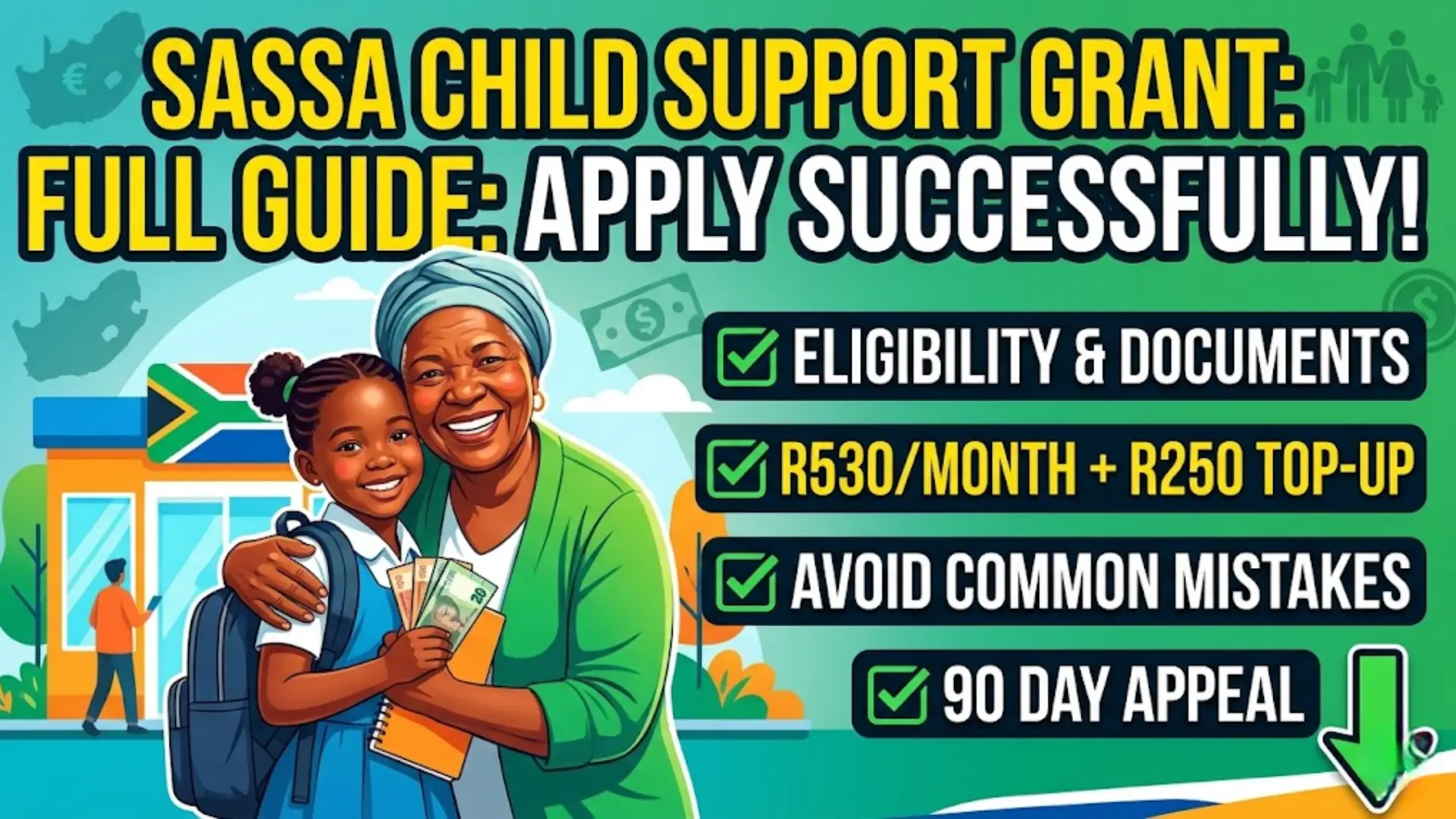
The SASSA Child Support Grant (CSG) is a financial assistance program designed to help low-income families cover the basic needs of children. It plays a crucial role in supporting caregivers who may not always have stable income but are responsible for raising a child. Whether you are a parent, grandparent, or another primary caregiver, this grant aims to reduce financial pressure and improve a child’s well-being.
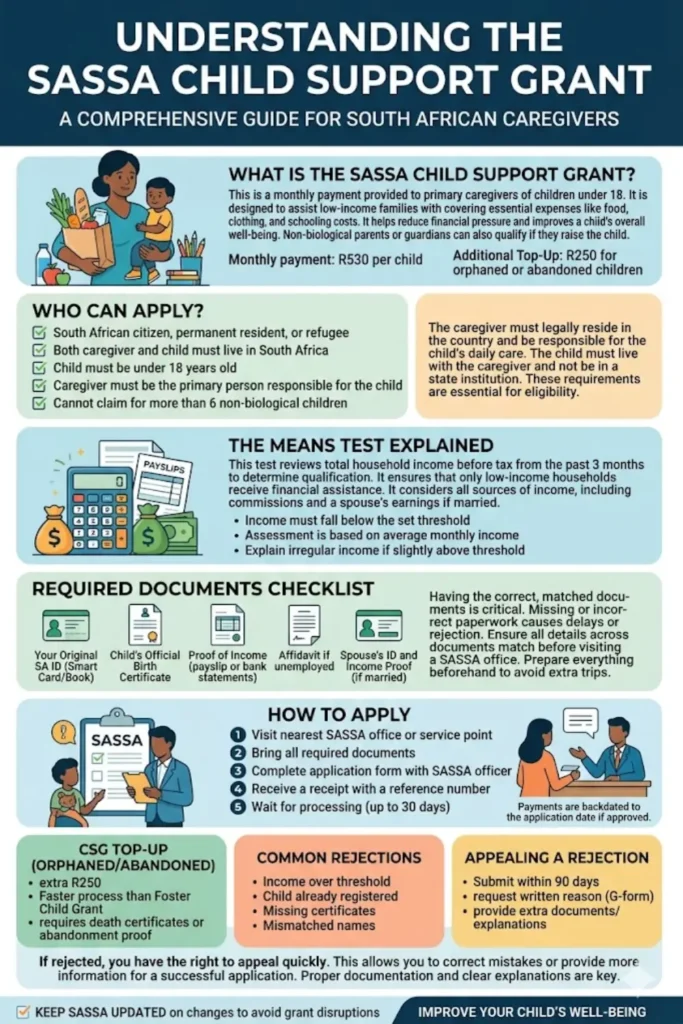
This guide explains everything you need to know about eligibility, requirements, application steps, and common mistakes. The information is structured in a simple and practical way so you can easily understand how the system works and how to apply successfully.
What is the SASSA Child Support Grant?
The Child Support Grant is a monthly payment provided to caregivers of children under the age of 18. It is intended to assist with essential expenses such as food, clothing, and school-related costs.
You do not have to be the child’s biological parent to qualify. The program recognizes that children are often raised by extended family members or guardians, especially in low-income households.
- Monthly payment: R530 per child
- Additional Top-Up: R250 for orphaned or abandoned children
- Paid directly to the primary caregiver
This grant focuses on providing consistent support rather than a one-time payment, making it easier for families to plan their monthly expenses.
You can also read: Jetour F700 Beijing Motor Show
Who Can Apply for the Grant
To qualify for the CSG, both the caregiver and the child must meet certain conditions. These rules ensure that the grant reaches those who genuinely need assistance.
The caregiver must be legally residing in South Africa and must be responsible for the child’s daily care. The child must also live with the caregiver and not be placed in a state institution.
Basic Eligibility Criteria
- Must be a South African citizen, permanent resident, or refugee
- Both caregiver and child must live in South Africa
- Child must be under 18 years old
- Caregiver must be the primary person responsible for the child
- Cannot claim for more than 6 non-biological children
These requirements are essential, and failing to meet even one can lead to rejection of the application.
Understanding the Means Test
The Means Test is used to determine whether your income qualifies for the grant. It ensures that only low-income households receive financial support.
SASSA reviews your total income before tax, usually based on payslips or bank statements from the past three months. Even irregular income, such as commissions or once-off payments, can affect your eligibility.
Key Points About the Means Test
- Income must fall below the set threshold
- Assessment is based on average monthly income
- Includes all sources of income, not just salary
- Spouse income is considered if married
If your income is slightly above the threshold due to temporary earnings, it is important to explain this clearly during the application process.
Required Documents for Application
When applying for the Child Support Grant, having the correct documents is critical. Missing or incorrect paperwork is one of the most common reasons for delays or rejection.
You should prepare all documents before visiting a SASSA office to avoid unnecessary trips.
Document Checklist
- Your original South African ID or Smart ID Card
- Child’s official birth certificate
- Proof of income (payslip or bank statements)
- Affidavit if unemployed
- Spouse’s ID and income proof (if married)
Ensure all names and details match across documents. If there are differences, include a sworn affidavit explaining the issue.
You can also read: SASSA Office Hours Check Contact
How to Apply for the CSG
Unlike some other grants, the Child Support Grant requires an in-person application. This is because SASSA must verify both the caregiver and the child’s situation.
At the SASSA office, an officer will guide you through the application process and ensure that all forms are completed correctly.
Application Steps
- Visit your nearest SASSA office or service point
- Bring all required documents
- Complete the application form with a SASSA officer
- Receive a receipt with a reference number
- Wait for processing (up to 30 days)
If approved, payments are backdated to the application date, meaning you will receive money from the day you applied.
CSG Top-Up for Orphaned or Abandoned Children
The CSG Top-Up is an additional benefit for caregivers looking after children who have lost both parents or have been abandoned. This support is designed to address the extra financial burden in such situations.
Unlike the Foster Child Grant, this option does not require a court order, making it faster and more accessible.
Top-Up Requirements
- Proof that both parents are deceased, or
- Evidence that the child has been abandoned
- Supporting documents such as:
- Death certificates
- Social worker affidavit
This adds R250 per month to the standard grant, increasing the total support.
Choosing the Right Child Grant
Many caregivers apply for the wrong grant, which leads to wasted time and delays. Understanding the differences can help you make the right choice from the start.
| Scenario | Recommended Grant | Reason |
|---|---|---|
| Parent or family caregiver | Child Support Grant | No court order required |
| Orphaned child in your care | CSG + Top-Up | Faster process, extra support |
| Court-placed child | Foster Child Grant | Higher payment, legal placement |
| Child with severe disability | Care Dependency Grant | Requires medical assessment |
Choosing the correct grant ensures a smoother application process and quicker approval.
Common Reasons for Rejection
Applications can be rejected for several reasons, many of which can be avoided with proper preparation. Understanding these issues can help you avoid delays.
The most frequent problems are related to income, documentation, and living arrangements.
Top Causes of Rejection
- Income exceeds the Means Test threshold
- Child already registered under another caregiver
- Missing official birth certificate
- Mismatched surnames without explanation
- Caregiver not living with the child
Carefully reviewing your application before submission can significantly reduce the chances of rejection.
How to Appeal a Rejected Application
If your application is rejected, you still have the right to appeal. Acting quickly is important, as there is a limited time frame to challenge the decision.
The appeal process allows you to provide additional information or correct mistakes made during the initial application.
Appeal Process
- Submit an appeal within 90 days
- Request the written rejection reason (G-form)
- Provide supporting documents or explanations
- Escalate to the Independent Tribunal if needed
Proper documentation and clear explanations can improve your chances of a successful appeal.
When the Grant May Stop or Change
The Child Support Grant is not permanent and can stop under certain conditions. It is important to stay informed and report any changes to avoid disruptions.
Changes in the child’s age, living situation, or household income can all affect the grant.
Situations That Affect the Grant
- Child turns 18 years old
- Caregiver changes
- Increase in household income
- Child moves to a state institution
- Caregiver leaves South Africa for over 90 days
Keeping SASSA updated helps prevent unexpected payment interruptions.
You can also read: South Africa Fuel Price Hikes
Final Thoughts
The SASSA Child Support Grant is an essential support system for many families. It helps ensure that children receive the basic care they need, even in financially challenging situations.
By understanding the eligibility criteria, preparing the correct documents, and following the application process carefully, you can improve your chances of approval. Taking the time to get everything right from the beginning saves effort and ensures that support reaches you without unnecessary delays.
