How will NSFAS Funding be Received After Changing Universities is a Question Many South Africans Have
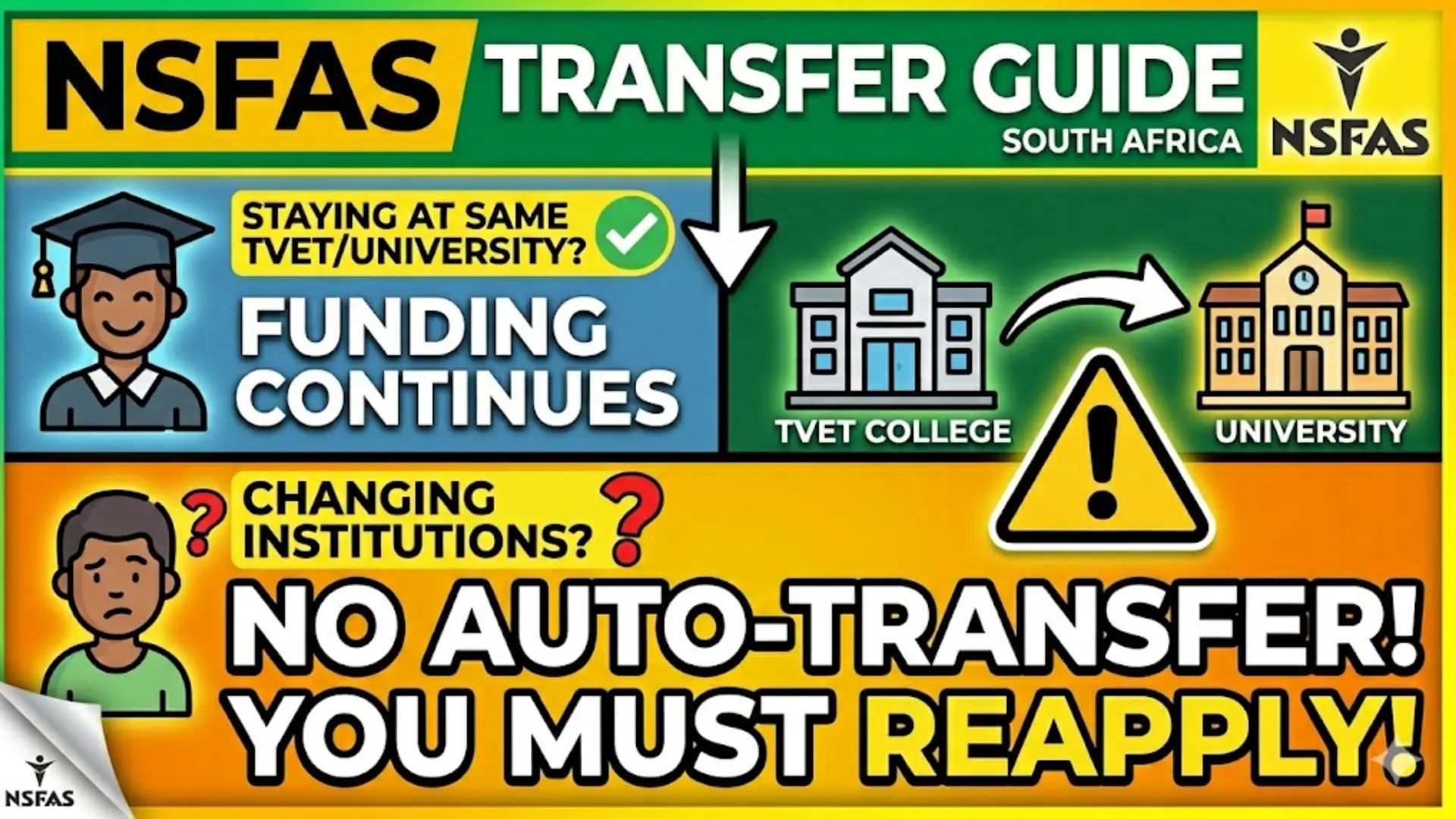
Changing institutions is a big step in any student’s academic journey. Many South African students who rely on NSFAS funding often worry about what happens when they move from a TVET college to a university, or the other way around. Understanding how the process works can help you avoid delays, confusion, or even losing funding.
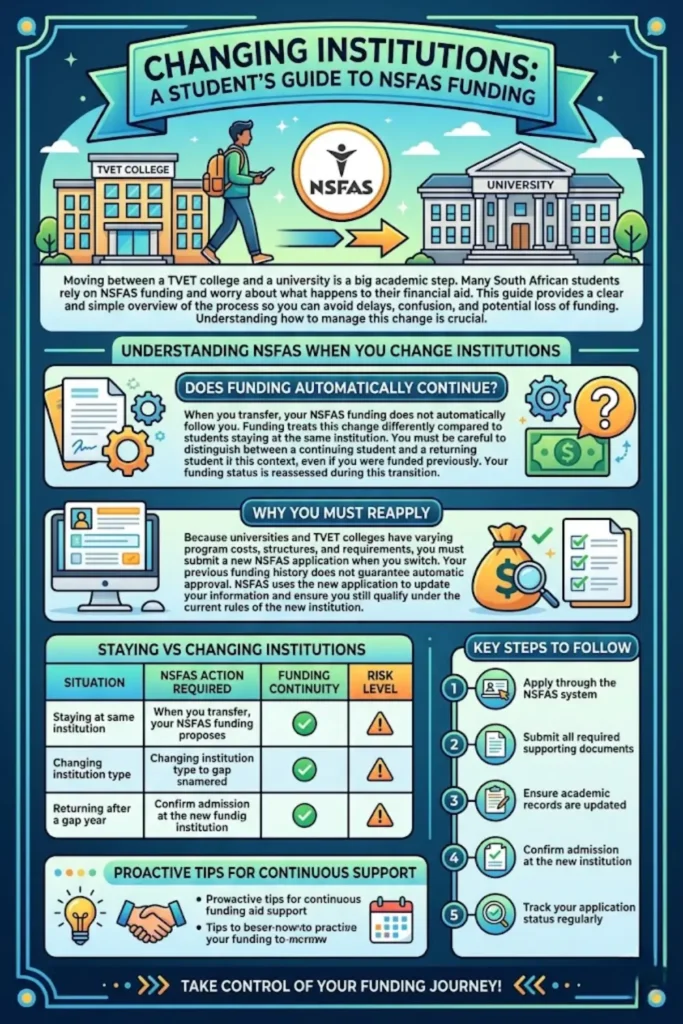
This guide explains everything in a clear, simple, and human-friendly way so you know exactly what to expect and what actions to take.
Understanding NSFAS Funding When You Change Institutions
When you transfer between a TVET college and a university, your funding status does not automatically continue in the same way. NSFAS treats this change differently compared to students who remain at the same institution.
A key concept here is the difference between a continuing student and a returning student. Even if you were funded before, changing institution types places you in a category that requires additional steps. This is where many students get confused.
In simple terms, your funding does not “move” with you automatically you need to take action to keep receiving support.
You can also read: University of Cape Town South Africa
What Is a Continuing Student vs a Returning Student?
Understanding these two categories is essential because they determine whether you need to apply again.
A continuing student is someone who:
- Was funded by NSFAS in the previous academic term
- Is still studying without interruption
- Meets academic and financial requirements
- Remains at the same type of institution
A returning student, on the other hand:
- Was not funded in the previous academic term
- Must submit a new application
- Is treated as a fresh applicant
However, there is an important exception when changing institutions.
Why You Must Reapply When Changing Universities or TVET Colleges
Even if you were funded before, switching between a TVET college and a university changes your funding pathway. NSFAS does not automatically transfer your funding in this situation.
This means:
- You are required to submit a new NSFAS application
- Your previous funding history does not guarantee approval
- Your eligibility will be reassessed
This step is necessary because universities and TVET colleges have different funding structures, costs, and program requirements. NSFAS needs updated information to ensure you still qualify.
What Happens to Your NSFAS Funding After You Transfer?
After changing institutions and reapplying, your funding outcome depends on several factors. NSFAS will review your application just like any new applicant.
Here’s what typically happens:
- Your financial eligibility is reassessed
- Your academic progress is evaluated
- Your new course and institution are verified
- Funding is approved, rejected, or delayed based on your status
If approved, your funding will then be allocated according to your new institution’s funding structure.
Key Steps to Follow When Changing Institutions
To avoid losing your funding, it’s important to follow the correct process. Missing even one step can cause delays or rejection.
Important actions to take:
- Apply again through the NSFAS application system
- Submit all required supporting documents
- Ensure your academic records are up to date
- Confirm your admission at the new institution
- Track your application status regularly
Taking these steps early increases your chances of receiving funding on time.
Common Challenges Students Face During the Transfer Process
Many students face difficulties when switching institutions, mainly because they assume funding will continue automatically.
Some common challenges include:
- Delayed application submissions
- Missing documents
- Confusion about eligibility rules
- Funding gaps between institutions
- Rejection due to academic performance
Understanding these issues in advance can help you prepare better and avoid unnecessary stress.
You can also read: NSFAS 2026 Applications Update
Comparison: Staying vs Changing Institutions
Below is a simple comparison to help you understand the difference:
| Situation | NSFAS Action Required | Funding Continuity | Risk Level |
|---|---|---|---|
| Staying at same institution | No reapplication | Continues | Low |
| Changing institution type | Must reapply | Not automatic | Medium |
| Returning after a gap year | Must reapply | Not guaranteed | High |
This table shows why changing institutions requires extra attention.
Tips to Ensure Continuous NSFAS Support
Planning ahead can make a big difference when transferring between institutions.
Practical tips:
- Apply for NSFAS as early as possible
- Keep copies of all documents
- Maintain good academic performance
- Stay informed about NSFAS deadlines
- Communicate with both institutions
Being proactive reduces the chances of funding interruptions.
Conclusion
Changing universities or moving between a TVET college and a university can affect your NSFAS funding, but it doesn’t mean you will lose it. The most important thing to remember is that you must reapply and meet all eligibility requirements again.
You can also read: South African Social Security Agency Status
By understanding the process, preparing your documents, and applying on time, you can continue your studies without major financial setbacks.
