NSFAS Status Processing Details Check Step by Step
Waiting for financial aid feedback can feel stressful, especially when your future studies depend on it. If you’ve recently checked your NSFAS application and seen the words “Processing”, you may be wondering what’s actually going on behind the scenes.
This guide explains everything you need to know about NSFAS status processing in plain language. You’ll learn what the statuses mean, how long it usually takes, what steps you should follow, and how to avoid mistakes that can cause delays. Whether you’re a first-time applicant or a returning student, this article will help you feel more confident about your application journey.
What Does “NSFAS Status Processing” Mean?
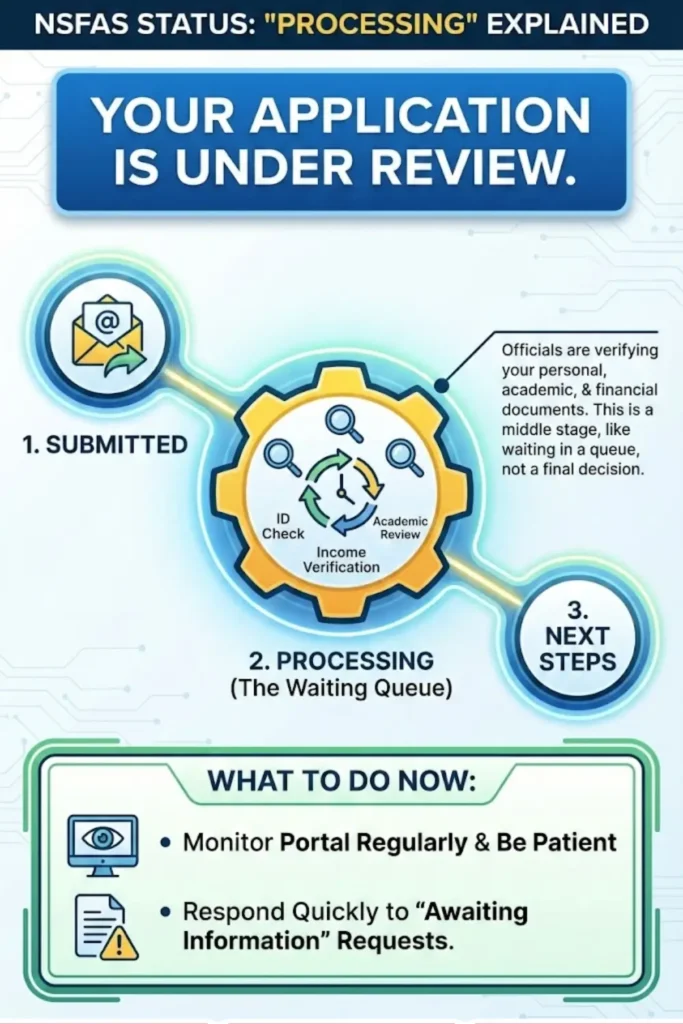
When your NSFAS status shows Processing, it means your application has been received and is currently being reviewed by NSFAS officials. Your information is going through verification checks to confirm that everything you submitted is correct and complete.
This is not an approval or rejection. It is simply a middle stage between submission and final decision. Think of it like waiting in a queue. Your application is inside the system, and staff members are working through it step by step.
Why This Status Appears
You see the Processing status because:
- Your application was successfully submitted
- Your documents were uploaded
- NSFAS is checking your personal, academic, and financial information
It shows progress, even though the waiting period can feel long.
You can also read: Coinvest NSFAS Login Status Check Online
Why Understanding Your NSFAS Status Is Important
Knowing what your status means helps you plan better. You will understand whether:
- You should wait patiently
- You need to upload documents
- You must prepare for an appeal
This prevents unnecessary panic and confusion.
Academic Preparation
Understanding your funding position helps you:
- Plan registration
- Arrange accommodation
- Focus on your studies
When you know what stage your application is in, you can make smarter decisions.
Who Usually Sees the Processing Status
First-Time Applicants
Grade 12 learners and new university or TVET students often see Processing after submission.
Returning Students
Students who previously received NSFAS funding still need to be evaluated every year.
TVET College Students
TVET students also go through the same verification steps, even if they qualify automatically.
NSFAS Application Journey Explained
From Registration to Decision
Your application moves through several stages:
- Create myNSFAS account
- Submit online application
- Upload documents
- NSFAS reviews details
- Final decision issued
Where Processing Fits
Processing happens after submission and before approval or rejection. It is the longest and most important stage.
Step-by-Step Guide to Check NSFAS Status
Using myNSFAS Portal
Follow these steps:
- Visit official NSFAS website
- Click “myNSFAS”
- Log in with username and password
- Select “Track Funding Progress”
- View current status
Alternative Methods
If the website is slow:
- Try early morning or late evening
- Use a different browser
- Clear cache and cookies
Avoid third-party websites claiming to check your status.
Documents Verified During Processing
Personal Documents
NSFAS checks:
- Your ID number
- Citizenship status
- Name and surname
Financial Documents
They verify:
- Household income
- Employment status of parents or guardians
- SASSA grant records
Missing or unclear documents slow down processing.
NSFAS Eligibility Requirements Reviewed
Citizenship Rules
You must be:
- South African citizen or
- Permanent resident
Income Thresholds
Your household income must be:
- R350,000 or less per year
- R600,000 or less for students with disabilities
Academic Performance
For continued funding:
- Pass at least 50% of modules
- Meet institutional academic rules
You can also read: SASSA February 2026 Payment Calendar
How Long Does NSFAS Status Processing Take?
Average Timeframes
Processing can take:
- A few weeks
- Several months during peak periods
January to March is the busiest period.
Factors That Cause Delays
- High application volumes
- Missing documents
- Incorrect information
- Institution delays
Common NSFAS Status Messages and Meanings
- Submitted – Application received
- Processing – Under review
- Awaiting Information – Documents needed
- Approved – Funding granted
- Unsuccessful – Application rejected
Each status tells you what to do next.
What To Do While Your Status Is Processing
Productive Actions
- Check status regularly
- Monitor your email
- Prepare documents
- Confirm registration with institution
Things to Avoid
- Submitting multiple applications
- Paying scammers
- Ignoring messages
Patience combined with monitoring is key.
Common Problems and How to Fix Them
- Forgotten password → Use reset option
- Portal not loading → Try later
- Status stuck → Contact financial aid office
- Awaiting information → Upload documents immediately
Small actions can solve big problems.
NSFAS Status Meanings and Actions
| NSFAS Status | Meaning | What You Should Do |
|---|---|---|
| Submitted | Application received | Wait |
| Processing | Under evaluation | Monitor portal |
| Awaiting Info | Documents missing | Upload files |
| Approved | Funding granted | Sign agreement |
| Unsuccessful | Not funded | Prepare appeal |
How to Avoid Delays in NSFAS Processing
- Upload clear certified documents
- Double-check ID numbers
- Use correct personal details
- Respond quickly to messages
Accuracy speeds up everything.
Appeals After Unsuccessful Status
When to Appeal
You can appeal if:
- Your financial situation changed
- Documents were missing
- You believe an error occurred
How to Submit Appeal
- Log into myNSFAS
- Select appeal option
- Upload supporting documents
- Submit before deadline
Appeals give you a second chance.
Tips for First-Time Applicants
- Apply early
- Read instructions carefully
- Ask school counsellors for help
- Keep copies of documents
Preparation reduces stress.
Tips for Returning Students
- Check academic performance
- Confirm registration details
- Ensure institution submitted data
- Monitor status often
Your funding is not automatic.
Role of Institutions in NSFAS Processing
Colleges and universities:
- Submit registration data
- Confirm academic results
- Communicate with NSFAS
If your institution delays, your status may remain Processing.
Myths About NSFAS Processing Status
- Processing means approved → False
- Paying agents speeds up process → False
- Everyone gets funded → False
Only official NSFAS channels are reliable.
You can also read: NSFAS R5,200 Allowance Update Distribution
Conclusion
Seeing NSFAS Status Processing means your application is actively being reviewed. It is a positive step, not a final answer. The best approach is to remain patient, monitor your portal, respond quickly to requests, and avoid mistakes that cause delays. Thousands of students pass through this stage every year and go on to receive funding. Stay informed, stay prepared, and trust the process.