NSFAS R5,200 Allowance Update Distribution of Payment may be Delayed, Students Should Fully Adhere to the Schedule
The National Student Financial Aid Scheme (NSFAS) has released an important update regarding the R5,200 monthly student allowance. This allowance supports thousands of students studying at public universities and TVET colleges across South Africa. Recently, many students have reported that they did not receive their allowances on time, which has caused widespread concern.
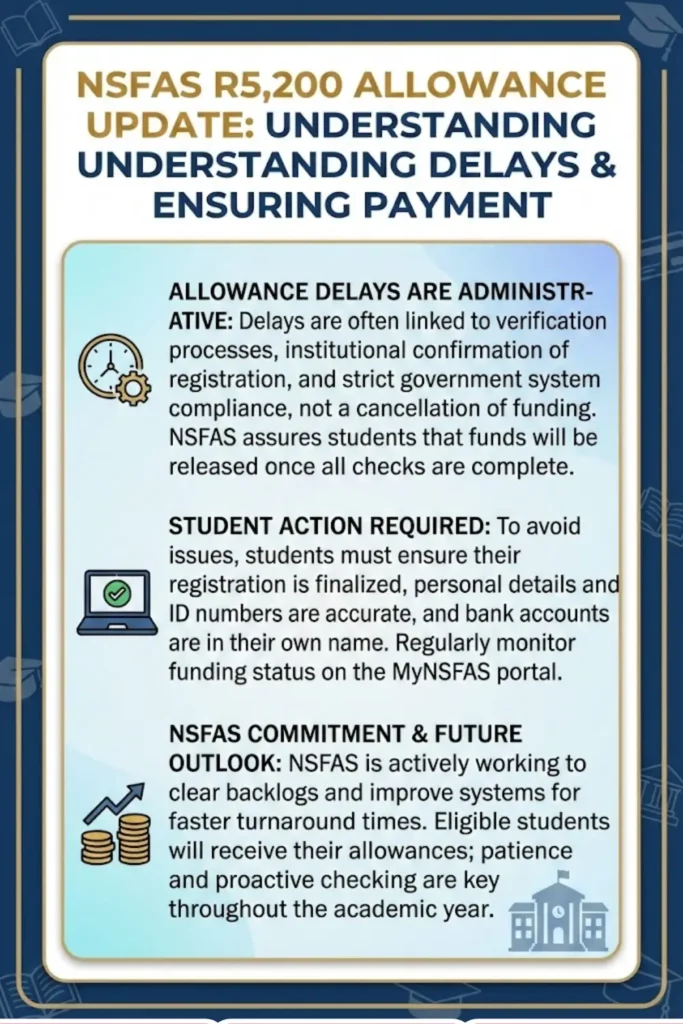
NSFAS has clarified that these delays do not mean funding has been cancelled. Instead, the distribution of payments may be delayed due to verification processes and institutional confirmations. Students are encouraged to remain patient, regularly check their funding status, and ensure all personal information is accurate.
Understanding the Purpose of the R5,200 Monthly Allowance
The R5,200 allowance is not just a payment. It is a lifeline for students who rely on financial support to survive while studying.
Supporting Daily Living Costs
Students use this allowance for essential needs such as:
- Food and groceries
- Local transport
- Accommodation contributions
- Learning materials and stationery
- Internet and communication costs
Without this financial assistance, many students would struggle to attend classes or focus on their studies.
You can also read: NSFAS Application Rejected & Check Login Problems
Ensuring Equal Access to Education
NSFAS aims to create equal educational opportunities for students from low-income households. The allowance helps level the playing field by ensuring that financial hardship does not become a barrier to success.
Key goals of the allowance include:
- Reducing dropout rates
- Promoting academic success
- Supporting student dignity
- Encouraging full-time study
Why Payment Distribution May Be Delayed
NSFAS has explained that payment delays are usually linked to administrative processes rather than a lack of funds.
Institutional Registration Confirmation
Before any allowance is released, NSFAS must receive confirmation that a student is fully registered at their institution. If this confirmation is delayed, payments cannot be processed.
Government Processing Systems
NSFAS operates within government financial systems that require strict compliance. Payments must go through multiple approval stages before release.
Data Verification Requirements
Student information must match official records. Even small errors can cause delays.
Examples include:
- Incorrect ID numbers
- Misspelled names
- Wrong bank account details
Common Reasons Students Experience Non-Payment
Many payment problems can be traced back to simple issues that students can fix.
Incomplete Registration
If a student has not completed registration or if the institution has not uploaded registration data, NSFAS cannot process allowances.
Incorrect Banking Details
Payments are only sent to bank accounts registered in the student’s own name.
Common mistakes include:
- Using someone else’s bank account
- Typing errors in account numbers
- Closed or inactive accounts
Identity Verification Issues
If NSFAS cannot verify a student’s identity with national records, payments will be placed on hold.
Official NSFAS Position on Allowance Delays
NSFAS has acknowledged the frustration students are experiencing. The scheme has reassured students that allowances will be paid once all verification requirements are met.
Important points from NSFAS:
- Delays do not mean funding is cancelled
- Payments will be processed in batches
- Priority is given to students with complete information
NSFAS continues to work with institutions to speed up data sharing and verification.
The Role of Universities and TVET Colleges in Payments
Institutions play a major role in allowance distribution.
Their responsibilities include:
- Confirming student registration
- Uploading academic records
- Reporting changes in enrolment
If an institution delays sending information, NSFAS cannot release payments, even if the student has completed everything on their side.
Students are advised to stay in contact with their financial aid offices to ensure their information has been submitted.
You can also read: Coinvest NSFAS Login Status Check Online Step by Step With Easy Method
Importance of Bank Account Verification
Bank account verification remains one of the most important steps in the payment process.
Why Personal Bank Accounts Are Required
NSFAS only pays into accounts that belong to the funded student. This rule helps prevent fraud and ensures funds reach the correct person.
Consequences of Mismatched Details
If banking details do not match student records:
- Payment is blocked
- Account goes into verification status
- Student must resubmit details
This process can take time, which leads to delays.
How Students Can Check Their Allowance Status
Students should regularly monitor their funding and payment status.
Using the MyNSFAS Portal
On the MyNSFAS portal, students can:
- View funding status
- Check payment progress
- Update personal information
- Upload documents
Communication from Institutions
Institutions may send emails or SMS notifications about registration confirmation or missing information.
Students should:
- Read messages carefully
- Respond promptly
- Keep copies of submitted documents
Steps Students Should Take to Prevent Payment Problems
Students can reduce the risk of delays by following these steps:
- Ensure registration is completed
- Update banking details
- Verify ID number and personal details
- Check MyNSFAS regularly
- Respond to NSFAS requests
Additional best practices:
- Keep screenshots of confirmations
- Save reference numbers
- Contact financial aid offices when unsure
What to Do If Your Payment Is Delayed
If your allowance has not arrived:
- Log into MyNSFAS and check status
- Confirm registration with your institution
- Verify banking details
- Submit any outstanding documents
If issues persist:
- Visit your campus financial aid office
- Use NSFAS contact channels
- Keep records of all communication
NSFAS Efforts to Clear Backlogs
NSFAS has confirmed that it is actively working to resolve outstanding verification backlogs.
Key actions include:
- Increasing system capacity
- Improving data sharing with institutions
- Strengthening verification processes
These efforts aim to ensure faster turnaround times and fewer delays in future payment cycles.
Expected Payment Timeline and Schedule
Although exact dates may vary, allowances generally follow a monthly cycle once verification is complete.
| Stage | Description |
|---|---|
| Registration Confirmed | Institution submits student data |
| Verification Completed | NSFAS checks personal and banking details |
| Payment Batch Processed | Payment prepared for release |
| Allowance Paid | Funds reflect in student account |
Students should understand that missing any stage can delay the entire process.
How the R5,200 Allowance Impacts Student Life
The allowance affects more than just finances.
Academic Focus
With basic needs covered, students can:
- Attend lectures regularly
- Buy learning materials
- Participate in academic activities
Mental and Emotional Wellbeing
Financial stability reduces stress and anxiety, allowing students to focus on personal growth and success.
You can also read: Install Moya App Check SASSA Status & Check key Features
Key Differences Between Allowance Delays and Rejection
It is important to understand the difference.
Allowance Delay:
- Funding approved
- Payment pending
- Usually due to verification
Funding Rejection:
- Application declined
- Does not qualify
- Requires appeal
Most current cases involve delays, not rejection.
Student Responsibilities for Continuous Funding
To keep receiving allowances, students must:
- Pass required modules
- Remain registered
- Follow institutional rules
- Keep information updated
Failure to meet academic or administrative requirements can affect funding.
Future Outlook for NSFAS Allowance Distribution
NSFAS plans to improve systems and communication to reduce delays. Digital verification and better coordination with institutions are expected to streamline payments.
Students who stay informed and proactive will experience fewer disruptions.
Conclusion
The NSFAS R5,200 allowance remains a vital support system for students across South Africa. While payment distribution may be delayed due to verification and administrative processes, NSFAS has confirmed that eligible students will receive their allowances once all requirements are met.
By keeping personal details updated, completing registration, and regularly checking the MyNSFAS portal, students can significantly reduce the risk of delays. Patience, awareness, and proactive action are the keys to ensuring smooth allowance payments throughout the academic year.