NSFAS Allowance Delays 2026 Check Universities and Colleges Respond
The NSFAS allowance delays in 2026 have created serious concern among funded students across South Africa. The R5,200 monthly allowance, which many students rely on for basic survival, has not been paid on time for a large number of beneficiaries. This delay has affected both university and TVET college students during a critical academic period.
As student enrollment continues to increase each year, the NSFAS funding system is under growing pressure. While NSFAS remains a vital support system for millions, the 2026 delays have highlighted weaknesses that directly affect students’ financial stability and academic performance.
You can also read: Apply for SRD R370 Grant Check Documents Required
Why the NSFAS R5,200 Allowance Is Delayed
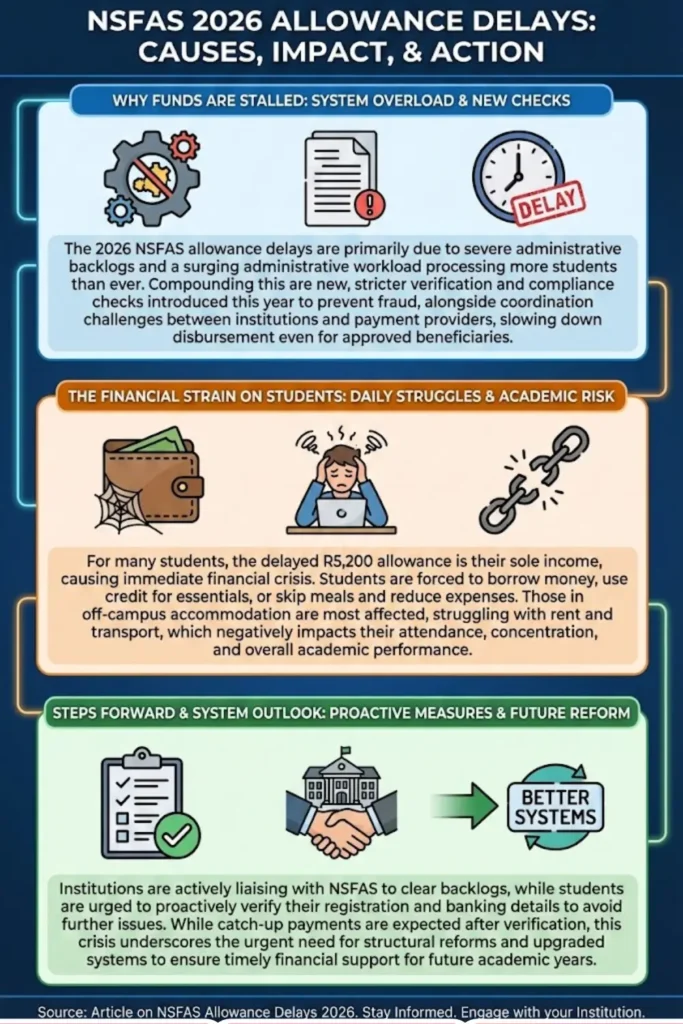
NSFAS has confirmed that the main causes of the delay are administrative and operational challenges. The funding system is handling more students than ever before, which has slowed down processing times.
Key reasons behind the delay include:
- A heavy backlog of student verification cases
- Increased administrative workload across NSFAS offices
- Coordination issues between institutions and payment service providers
- Additional compliance checks introduced in 2026
These factors combined have resulted in slower disbursement of allowances, even for students who are fully approved and registered.
Financial Impact on NSFAS-Funded Students
For many students, the R5,200 allowance is their only source of income during the academic year. When payments are delayed, the effects are immediate and deeply personal. Students struggle to cover food, transport, accommodation, and study materials.
As a result of these delays, many students have been forced to:
- Borrow money from family or friends
- Use credit for basic necessities
- Reduce meals or skip essential expenses
Student organizations have warned that continued delays could negatively affect attendance, concentration, and overall academic success, especially for students from low-income households.
Universities and Colleges Respond to NSFAS Delays
Universities and TVET colleges have acknowledged the allowance delays and are actively working with NSFAS to resolve the issue. Many institutions have set up internal support systems to assist students facing financial distress.
Institutions are responding by:
- Liaising directly with NSFAS to clear verification backlogs
- Advising students to confirm their registration status
- Helping students update incorrect banking details
- Offering temporary support or guidance where possible
These efforts aim to prevent further delays and ensure that eligible students receive their allowances as soon as possible.
Stricter Verification and Compliance Checks in 2026
In 2026, NSFAS introduced stronger verification and compliance measures to reduce fraud and incorrect payments. While these steps are intended to protect public funds, they have also added extra layers to the approval process.
The new checks focus on:
- Confirming student registration and enrollment status
- Verifying personal and banking information
- Ensuring compliance with funding rules
Although these measures improve accountability, they have contributed to longer processing times for allowances.
You can also read: SASSA Payment Dates for February 2026
Students Most Affected by the Payment Delays
Not all students are affected equally by the NSFAS delays. Those living off-campus are experiencing the greatest financial strain, as they must pay rent, transport, and utilities without guaranteed monthly income.
Students most impacted include:
- Off-campus accommodation residents
- Students without family financial support
- Those dependent on allowances for daily transport
- Students already carrying debt from previous delays
Accommodation providers and transport services have also felt the strain, as delayed payments affect students’ ability to meet payment commitments.
What Students Should Do Right Now
NSFAS and government officials have urged students to take proactive steps to avoid further delays. While not all issues are within a student’s control, ensuring accurate information can significantly reduce processing problems.
Students are advised to:
- Regularly check their NSFAS funding status
- Confirm their registration details with their institution
- Ensure banking details are correct and active
- Respond quickly to any verification requests
Early action can help streamline payments once backlogs are cleared.
Catch-Up Payments and What to Expect Next
NSFAS has not yet announced a confirmed date for clearing all outstanding allowances. However, official statements have emphasized the urgency of resolving the delays as soon as possible.
Once verification issues are finalized, students may receive catch-up payments covering unpaid months. These payments would help students recover financially and settle outstanding expenses incurred during the delay period.
Overview of Key NSFAS Delay Factors and Responses
| Area | Details |
|---|---|
| Main Allowance Affected | R5,200 monthly NSFAS allowance |
| Primary Cause of Delay | Verification backlogs and admin overload |
| Institutional Response | Coordination with NSFAS and student support |
| Students Most Affected | Off-campus and financially dependent students |
| Possible Resolution | Catch-up payments after verification |
What the 2026 NSFAS Delays Reveal About the System
The NSFAS allowance delays of 2026 highlight deeper structural challenges within the student funding system. While the program continues to support millions, current processes struggle to keep up with rising demand.
You can also read: How NSFAS Track Your Application Status
Student representatives are calling for long-term improvements, including earlier verification, better coordination with institutions, and upgraded payment systems. Addressing these issues is essential to ensure that future students receive timely financial support when they need it most.
Conclusion
The NSFAS allowance delays in 2026 have placed significant pressure on students and institutions alike. While universities and colleges are actively responding, the situation underscores the need for stronger systems and better planning.
Until lasting reforms are implemented, students are encouraged to stay informed, keep their details updated, and engage with their institutions. Timely action and improved coordination remain key to resolving the current challenges and preventing future disruptions.