NSFAS Disbursed R3.6 Billion to Universities For Allowances Details Check Online

The National Student Financial Aid Scheme (NSFAS) has confirmed a major financial milestone for the 2026 academic year. A total of R3.6 billion has already been disbursed to South African universities to cover student allowance payments. In addition, R679 million has been paid to Technical and Vocational Education and Training (TVET) colleges for tuition-related costs.
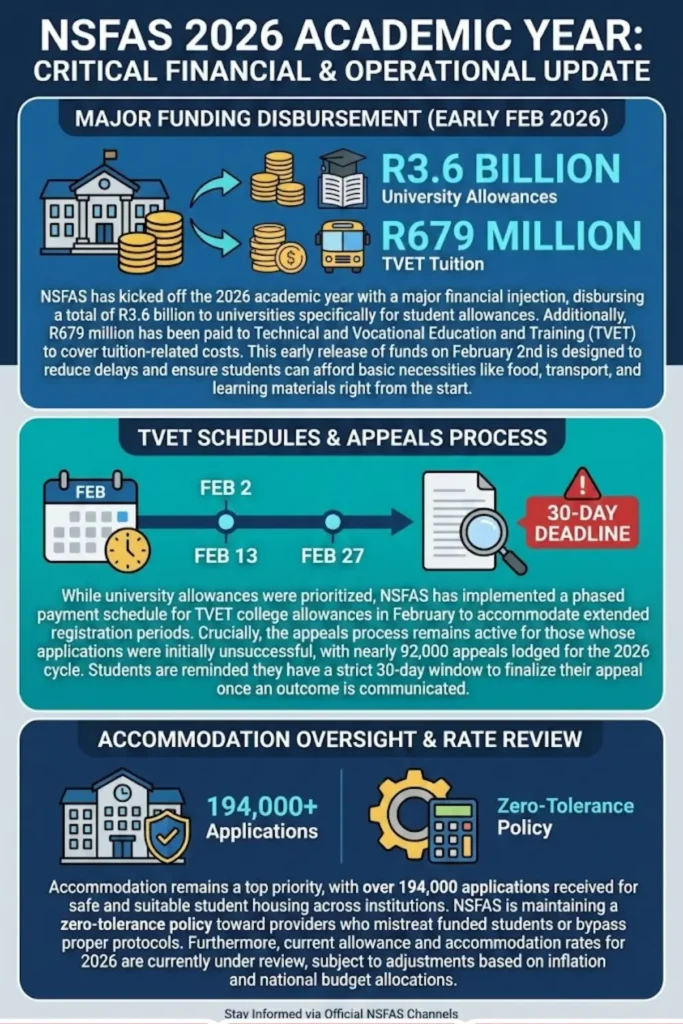
This update brings clarity and reassurance to thousands of students who depend on NSFAS funding to continue their studies. With rising living costs and ongoing accommodation challenges, these disbursements play a critical role in ensuring academic stability and student well-being across the country.
Overview of the 2026 NSFAS Funding Update
NSFAS Acting CEO Wassem Carrim shared this update during a media briefing, highlighting that the scheme has made significant progress in releasing funds early in the academic year. Upfront payments were made on 2 February 2026, setting the stage for smoother allowance distribution.
The early release of funds reflects NSFAS’s intention to reduce delays that previously affected students’ ability to pay for food, transport, learning materials, and accommodation. For many students, these allowances are not optional extras but basic necessities that determine whether they can attend classes consistently.
You can also read: NSFAS February 2026 Payment Schedule Check Funding
NSFAS Disbursements for Universities and TVET Colleges
The funding distribution clearly separates university allowances from TVET tuition payments. This structured approach helps institutions manage funds more effectively while ensuring that students receive support aligned with their academic pathways.
Key disbursement highlights include:
- R3.6 billion allocated to universities for student allowances
- R679 million paid to TVET colleges for tuition costs
- Separate schedules for allowances and tuition payments
- Continued monitoring to ensure funds reach the intended beneficiaries
This financial separation improves accountability and allows NSFAS to track how funds are being used at different types of institutions.
University Allowance Payments Explained
University students funded by NSFAS receive allowances that typically cover accommodation, meals, transport, and study materials. The R3.6 billion disbursement ensures that universities have enough funds to pay these allowances without unnecessary delays.
For students, this means fewer disruptions during the academic year. When allowances are paid on time, students can focus on their studies instead of worrying about daily survival expenses. Universities also benefit, as timely payments reduce administrative pressure and student complaints.
TVET College Tuition and Allowance Disbursements
While universities received funds mainly for allowances, TVET colleges were allocated R679 million specifically for tuition payments. Allowance disbursements to TVET students are scheduled separately due to extended registration periods at many colleges.
TVET students can expect allowance payments on 13 February 2026, followed by a second disbursement on 27 February 2026. This phased approach ensures that all registered students are correctly captured in the system before payments are released.
NSFAS Payment Schedule for February 2026
NSFAS has introduced a clear and structured payment timeline to reduce confusion among students and institutions. Knowing when funds are released allows students to plan their finances more effectively.
February 2026 payment timeline:
- 2 February: Upfront payments to institutions
- 13 February: First TVET allowance disbursement
- 27 February: Second TVET allowance disbursement
This schedule reflects NSFAS’s responsiveness to registration delays while still prioritising timely student support.
NSFAS Appeals Process for the 2026 Application Cycle
The NSFAS appeals process remains a critical lifeline for students who believe their funding applications were not assessed accurately. For the 2026 cycle, 91,937 appeals have already been lodged, showing how vital this process is for access to higher education.
Appeals allow students to submit additional information or clarify changes in their financial circumstances. This ensures that deserving students are not excluded due to incomplete or outdated data.
You can also read: NSFAS Allowance Delays 2026 Check Universities and Colleges
Number of Appeals Received and Current Status
NSFAS has provided a detailed breakdown of the current appeal outcomes, offering transparency into the review process.
| Appeal Status | Number of Appeals |
|---|---|
| Approved | 10,445 |
| In Process | 27,893 |
| Awaiting Documents | 3,209 |
| Rejected | 5,407 |
| Closed / Withdrawn | 44,983 |
These figures show that while many appeals have been finalised, a significant number are still under review.
Reasons Why Students Submit Appeals
Students submit appeals for various reasons, often linked to changes in household income or documentation issues. Common reasons include:
- Loss of parental income
- Incorrect household financial details
- Missing or outdated supporting documents
- Administrative errors during application review
Understanding these reasons helps students prepare stronger appeals and avoid unnecessary delays.
Timeframes and Important Deadlines for Appeals
Once NSFAS communicates an appeal outcome, students have 30 days to finalise the process. Missing this deadline can result in the appeal being automatically closed.
Students are strongly advised to keep their contact details updated and regularly check official NSFAS communication channels to avoid missing critical updates.
Student Accommodation Support by NSFAS
Accommodation remains one of the most sensitive issues facing students. NSFAS has reaffirmed that access to safe, suitable housing is essential for academic success and personal well-being.
The scheme continues to work with universities, TVET colleges, and student organisations to improve accommodation systems and address ongoing challenges.
Importance of Safe and Suitable Student Housing
Stable accommodation directly impacts academic performance. Students living in unsafe or overcrowded conditions often struggle to focus and attend classes consistently. NSFAS recognises this link and has prioritised accommodation oversight in its 2026 strategy.
By engaging stakeholders such as the Department of Higher Education and Training, SAUS, and SATVETSA, NSFAS aims to align accommodation standards with real student needs.
Accommodation Payment Management Model
For the 2026 academic year, NSFAS will continue managing accommodation payments directly for participating institutions. Institutions that previously handled accommodation payments independently will maintain their existing systems during this transition period.
This hybrid model reduces disruption while allowing NSFAS to strengthen oversight where needed.
Student Accommodation Applications: Key Statistics
NSFAS has received 194,071 accommodation applications across universities and TVET colleges. The current status reflects ongoing collaboration with institutions and landlords.
Application status overview:
- Approved: 55,653
- Pending institutional review: 90,794
- Awaiting landlord approval: 53,864
These numbers highlight the scale of demand and the importance of efficient processing.
Addressing Accommodation Challenges at Institutions
Recent concerns, including issues at the Cape Peninsula University of Technology (CPUT), have drawn attention to accommodation management. NSFAS clarified that CPUT manages accommodation independently but has engaged with the institution to address reported challenges.
The focus remains on protecting student well-being while ensuring that institutions meet acceptable accommodation standards.
Zero-Tolerance Policy for Accommodation Providers
NSFAS has issued a clear warning to accommodation providers. Housing students without confirming their NSFAS funding status or relocating students without due process will not be tolerated.
Students experiencing accommodation issues are encouraged to report them through official NSFAS channels to ensure swift intervention.
You can also read: SASSA R8070 Income Rule 2026 Check Eligibility Online
Review of NSFAS Allowances and Accommodation Rates for 2026
Allowances and accommodation rates for 2026 are currently under review. Adjustments will consider several factors, including:
- Consumer price inflation
- Student academic progression
- Enrolment trends
- National Budget allocations
Final recommendations will be made once the national budget process is completed.
What Students Should Do Next
Students are advised to stay proactive throughout the 2026 academic year. Regularly checking NSFAS portals, updating personal details, and responding promptly to requests for documentation can prevent unnecessary delays.
Being informed is the best defence against funding interruptions, especially during periods of high administrative demand.
Conclusion
The disbursement of R3.6 billion to universities and R679 million to TVET colleges marks a strong start to the 2026 academic year. NSFAS has demonstrated its commitment to timely funding, transparent appeal processes, and improved accommodation oversight. While challenges remain, these updates provide reassurance that student support remains a national priority.