NSFAS R5200 Delay 2026 If You are Having any Problems with Your Funding, you Should Review the Situation

The uncertainty surrounding the NSFAS R5,200 monthly allowance has created serious concern among students across South Africa. Thousands of university and TVET college students depend on this allowance to survive while pursuing their studies. When payments are delayed, everything else in a student’s life is affected.
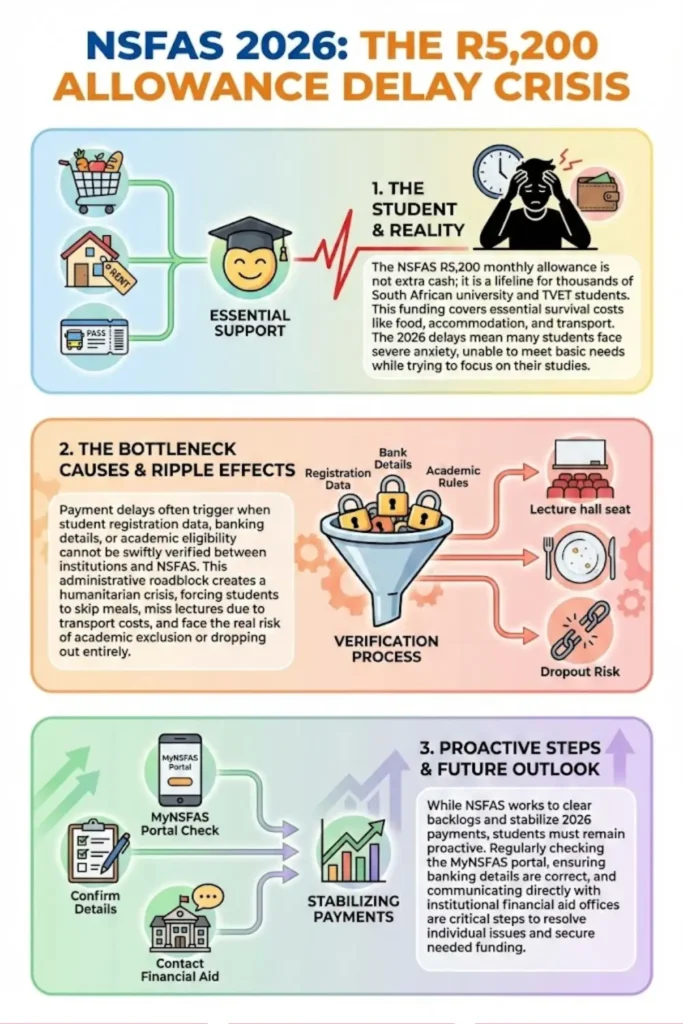
For many students, this allowance is not extra money. It is the only money they have. It pays for food, rent, transport, and basic study needs. The possibility that the R5,200 allowance might only be released when the 2026 academic year officially begins has left students feeling anxious, frustrated, and unsure about their future.
Understanding the Role of NSFAS in South Africa
NSFAS (National Student Financial Aid Scheme) was established to make higher education accessible to students from low-income households. Without this support, millions of young South Africans would never be able to attend university or college.
NSFAS exists to:
- Cover tuition fees
- Provide monthly living allowances
- Reduce financial barriers to education
- Promote equal access to skills development
The goal is simple: talented students should not be excluded because they are poor.
You can also read: Will NSFAS Provide Funding For Courses to Ingwe TVET
Who Qualifies for NSFAS Funding
NSFAS funding is aimed at students who meet specific criteria, including:
- Coming from households below the income threshold
- Being registered at an accredited institution
- Meeting academic progression rules
- Submitting correct and complete documentation
When any of these conditions are not properly verified, delays can occur.
What the R5,200 Monthly Allowance Is Designed to Cover
The R5,200 allowance is meant to help students survive on a day-to-day basis. It usually supports:
- Food and groceries
- Rent or residence fees
- Transport to campus
- Basic toiletries
Without this money, students struggle to meet even the most basic needs.
Academic Support Expenses
Apart from survival needs, the allowance also helps students pay for:
- Printing and photocopying
- Stationery
- Data or internet access
- Small learning materials
These expenses may seem small, but they are essential for academic success.
Why the NSFAS R5,200 Allowance Is Delayed
Before any payment is released, NSFAS must confirm:
- Student registration status
- Academic eligibility
- Correct banking details
- Institutional data submission
Each step depends on accurate information from both students and institutions.
Registration Data Challenges
Delays often happen when:
- Institutions submit registration data late
- Student records contain errors
- Banking details fail verification
- Systems experience technical problems
Even one missing detail can stop a payment from being processed.
How the Delay Is Affecting University Students
University students are facing serious financial pressure. Many cannot afford:
- Daily meals
- Rent payments
- Transport to lectures
Some students survive on one meal per day or borrow money just to get by.
Academic Disruptions
When survival becomes the priority, studying becomes difficult.
Students report:
- Missing classes
- Poor concentration
- Increased stress
- Falling behind in coursework
Education suffers when basic needs are not met.
How the Delay Is Affecting TVET College Students
TVET students often live far from campus. Without allowances:
- Transport costs become unaffordable
- Private accommodation fees go unpaid
- Students risk being evicted
This makes consistent attendance almost impossible.
Risk of Dropouts
Many TVET students come from extremely vulnerable backgrounds. Prolonged delays increase the risk of:
- Temporary withdrawal
- Permanent dropout
- Loss of motivation
Once students leave, returning becomes difficult.
The Link Between Registration and NSFAS Payments
Institutions must confirm that a student is registered before NSFAS releases funds. This ensures that money only goes to active students.
Without confirmation:
- Payments are automatically blocked
- Allowances remain pending
What Happens When Registration Is Incomplete
Incomplete registration can happen due to:
- Outstanding documents
- Unpaid balances
- System errors
Until registration is finalized, NSFAS cannot process payments.
You can also read: How to Check SRD Appeal for Declined Application Details
Universities and Colleges Response to the Crisis
Some institutions are trying to help students by:
- Allowing provisional registration
- Offering meal vouchers
- Delaying residence evictions
However, these measures are limited and temporary.
Communication with NSFAS
Institutions are in constant discussion with NSFAS to:
- Resolve data backlogs
- Correct student records
- Speed up verification
Despite these efforts, delays continue.
What Students Should Do If Their Allowance Is Delayed
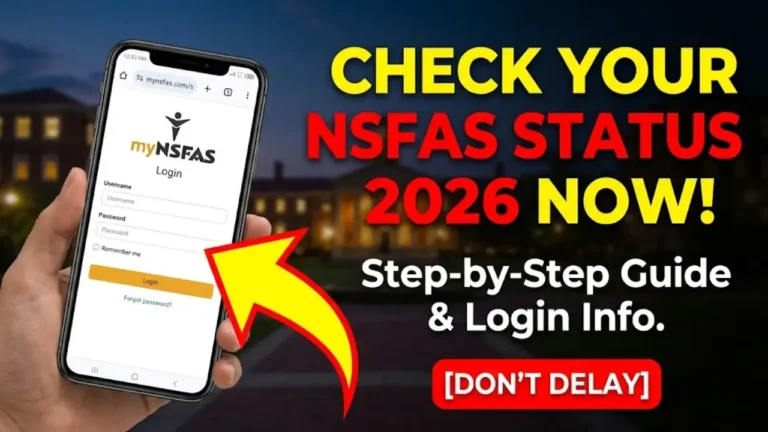
Students should regularly log into MyNSFAS and:
- Check funding status
- Confirm bank details
- Upload missing documents
Contacting Financial Aid Offices
Visit or email your institution’s financial aid office to:
- Confirm registration status
- Ask about submitted data
- Report errors
Quick action can prevent long delays.
Common Mistakes That Cause Payment Delays
Mistakes include:
- Wrong account number
- Bank account not in student’s name
- Closed accounts
Missing Documents
Common missing items:
- Certified ID copy
- Proof of income
- Registration confirmation
One missing document can stop everything.
How to Protect Yourself Financially During the Delay
Simple steps to stretch limited money:
- Prioritize food and transport
- Avoid unnecessary spending
- Share accommodation if possible
Seeking Temporary Support
Students may explore:
- Family assistance
- Campus food programs
- Community organizations
- Short-term part-time work
Every small support helps.
What NSFAS Has Said About the 2026 Payments
NSFAS has stated that:
- Payments will be made once verification is complete
- Backlogs are being addressed
- Institutions are being assisted
Expected Timeline
While no exact date is confirmed, NSFAS indicates payments should stabilize as 2026 progresses.
NSFAS Allowance Overview and Status
| Category | Description |
|---|---|
| Monthly Allowance Amount | R5,200 |
| Covers | Food, accommodation, transport, study needs |
| Main Cause of Delay | Verification and registration issues |
| Who Is Affected | University and TVET students |
| Student Action Required | Check MyNSFAS, confirm registration |
| NSFAS Status | Working to clear backlogs |
Long-Term Consequences If Delays Continue
Extended financial stress may lead to:
- Higher dropout numbers
- Increased academic exclusions
- Lost future opportunities
Impact on National Skills Development
South Africa depends on educated graduates. When students drop out:
- Skills shortages worsen
- Economic growth slows
- Poverty cycles continue
Why Clear Communication Is So Important
Reducing Anxiety: Students need clear timelines and honest updates. Silence increases fear and frustration.
Building Trust: Transparent communication builds confidence in the system and reduces unrest.
How Students Can Stay Updated
Official Channels
- MyNSFAS portal
- NSFAS website
- Institutional notices
Avoiding Misinformation
- Do not trust rumors
- Verify before sharing
- Use official sources only
Conclusion
The NSFAS R5,200 delay in 2026 is more than an administrative problem. It is a crisis that affects real lives, real dreams, and real futures. Students rely on this allowance to survive, not to live comfortably. When payments are delayed, education becomes almost impossible.
If you are experiencing funding problems, review your situation carefully. Check your details, confirm your registration, and communicate with your institution. While NSFAS and institutions work to resolve the issues, staying proactive gives you the best chance of receiving your allowance as soon as possible. Education is a pathway out of poverty. No student should be forced to abandon that path because of delayed payments.
You can also read: How to Check Short Learning Programmes at UNISA