Special Investigating Unit Fraud in R85 million border wall Project
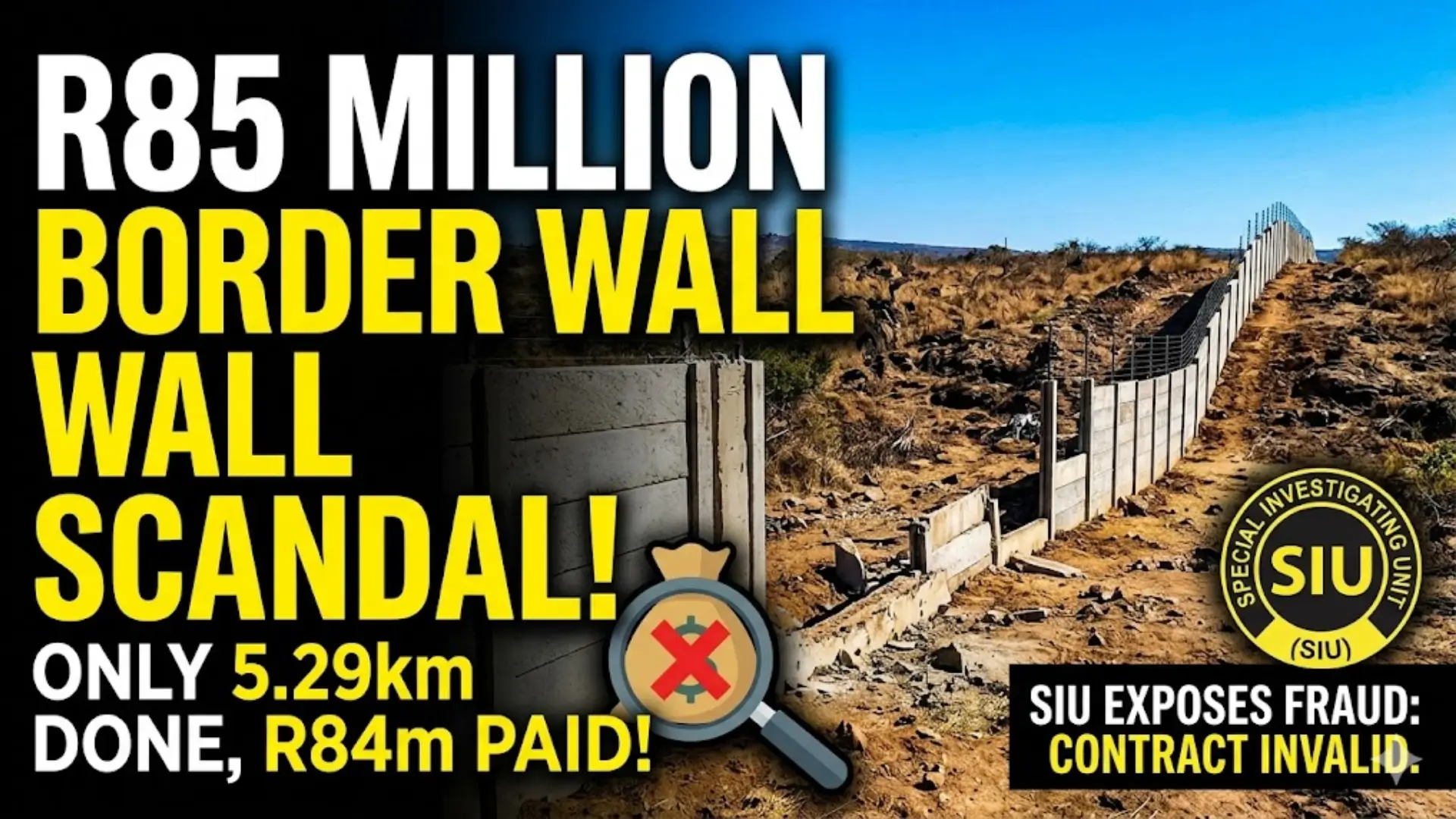
The R85 million border wall project along the KwaZulu-Natal–Mozambique border was initially launched to address rising concerns about cross-border crime. Communities in the area had reported increasing cases of vehicle smuggling and trafficking, prompting authorities to take action. The project aimed to strengthen border security and restore public confidence.
However, what began as a safety initiative soon turned into a major corruption case. The Special Investigating Unit (SIU) uncovered serious irregularities in how the contract was awarded and executed. These findings ultimately led to a Special Tribunal ruling that declared the contract invalid.
Key Findings from the SIU Investigation
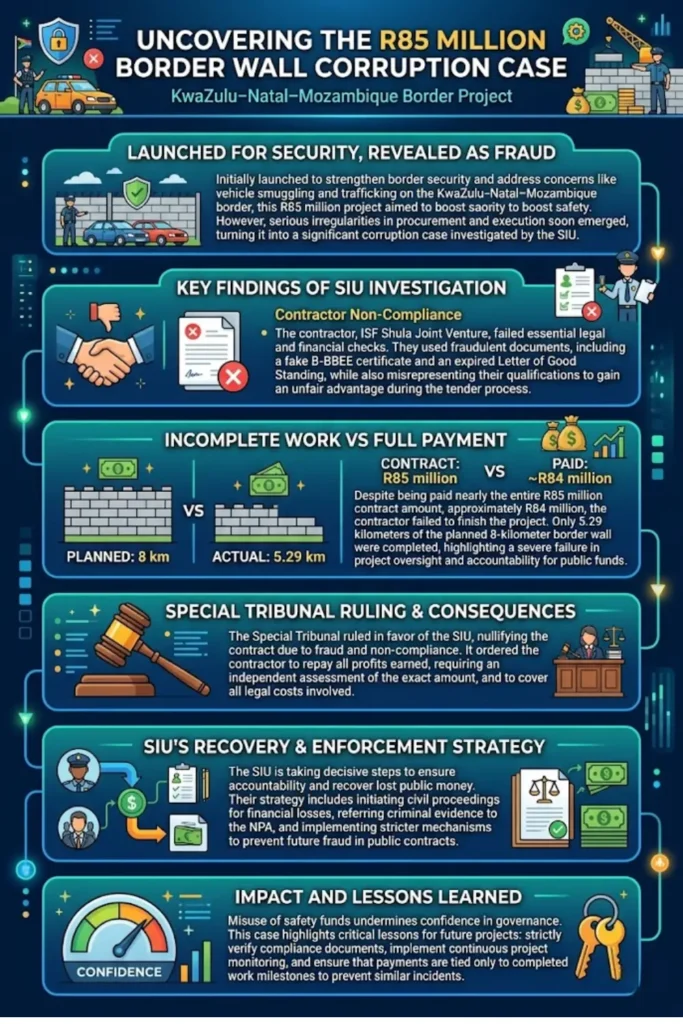
The SIU investigation revealed multiple layers of fraud and non-compliance by the contractor, ISF Shula Joint Venture. The company failed to meet basic legal and financial requirements but still managed to secure the lucrative contract.
Some of the most critical findings include:
- Use of a fraudulent B-BBEE certificate to gain an unfair advantage
- Submission of an expired Letter of Good Standing
- Failure to meet required financial capacity standards
- Misrepresentation of qualifications during the tender process
These violations indicate a breakdown in procurement oversight and raise serious concerns about how public contracts are awarded.
You can also read: Nsfas Login Portal Status Check
Incomplete Work Despite Full Payment
One of the most alarming aspects of the case is the mismatch between payment and actual work completed. The contractor received nearly the full contract amount, yet the project remained unfinished.
Key details of the project execution:
- Planned wall length: 8 kilometers
- Actual completed length: 5.29 kilometers
- Amount paid: approximately R84 million out of R85 million
This highlights a major failure in project monitoring and accountability. Public funds were spent without ensuring that deliverables were met.
Special Tribunal Ruling and Legal Consequences
The Special Tribunal ruled in favor of the SIU, setting aside the contract due to fraud and non-compliance. This decision is significant as it reinforces accountability in public sector projects.
The ruling includes several important directives:
- The contract has been officially declared invalid
- The contractor must repay all profits earned from the project
- An independent expert will assess the exact profit amount
- The contractor is responsible for covering legal costs
If disagreements arise over the profit calculation, the matter will be reviewed again by the Tribunal. This ensures transparency in the recovery process.
SIU’s Recovery and Enforcement Strategy
The SIU is now focused on recovering lost public funds and ensuring justice is served. Their mandate allows them to take both civil and criminal action where necessary.
Their next steps include:
- Initiating civil proceedings to recover financial losses
- Referring evidence of criminal conduct to the National Prosecuting Authority (NPA)
- Ensuring full repayment of misused funds
- Strengthening oversight mechanisms to prevent future fraud
This approach not only addresses the current case but also sets a precedent for handling similar issues in the future.
Project Overview Table
| Project Element | Details |
|---|---|
| Project Value | R85 million |
| Amount Paid | R84 million |
| Planned Wall Length | 8 km |
| Completed Wall Length | 5.29 km |
| Contractor | ISF Shula Joint Venture |
| Key Issue | Fraudulent documentation |
| Tribunal Decision | Contract set aside |
Impact on Public Trust and Governance
Cases like this have a direct impact on public trust in government institutions. When funds meant for safety and development are misused, it undermines confidence in leadership and governance systems.
This situation highlights the need for:
- Stronger procurement verification processes
- Improved project monitoring systems
- Greater transparency in public spending
- Accountability for both officials and contractors
Addressing these issues is essential to prevent similar incidents in future infrastructure projects.
You can also read: SRD SASSA Payment Dates January
Lessons Learned from the Case
This case offers several important lessons for governments, organizations, and oversight bodies. It demonstrates how weak controls can lead to large-scale financial losses.
Key takeaways include:
- Always verify compliance documents thoroughly before awarding contracts
- Ensure continuous monitoring of project progress
- Link payments strictly to completed work milestones
- Enforce strict penalties for misrepresentation and fraud
Implementing these lessons can significantly reduce the risk of corruption in public projects.
Conclusion
The SIU’s investigation into the R85 million border wall project exposes critical weaknesses in procurement and project management systems. While the Special Tribunal’s ruling is a step toward justice, it also serves as a warning about the consequences of ignoring due diligence.
Recovering the lost funds and holding those responsible accountable will be crucial. More importantly, systemic improvements must be made to ensure that public resources are used effectively and transparently in the future.
