Why Fake SRD Payment Date Pages Spread So Quickly April 2026
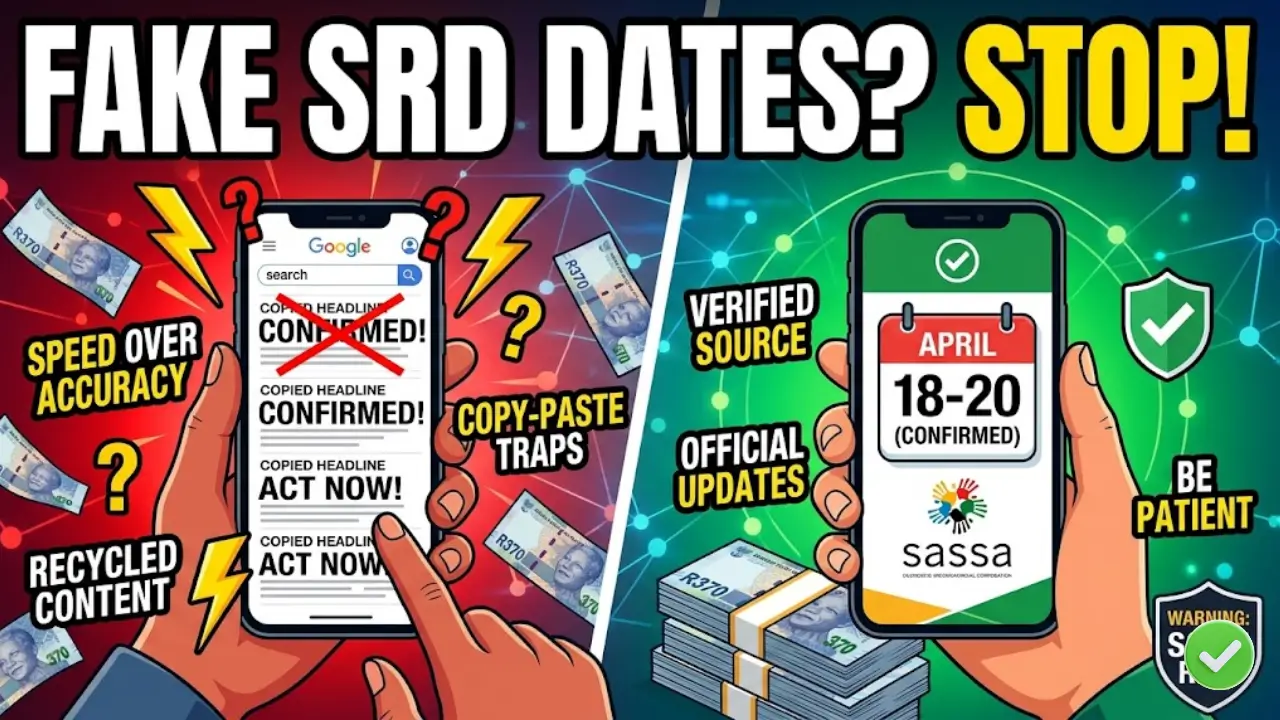
Every month, as April approaches, millions of people start searching for the latest SRD R370 payment dates. This demand creates an opportunity not just for helpful information, but also for misleading and low-quality content. Fake SRD payment date pages appear quickly, spread widely, and often dominate search results before any official update is released.
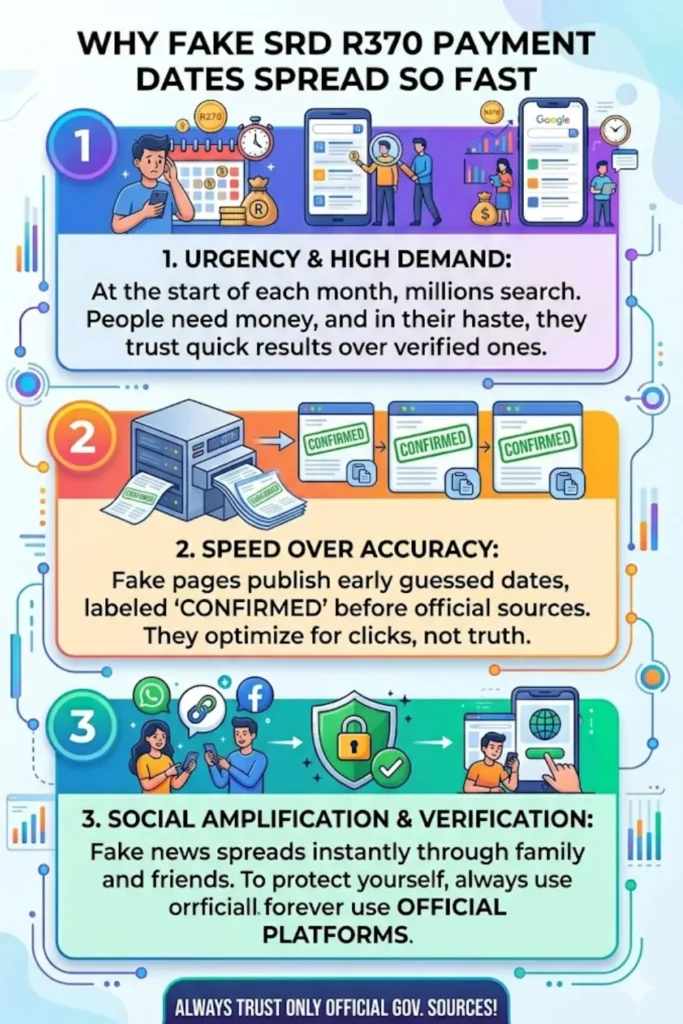
Understanding why these fake pages spread so fast is the key to avoiding them. This article explains the real reasons behind their growth, how they work, and how you can protect yourself from misinformation.
The Real Reason Fake SRD Pages Spread So Fast
Fake SRD payment date pages do not spread randomly. They follow a pattern driven by user behavior, search trends, and content shortcuts. These pages are designed to appear at the exact moment when people are most anxious and searching for answers.
When people urgently need information, they are less likely to verify sources. This creates the perfect environment for weak or misleading pages to gain attention quickly. The combination of urgency and uncertainty fuels their rapid spread.
Key factors behind fast spread:
- High monthly search demand for SRD dates
- Lack of early official updates
- Users trusting repeated information without verification
- Quick publishing by low-quality websites
You can also read: NSFAS Disbursement Allowance 2026
Predictable Monthly Search Demand
One of the biggest reasons fake pages spread is that SRD searches follow a predictable monthly pattern. Every month, especially in the first and second week, people begin searching for payment dates.
This predictable behavior allows weak websites to prepare content in advance. They publish early even without real information just to capture traffic before official updates are released. These sites are not focused on accuracy. Their goal is to be first, not correct.
Why this matters:
- Early content ranks faster in search engines
- Users click the first available results
- Speed gives fake pages an advantage over accurate ones
Speed Over Accuracy: The Core Strategy
Fake SRD pages rely on one simple strategy: publish quickly and worry about accuracy later. Since official announcements usually come later in the month, these sites fill the gap with guesses or recycled information.
For many users, a page that looks complete and confident feels trustworthy—even if the information is not verified. This false sense of certainty helps fake pages spread rapidly.
Common tactics used:
- Publishing exact dates before official confirmation
- Using strong words like “confirmed” or “official”
- Avoiding any real source or reference
Copy-Paste Effect: How Fake Dates Multiply
Once one fake page publishes a date, other websites quickly copy it. This creates a chain reaction where the same incorrect information appears across multiple platforms.
When users see the same date repeated on different sites, they assume it must be true. In reality, all those sites may be copying a single unreliable source.
This is how misinformation spreads at scale.
How the copy effect works:
- One site publishes a guessed date
- Multiple sites copy the same content
- Social media and WhatsApp amplify it
- Users see repetition and assume accuracy
Recycled Content Makes It Worse
Many fake SRD pages are not written fresh every month. Instead, they reuse old articles and simply change the month name. This makes content production fast and effortless.
Because the structure stays the same, the article looks complete, but the information inside may be outdated or irrelevant.
Signs of recycled content:
- Generic wording that fits any month
- No mention of current updates
- Same structure repeated across months
Emotional Pressure Increases Belief
Fake pages often use emotional language to push users into trusting them quickly. When someone is worried about money, they are more likely to believe information that sounds certain and urgent.
This psychological pressure reduces critical thinking and increases the chances of misinformation spreading.
Common pressure triggers:
- “Act now”
- “Breaking news”
- “Don’t miss your payment”
- “Latest confirmed dates”
These phrases are designed to create urgency, not provide clarity.
You can also read: Universities Open for 2027 Applications
How Fake Pages Gain Trust Quickly
Even without real information, fake pages can look convincing. They often mimic the style of genuine articles, making it difficult for users to tell the difference at first glance.
Here is a simple comparison to help you understand the difference:
| Feature | Trustworthy Page | Fake Page |
|---|---|---|
| Source | Links to official announcements | No source provided |
| Timing | Published after confirmation | Published too early |
| Language | Clear and honest | Overconfident and urgent |
| Content | Detailed and relevant | Generic and repetitive |
| Focus | Public dates explained clearly | Mixes multiple unrelated topics |
The Role of Social Sharing
Fake SRD pages spread even faster through social platforms. Once a link is shared in WhatsApp groups or Facebook posts, it reaches a wider audience instantly.
People tend to trust information shared by friends or family without verifying it. This makes social sharing one of the biggest drivers of misinformation.
Why social sharing is powerful:
- Information spreads quickly without verification
- Trusted contacts increase perceived credibility
- Repeated exposure builds false confidence
The Connection Between Fake Pages and Scams
Not all fake pages are scams, but many are closely linked to them. Once a user trusts a fake page, they may be directed to unsafe links or asked to provide personal information.
This is where the real risk begins.
Common scam risks:
- Fake status check forms
- Requests for ID or phone number
- Links that mimic official websites
- Messages asking for payment to “speed up” processing
These tactics can lead to financial loss or identity theft.
How to Protect Yourself
Understanding why fake pages spread is only useful if you know how to respond. The goal is not just to avoid fake information, but to rely on safe and verified sources.
Smart steps to stay safe:
- Ignore early “confirmed” dates
- Always check for a real source
- Avoid clicking unknown links
- Never share personal details on third-party sites
- Use only official platforms for status checks
You can also read: Universities Open for 2027 Applications
Conclusion
Fake SRD payment date pages spread quickly because they take advantage of urgency, predictable search behavior, and weak verification habits. They are designed to appear helpful but often provide misleading or recycled information.
By understanding their patterns—early publishing, copied content, and pressure language—you can avoid falling into the trap. The key is to stay patient, verify sources, and rely only on official channels.
FAQs
Why do fake SRD R370 payment date pages spread so quickly?
Fake SRD payment date pages spread quickly because many people search for payment information every month. Some websites publish unverified dates early to attract search traffic before official information is available.
How can I tell if an SRD payment date is fake?
Check whether the date comes from a reliable or official source. Be cautious of pages using words such as “confirmed” or “official” without providing a genuine source or reference.
Why do different websites sometimes show the same incorrect SRD date?
Many low-quality websites copy information from one another. A guessed date can therefore appear on several websites, creating the false impression that it has been officially confirmed.
Can fake SRD pages be connected to scams?
Yes. While not every misleading page is a scam, some may direct users to unsafe websites or request personal information such as ID numbers, phone numbers or banking details. Never provide sensitive information on unverified websites.
Where should I check for reliable SRD payment information?
For accurate information, rely on official SASSA communication and official government platforms. Avoid treating social media posts, WhatsApp messages or third-party websites as confirmation unless the information can be verified through an official source.
